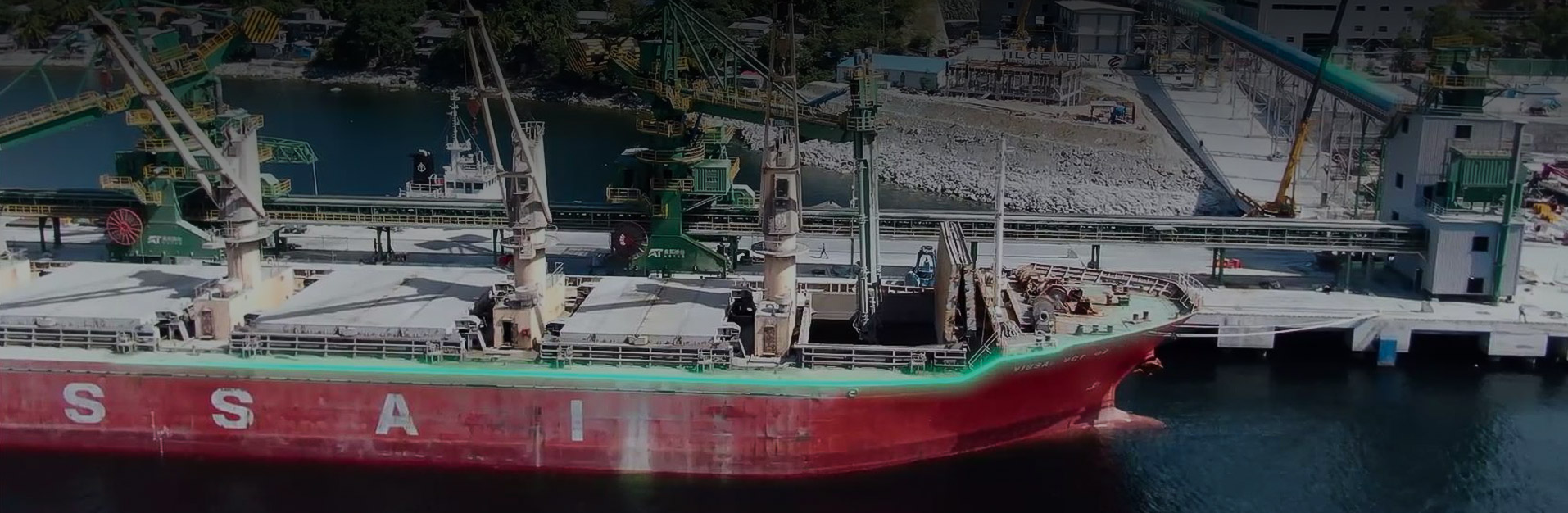
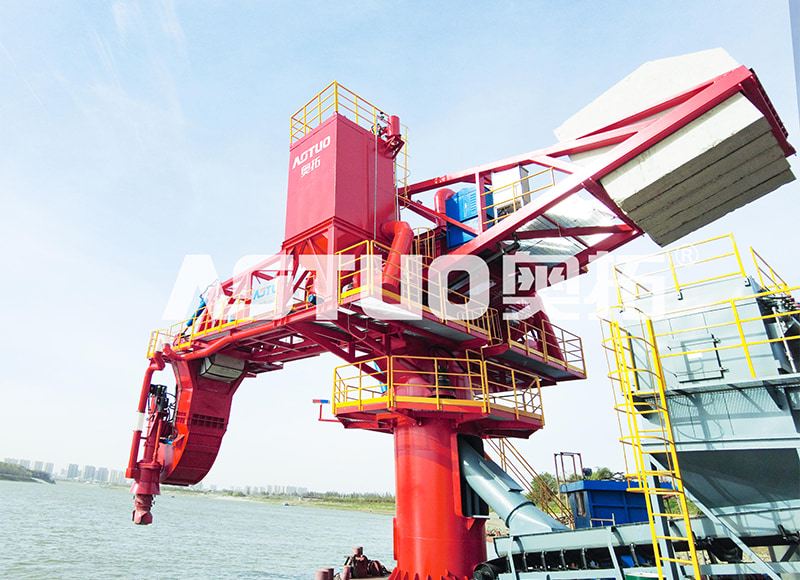
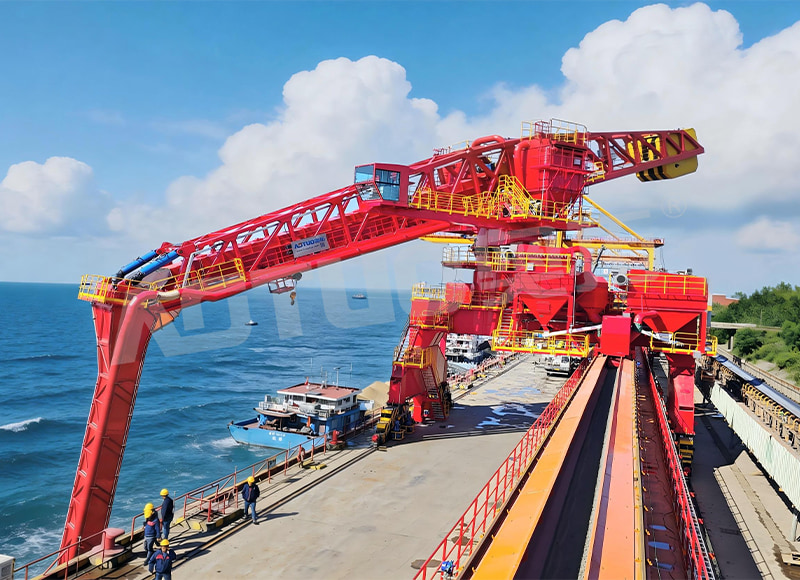
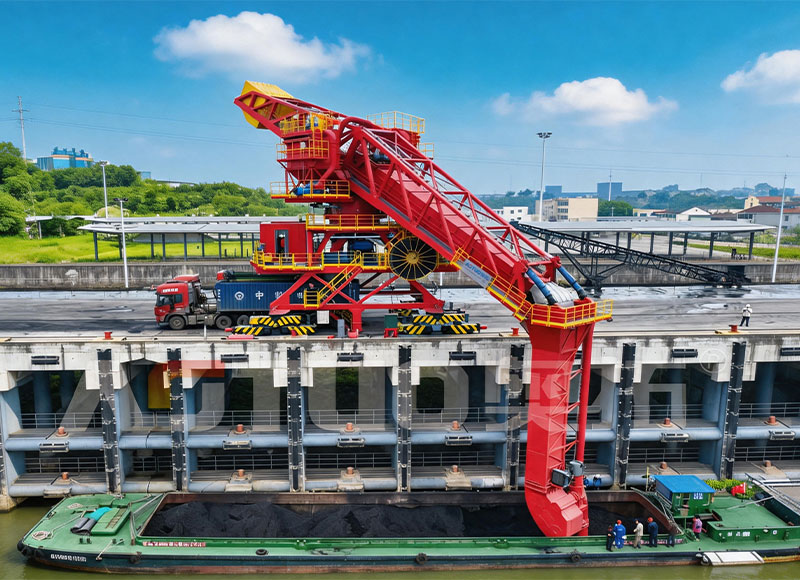
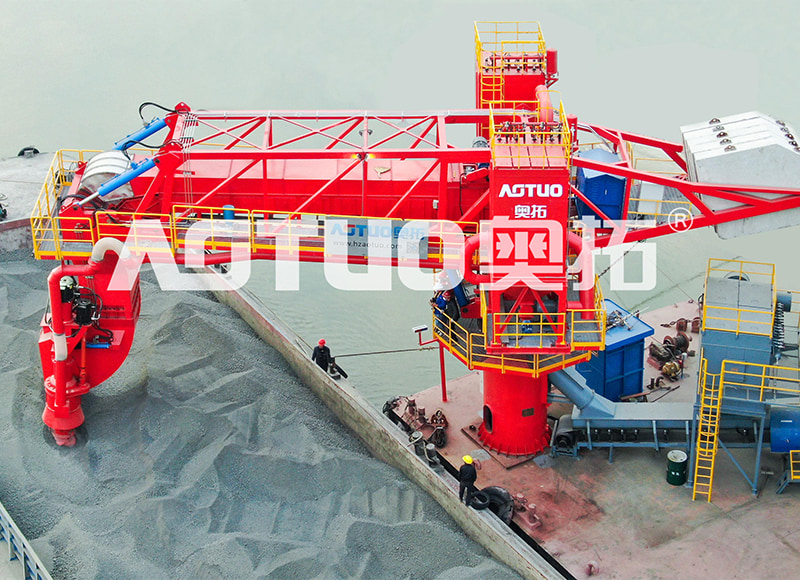
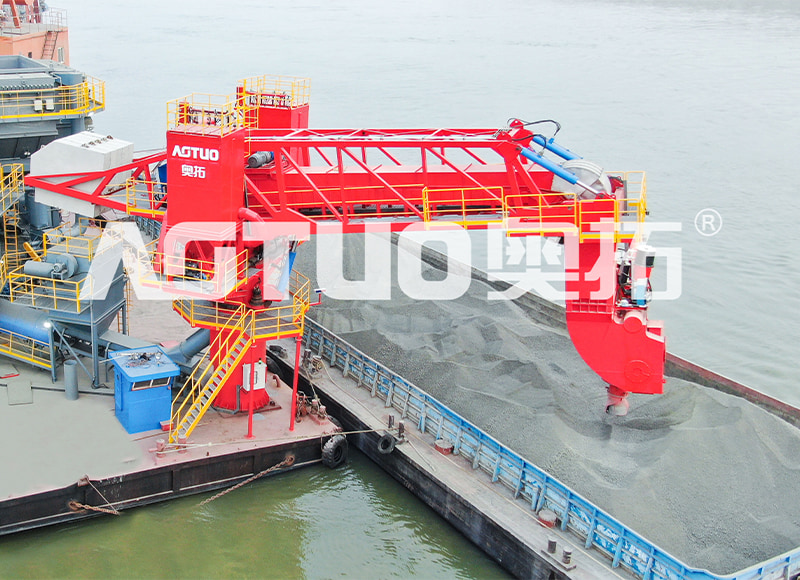
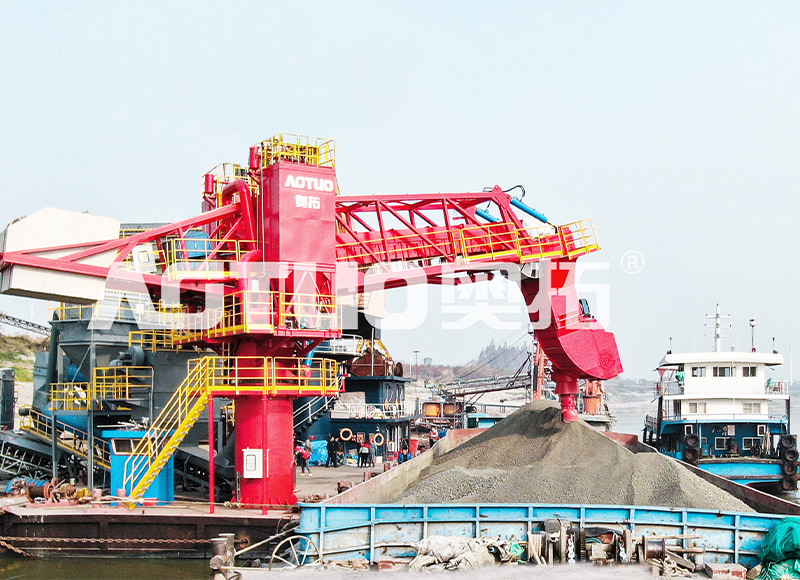
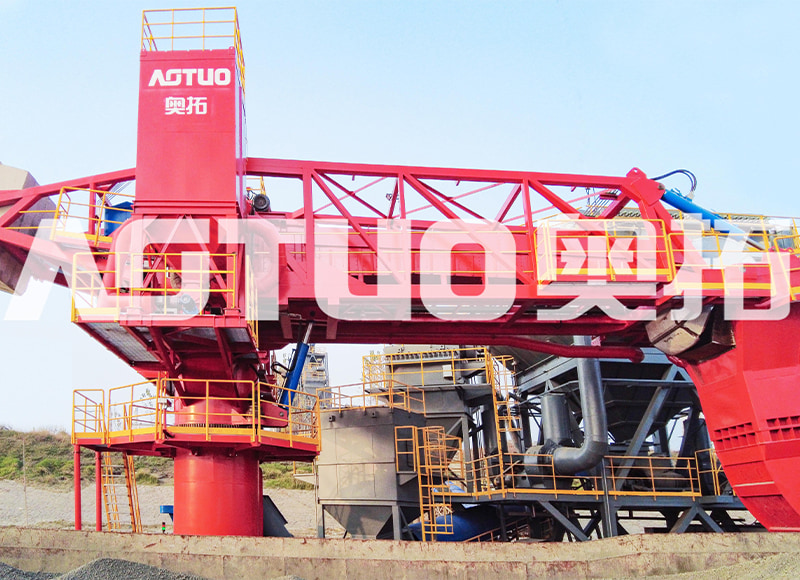
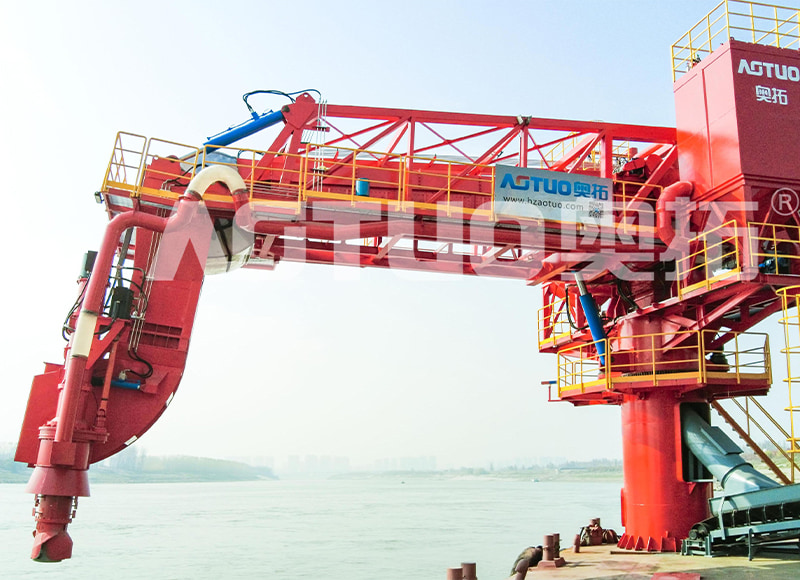
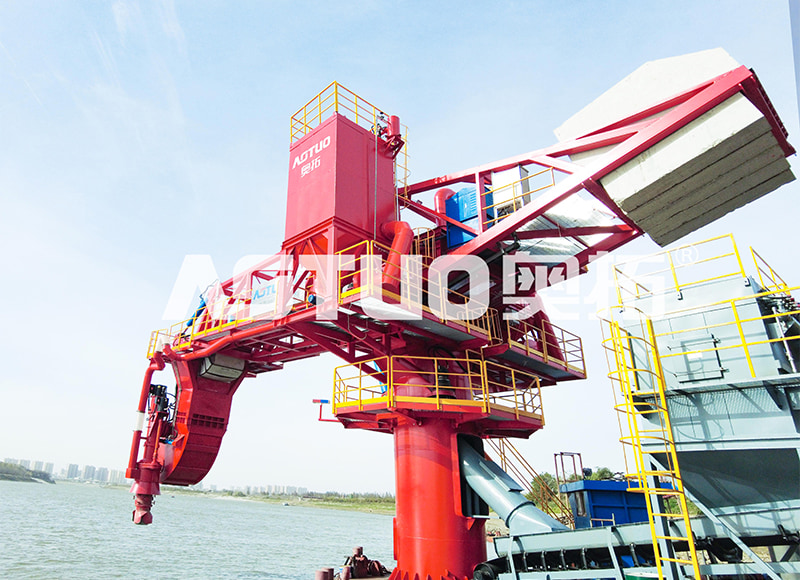
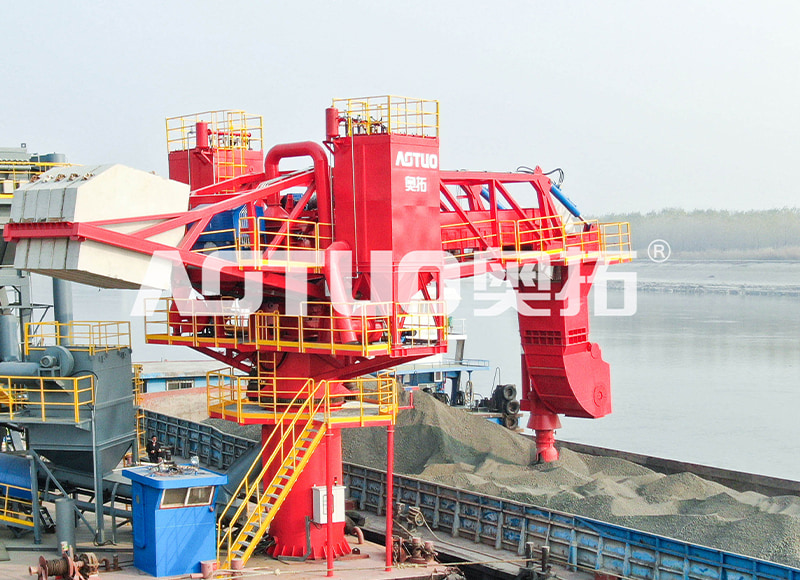
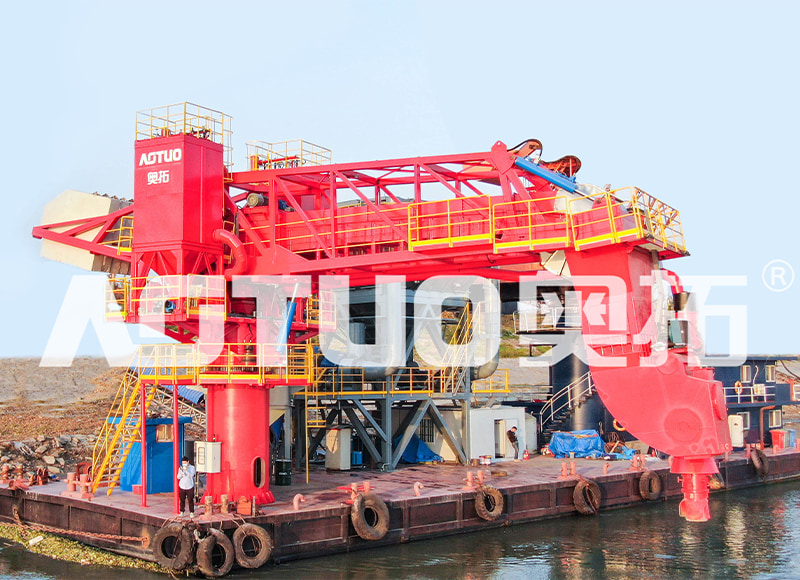
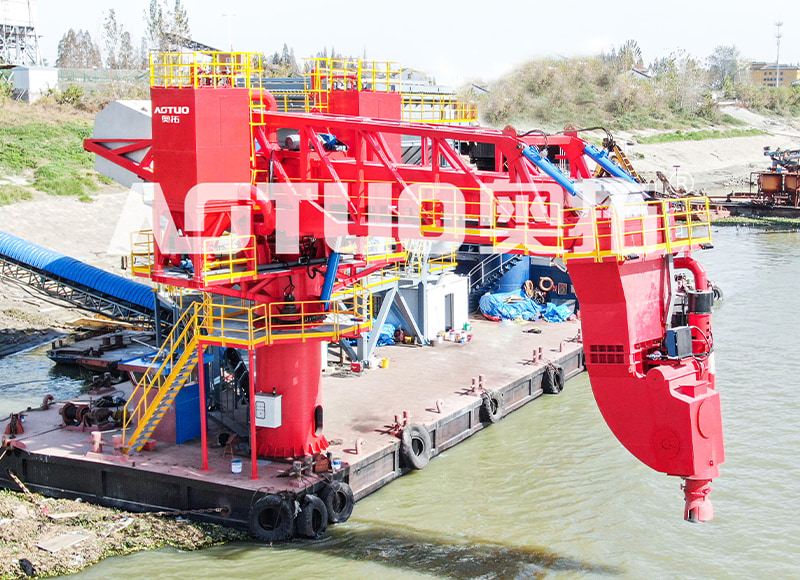
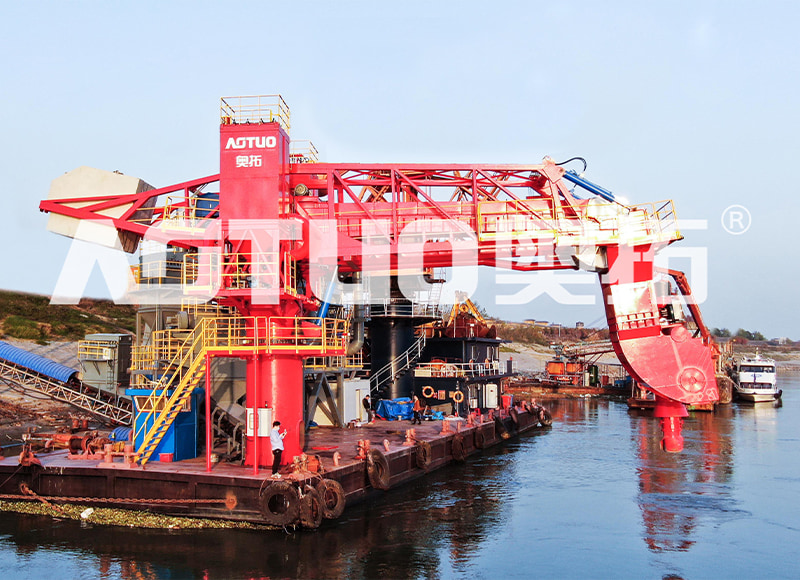
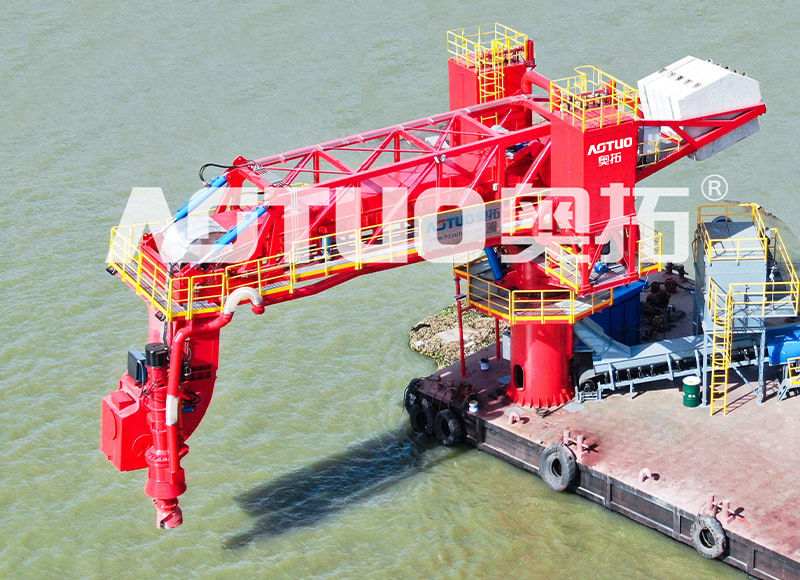
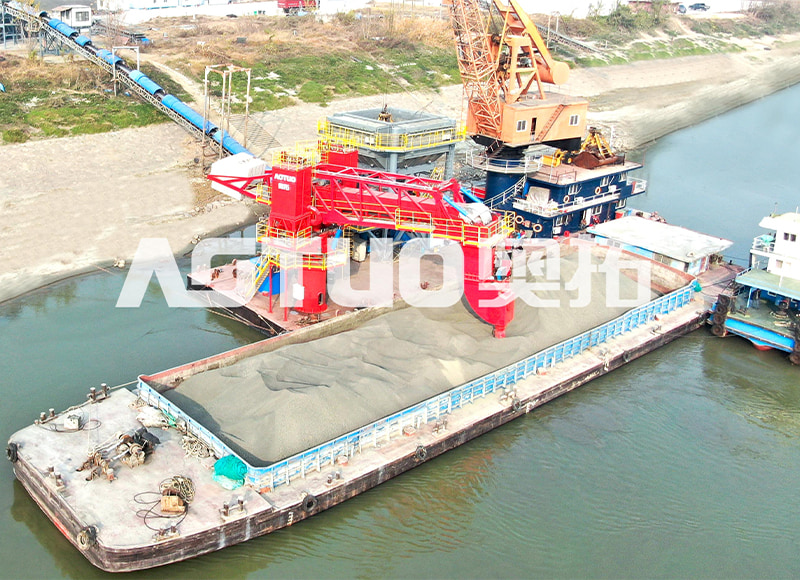
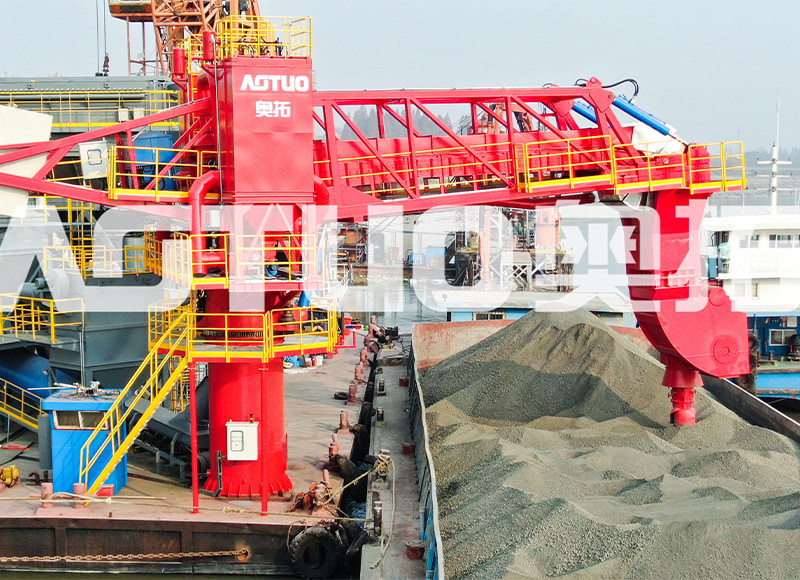
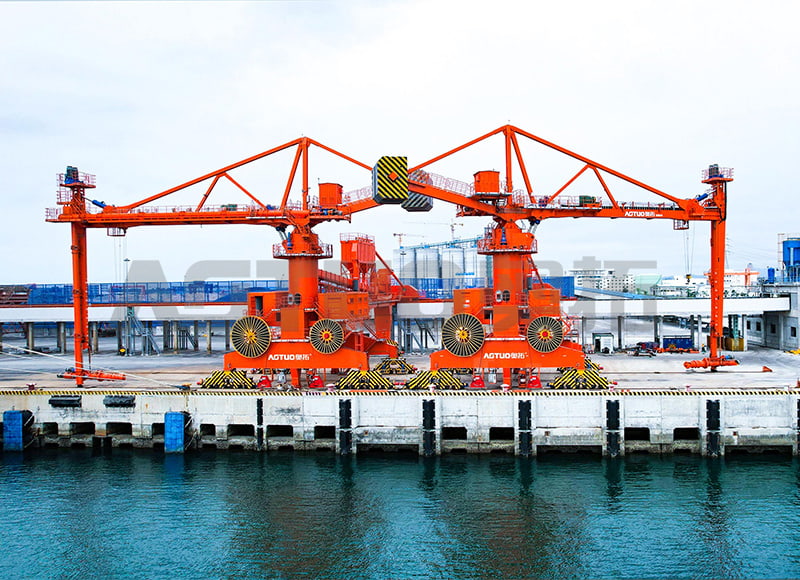
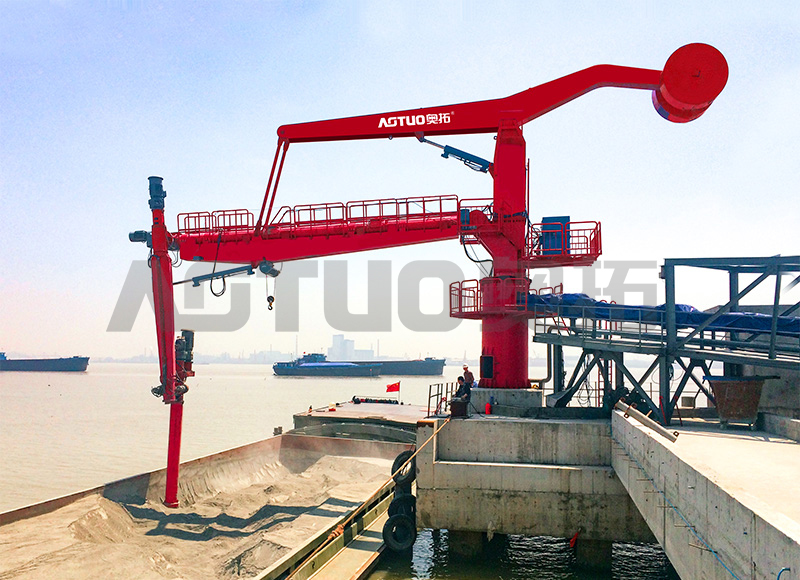
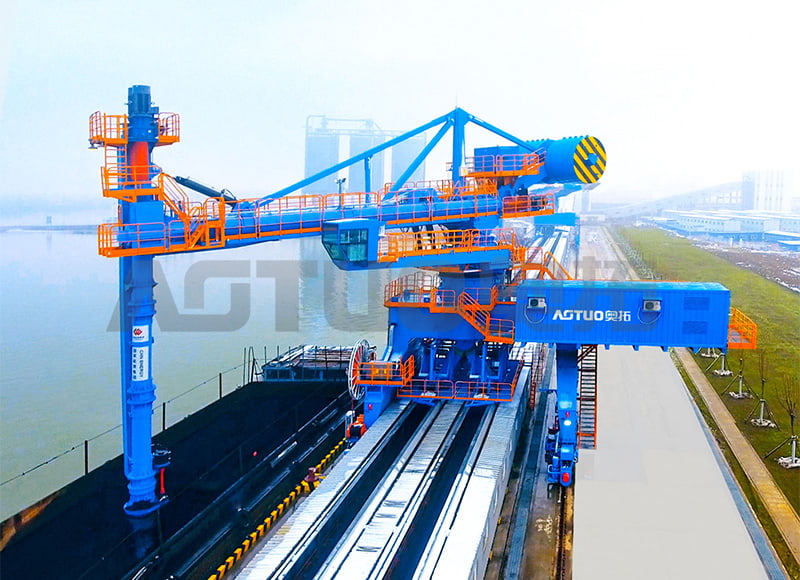
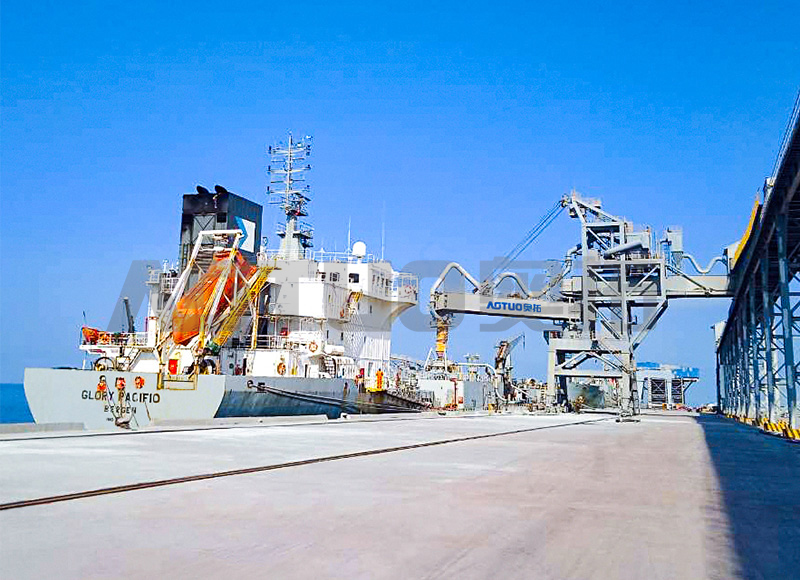
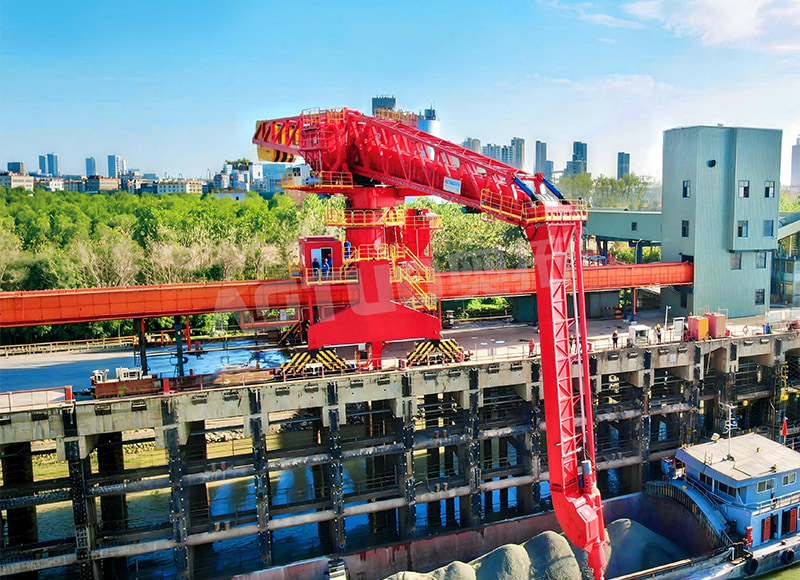
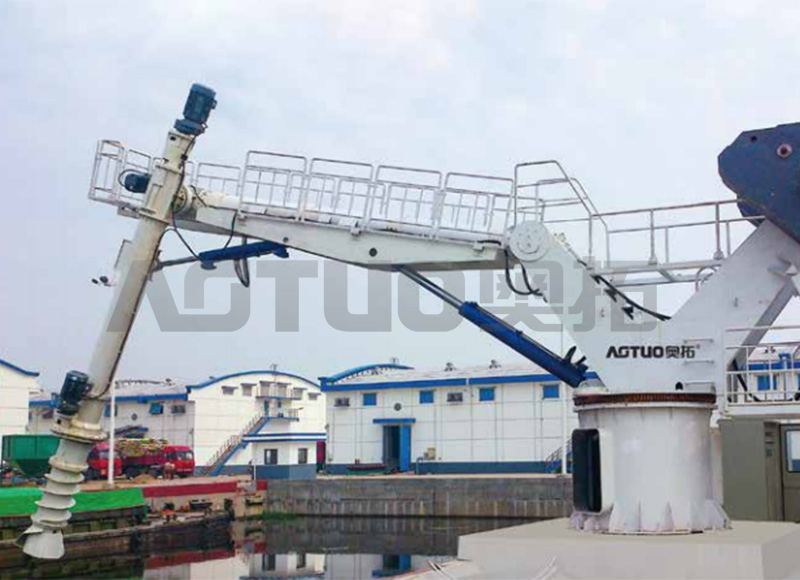
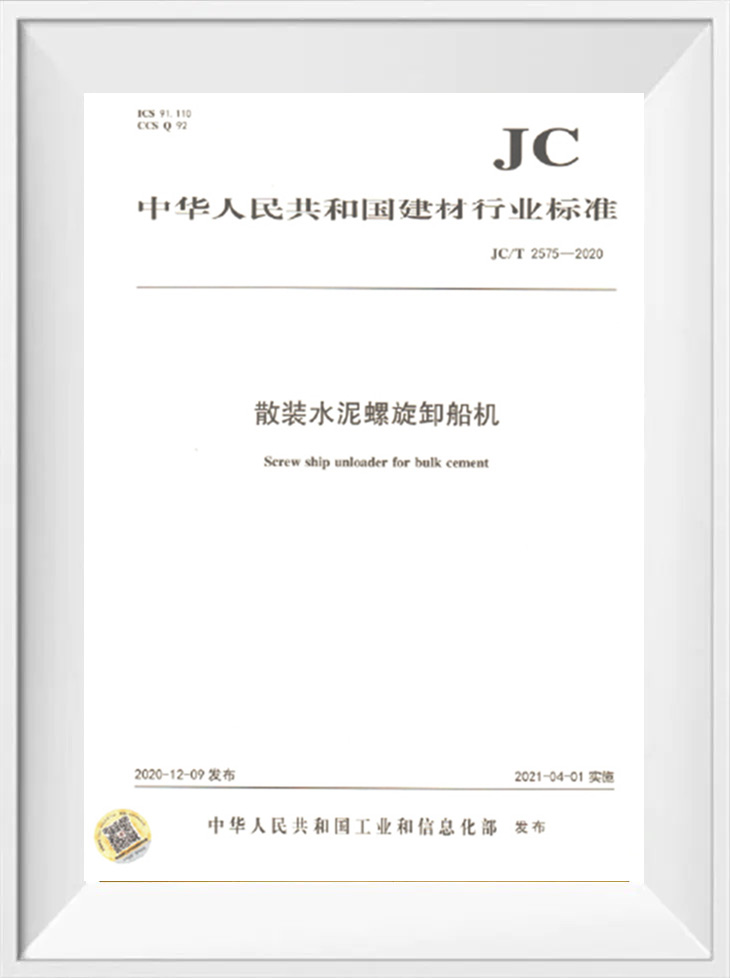
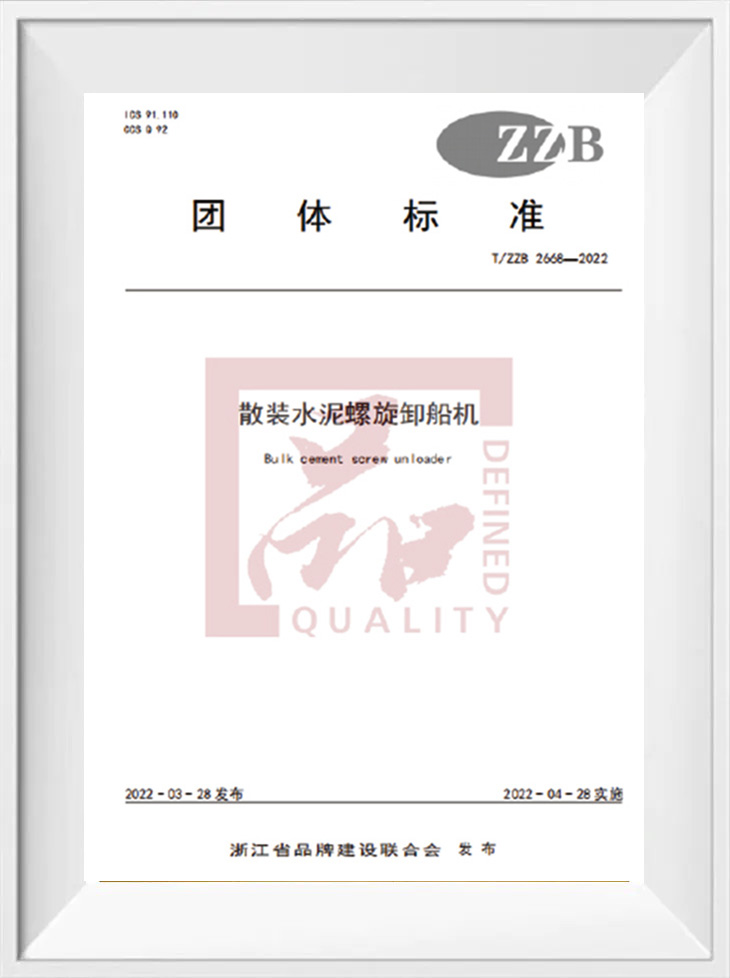
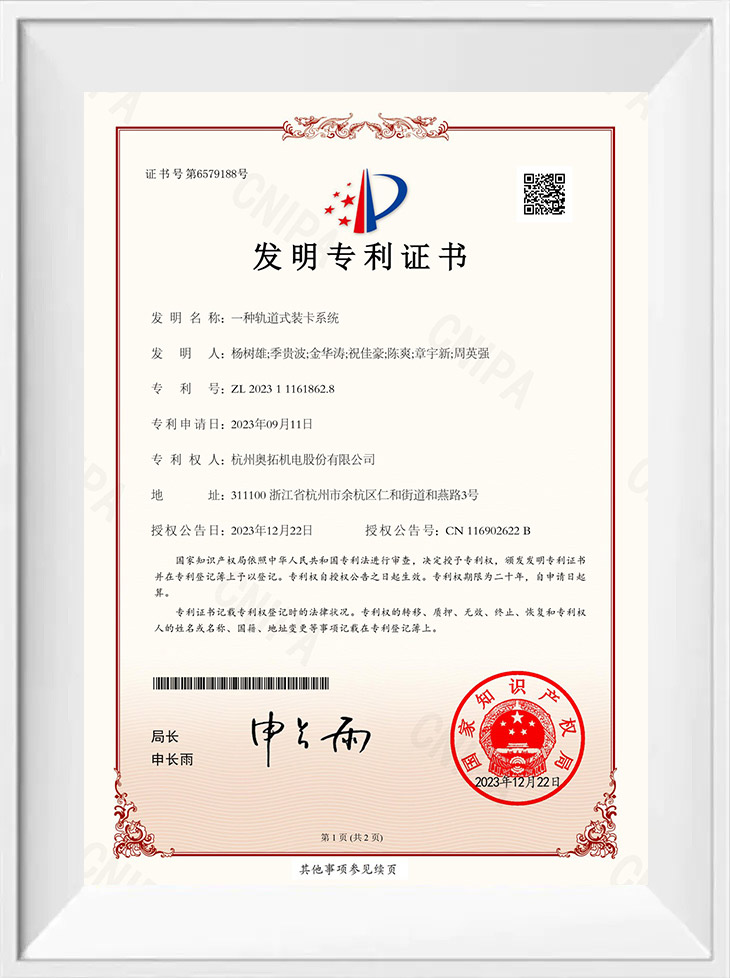
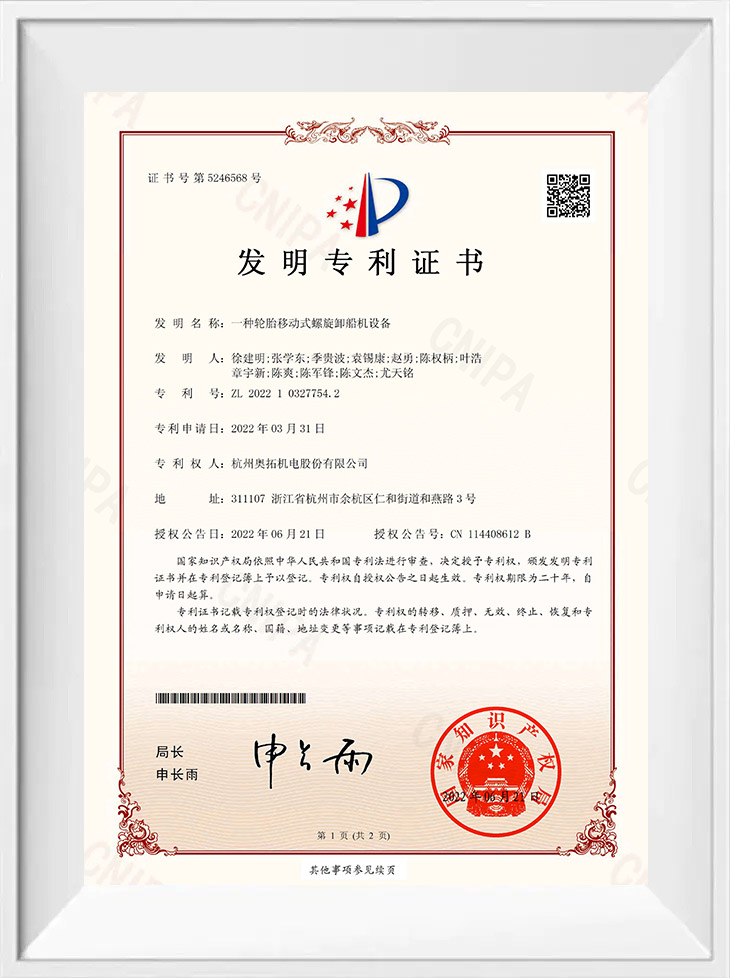
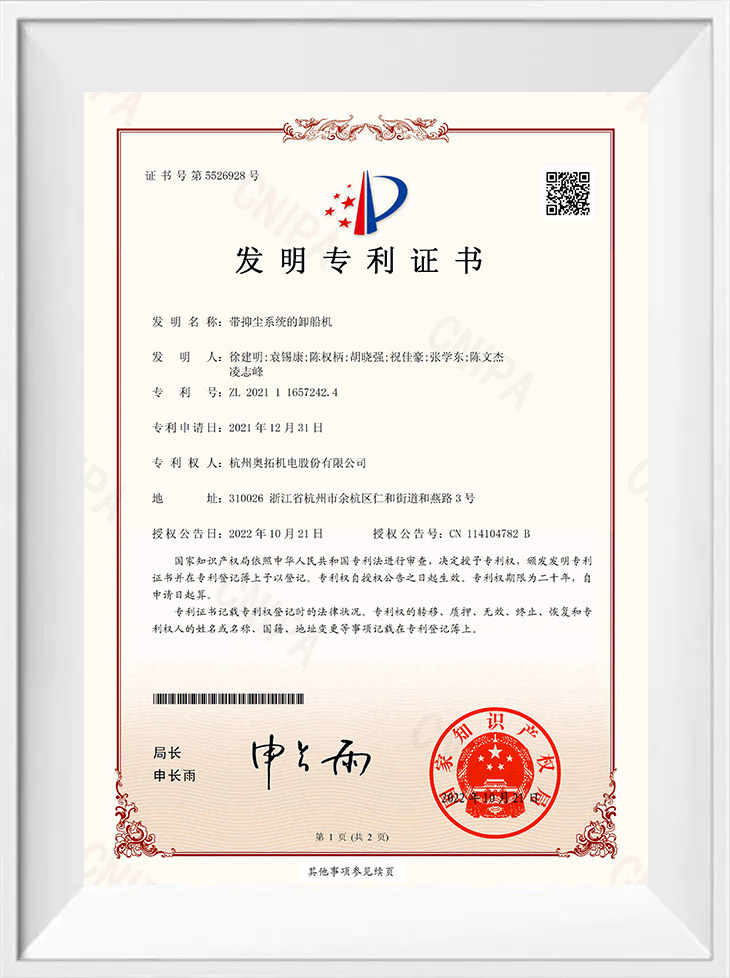
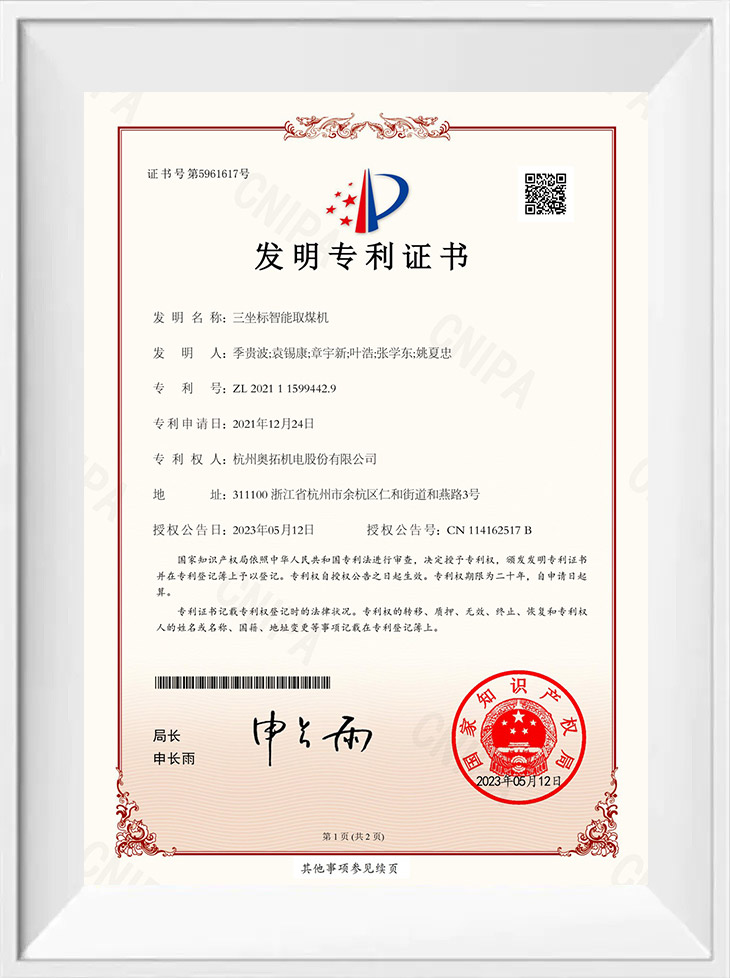
Hangzhou Aotuo Mechanical and Electrical Co., Ltd. (AOTUO) manufactures the ATSL-A fixed-type environmentally-friendly clinker unloading crane / screw ship unloader for dedicated berths handling clinker, coal, stone powder, aggregates, corn and soybeans. The machine is a stationary screw-type unloader with a fixed pedestal, articulated boom and enclosed screw conveying, configured for 400–1,000 t/h and vessels of 1,000–5,000 DWT.
As a China-based ATSL-A Fixed-type environmentally-friendly clinker unloading craneScrew Ship Unloader manufacturer, AOTUO builds the unit around the berth layout, material characteristics and downstream conveyor interface, then supports installation, commissioning and operator training through handover.
Where the ATSL-A Fits in Port Discharge
The ATSL-A is a fixed-pedestal screw unloader for terminals that discharge small to medium bulk carriers at one dedicated berth. Because the pedestal is bolted to a reinforced concrete foundation instead of a rail track, the berth needs no rail infrastructure, which suits confined quays, river ports and single-berth cement or grain terminals.
The machine collects material with a feeder, lifts it through the vertical screw, and transfers it to the dock conveyor through a corrugated-edge belt conveyor with buckets. The enclosed conveying path and integrated dust collection keep the working area within the emission and noise limits required by environmentally regulated ports.
Technical Specifications
| Parameter |
Value |
| Unloading capacity |
400–1,000 t/h |
| Applicable vessel size |
1,000–5,000 DWT |
| Unloading materials |
Clinker, coal, stone powder, aggregates, corn, soybeans and similar bulk materials |
| Horizontal arm slewing |
±135° |
| Horizontal arm elevation |
30° up / 30° down |
| Vertical arm swing |
30° inward / 40° outward |
| Energy consumption |
<0.8 kWh/t |
| Noise / dust emission |
≤85 dB / ≤10 mg/m³ |
| Installation type |
Fixed pedestal, no rail foundation required |
Material Handling and Application Fit
Capacity is rated on clinker at a bulk density of about 1.4 t/m³. Coal at roughly 0.8 t/m³, aggregates at 1.6 t/m³ and grain at 0.75 t/m³ change the effective throughput, so we confirm the design working point against the actual material before fixing screw speed and drive power.
- Cement terminals: clinker discharge from 1,000–5,000 DWT vessels into the existing dock conveyor.
- Coal receiving ports: coal discharge for power generation and industrial users.
- Aggregate terminals: stone powder and aggregates handling with dust-controlled transfer points.
- Grain ports: corn and soybean unloading with adjustable screw speed and dust settings.
- Multi-material terminals: one machine covering several cargo types through changeover settings.
For abrasive cargo such as clinker and coal, screw flighting is hardfaced and wear parts are selected according to material abrasiveness. Maximum lump size is 80 mm for clinker, 100 mm for coal and 50 mm for aggregates, with moisture content below 5% for stable flow.
Configuration Options
We configure each ATSL-A around the berth, the vessel mix and the downstream conveying system rather than supplying a single fixed variant. The main choices are:
- Screw design: 550–900 mm diameter, pitch/diameter ratio 0.85, 30–110 RPM variable frequency drive, with hardfaced flighting for abrasive materials.
- Dust control: baghouse filter with PTFE membrane bags, three-stage capture at the screw intake shroud, transfer chute and discharge hopper, plus explosion venting for combustible dust.
- Power supply: 380–690 V, 50/60 Hz three-phase, installed motor power 400–750 kW, cable connection via junction box at the pedestal base.
- Control and monitoring: variable frequency drive for flow control and a remote monitoring and diagnostic interface for integration with the terminal control room.
- Discharge interface: corrugated-edge belt conveyor with buckets connecting to the dock conveyor system.
Where the project needs a mobile machine instead of a fixed pedestal, our range includes the 1000-70000 DWT 200-1500t/h Rail mobile Screw Ship Unloader and the 1000-70000 DWT 200-1500t/h Tire Mobile Screw Ship Unloader. For larger clinker terminals, the Environmentally Friendly Cement Clinker Ship unloader range covers 500–100,000 DWT and 300–1,500 t/h.
Installation, Commissioning and Acceptance
The fixed pedestal requires a reinforced concrete foundation designed for the equipment weight and dynamic loads. We provide foundation dimensions and anchor bolt patterns with the engineering drawings, and soil bearing capacity and seismic conditions are factored into the foundation design.
The machine is factory assembled and tested before shipment. On-site work covers pedestal mounting, boom assembly and electrical connection, followed by commissioning. Acceptance includes a factory acceptance test at 100% capacity, an on-site 8-hour continuous run with actual material, and dust emission validation against local standards.
Operating environment is rated for ambient temperatures of −20°C to +45°C, operating wind up to 18 m/s and survival wind up to 50 m/s with the boom stowed.
Maintenance and Serviceability
Wear-part access is planned around the operating schedule so that inspection does not interrupt the berth window. The recommended schedule is:
- Screw flighting inspection every 400 operating hours.
- Liner plate measurement at 800-hour intervals.
- Bearing lubrication every 200 hours.
- Complete screw assessment at 2,000 hours.
- Dust filter cleaning weekly during operation, with annual full system inspection.
Operator training is a 32-hour certification covering boom controls, the dust system, emergency procedures and material changeover, with annual refresher training. Spare parts supply and technical support are handled through AOTUO's service system.
Information We Use to Configure Your Solution
To prepare a configuration and quotation for the ATSL-A, we work from the project data below. Missing items are confirmed during technical clarification rather than assumed.
| Project Input |
Why It Matters |
| Material type, bulk density, lump size, moisture |
Sets the capacity basis, screw design and wear protection |
| Vessel size range and hatch dimensions |
Confirms boom reach, slew and elevation coverage |
| Required unloading rate and berth window |
Fixes the working point and drive power |
| Dock conveyor interface and discharge height |
Matches the transfer conveyor and hopper arrangement |
| Power supply and control room interface |
Defines voltage, frequency and automation integration |
| Foundation and soil conditions |
Sizes the pedestal foundation and anchor layout |
| Dust and noise limits, local permits |
Confirms dust collection and enclosure scope |
Frequently Asked Questions
What materials can the ATSL-A unloader handle?
The ATSL-A handles clinker, coal, stone powder, aggregates, corn, soybeans and similar bulk materials. Screw speed and dust collection settings are adjusted for each material, and wear parts are selected according to abrasiveness.
What are the foundation requirements for fixed installation?
The fixed pedestal requires a reinforced concrete foundation designed to support the unloader's weight and dynamic loads. Foundation dimensions and anchor bolt patterns are provided with the engineering drawings, and soil bearing capacity and seismic considerations are included in the design.
How does the dust collection system achieve ≤10 mg/m³?
The system uses three-stage dust capture at the screw intake shroud, transfer chute and discharge hopper. A pulse-jet baghouse filter with PTFE membrane bags achieves 99.95% efficiency for particles above 1 micron, and differential pressure monitoring triggers automatic cleaning cycles.
What is the recommended maintenance schedule?
Screw flighting inspection every 400 operating hours, liner plate measurement at 800-hour intervals, bearing lubrication every 200 hours, complete screw assessment at 2,000 hours, weekly dust filter cleaning during operation and an annual full system inspection.
How is capacity affected by different materials?
Capacity is rated on clinker at about 1.4 t/m³. Coal at 0.8 t/m³, aggregates at 1.6 t/m³ and grain at 0.75 t/m³ change the effective throughput, so we confirm the design working point against the actual material before finalizing the configuration.
What does commissioning include?
Commissioning includes a factory acceptance test at 100% capacity, an on-site 8-hour continuous run test with actual material, and dust emission validation per local standards, followed by operator training and handover documentation.

 EN
EN English
 中文简体
中文简体 Français