Type ATSL-B Track-Type Environmentally Friendly Clinker Spiral Ship Unloader
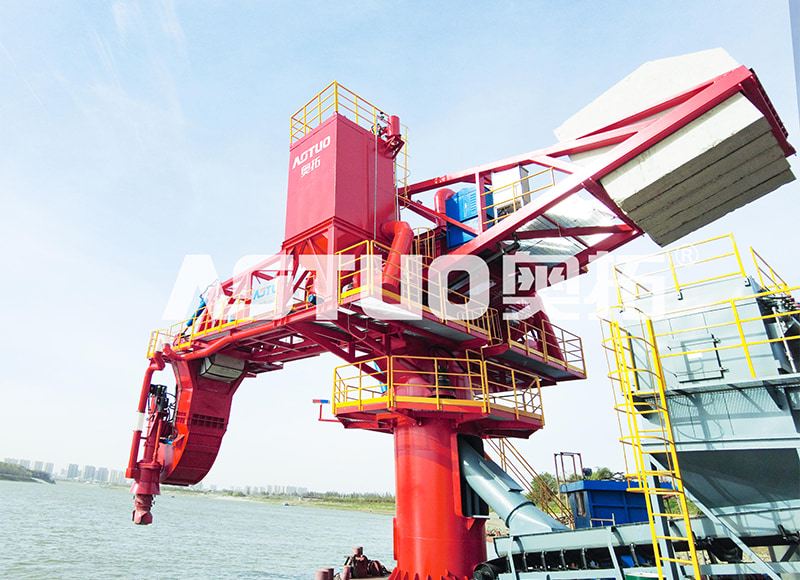
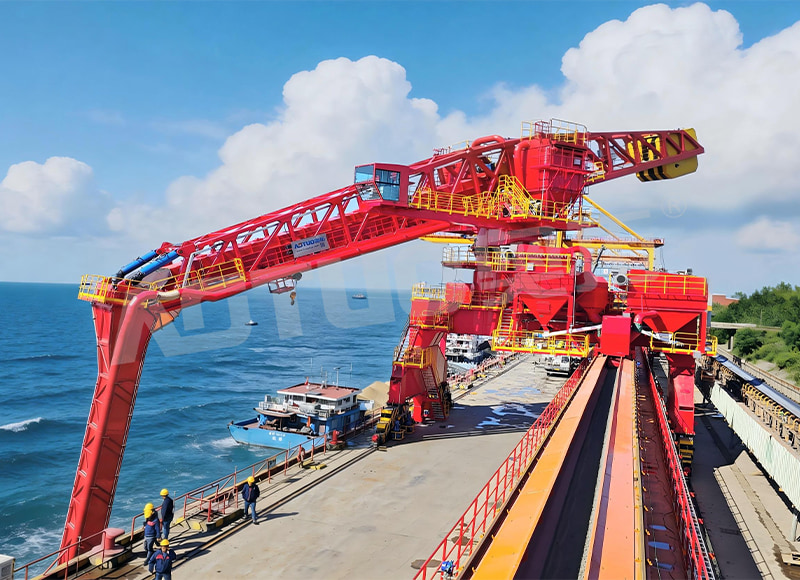
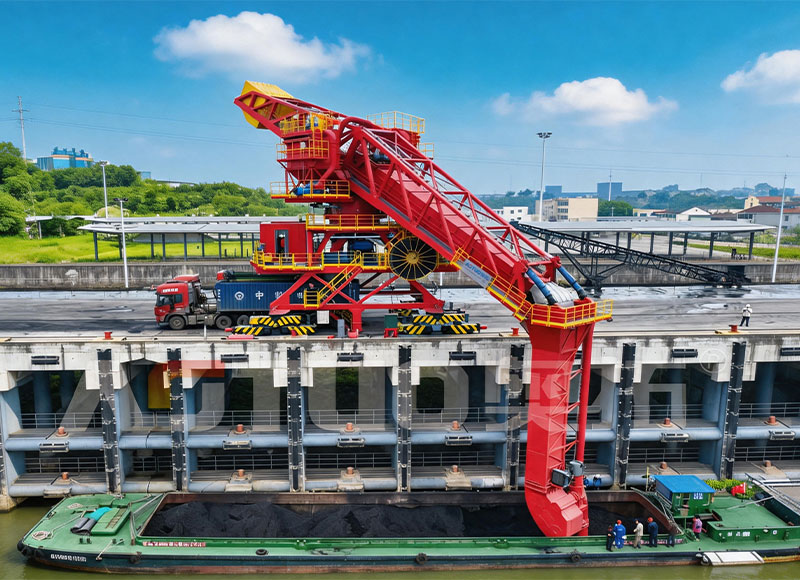
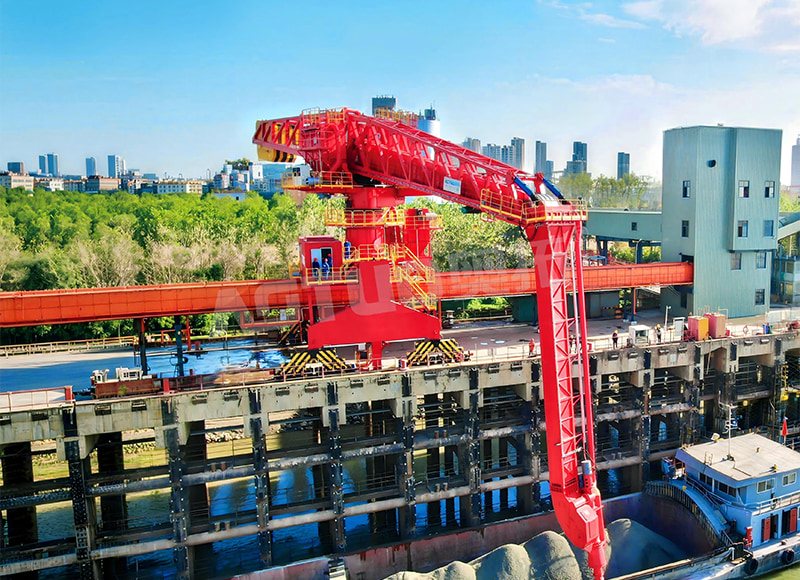
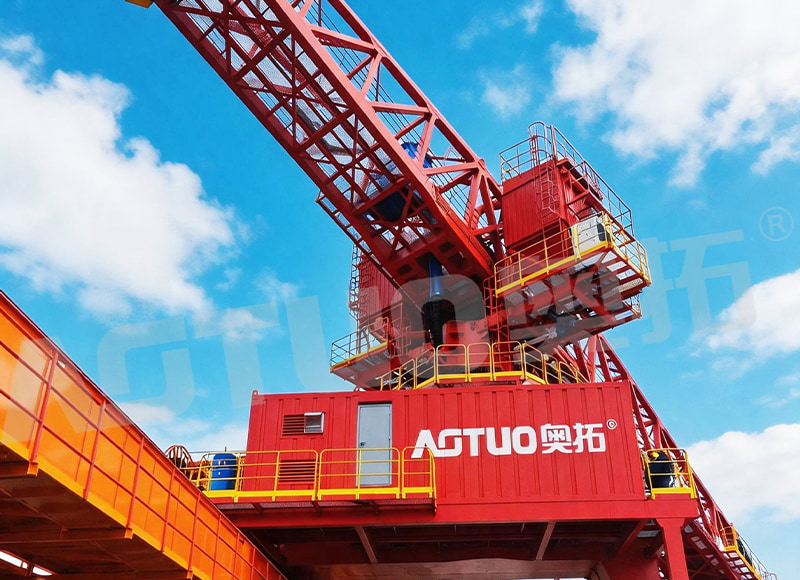
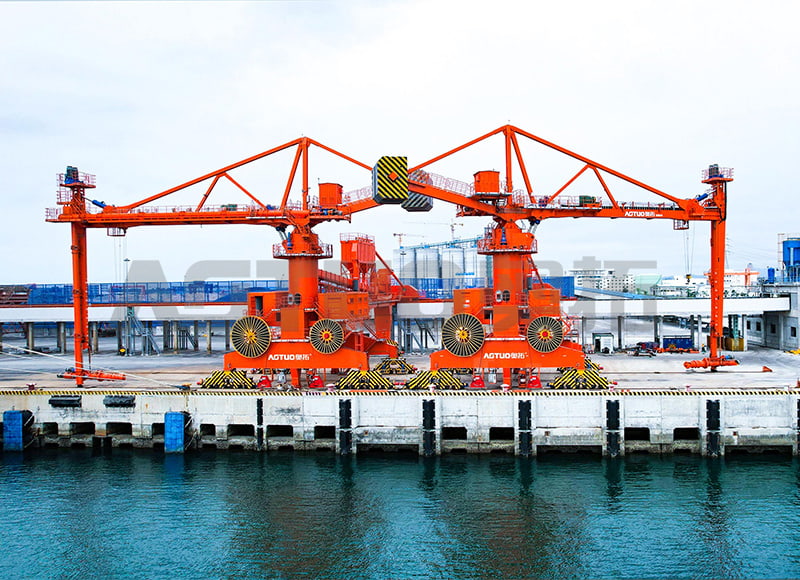
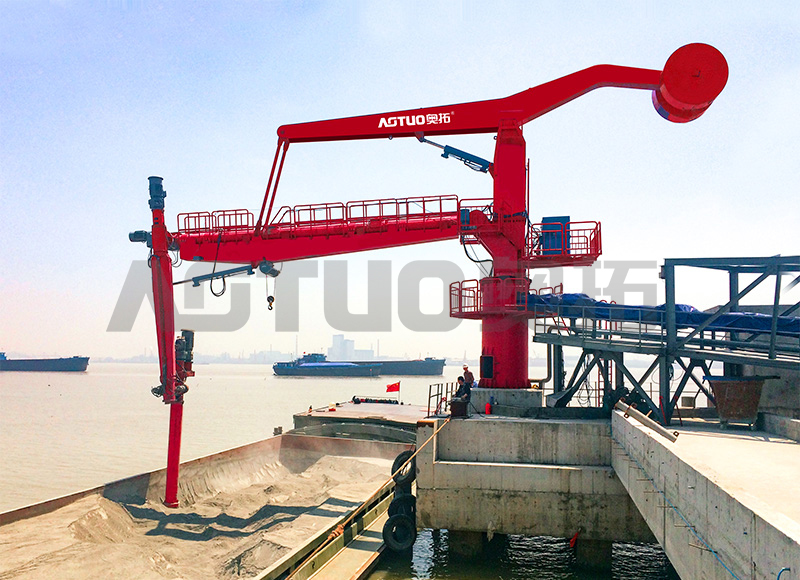
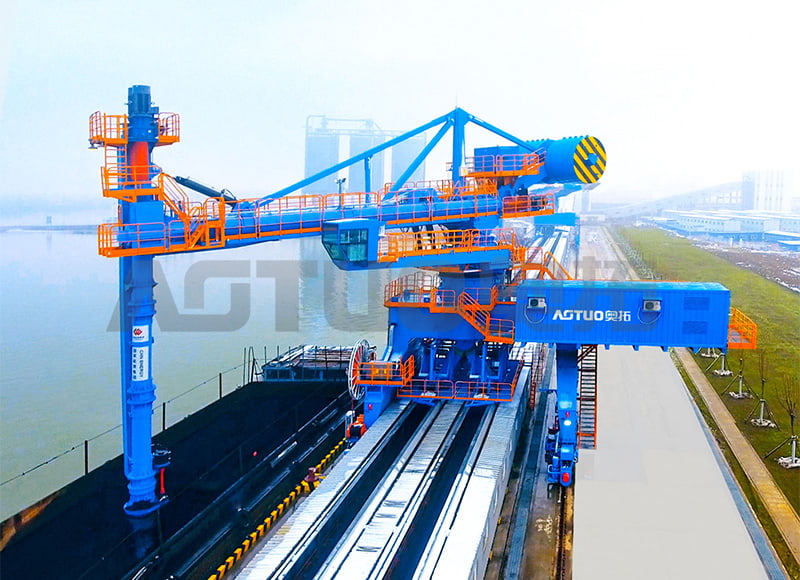
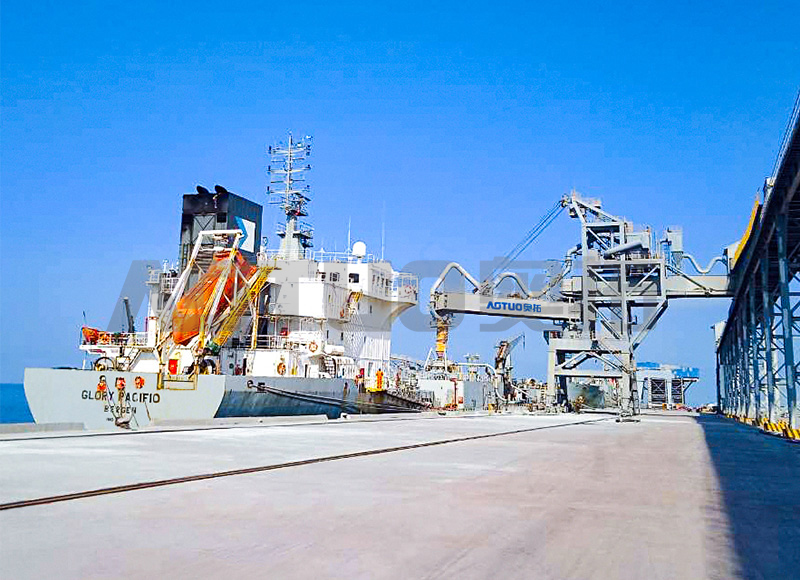
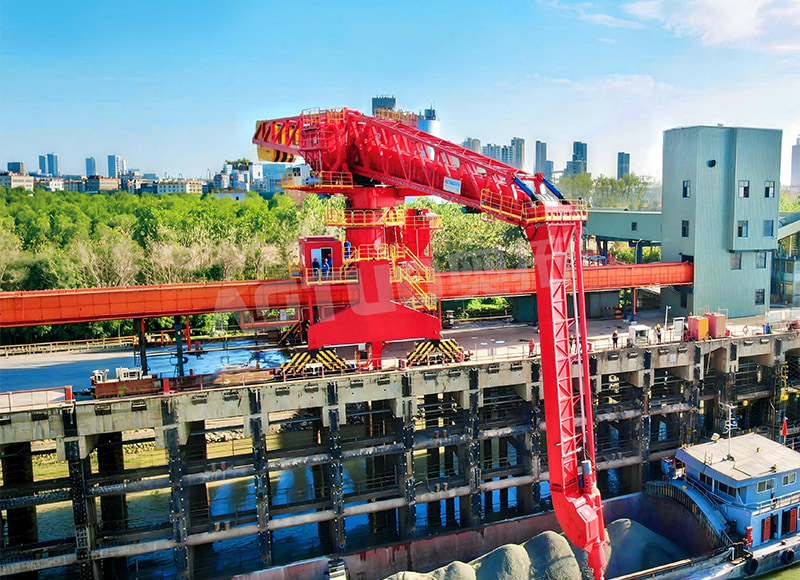
Hangzhou Aotuo Mechanical and Electrical Co., Ltd. (AOTUO) manufactures the Type ATSL-B track-type environmentally friendly clinker spiral ship unloader, a rail-mounted continuous discharge machine for clinker, coal, stone powder, aggregates, corn, soybeans and similar dry bulk materials. As a Type ATSL-B track-type environmentally friendly clinker spiral Ship Unloader manufacturer, we build the ATSL-B around a fully enclosed screw conveying principle that replaces grab operation with a continuous, dust-controlled process.
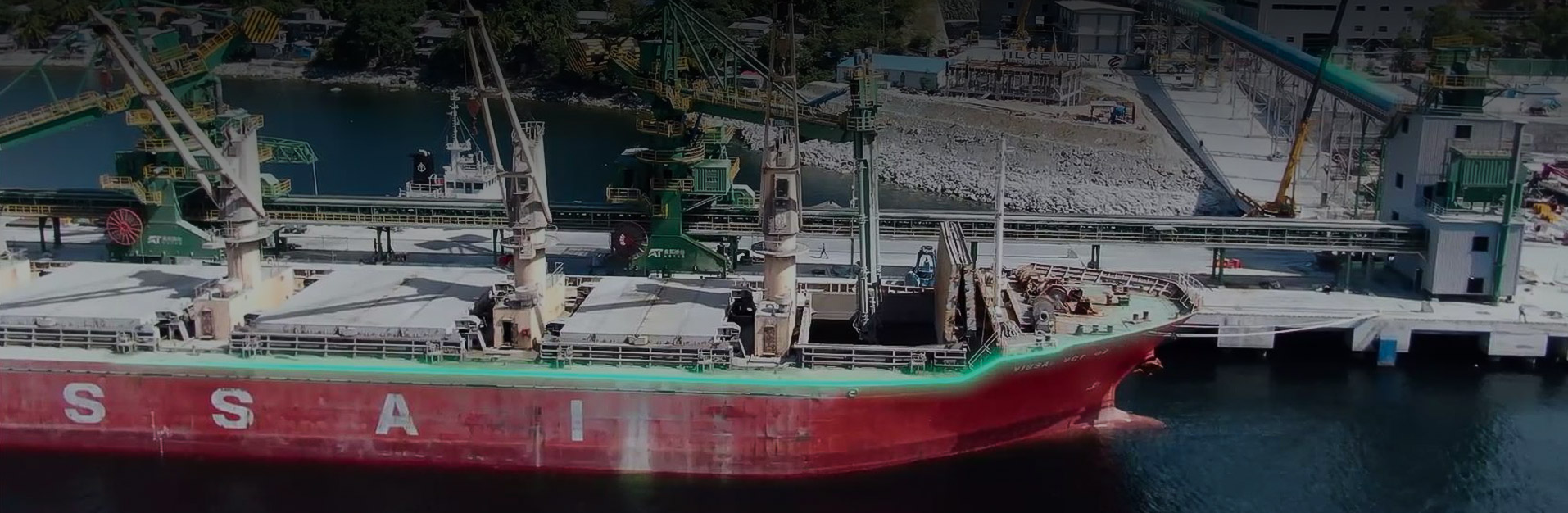
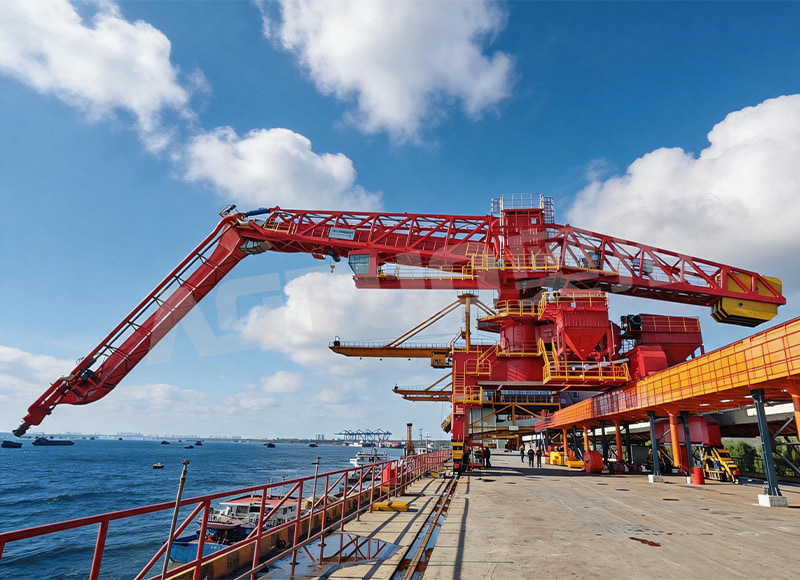
The ATSL-B serves vessels from 1,000 to 100,000 DWT at capacities of 400 to 1,000 metric tons per hour. Its rail-mounted bogie allows one unit to transfer between berths, making it suitable for large cement terminals, coal import facilities, multi-berth ports, aggregate yards and grain hubs that need flexible, high-capacity unloading with strict emission control.
Operating Principle and Environmental Performance
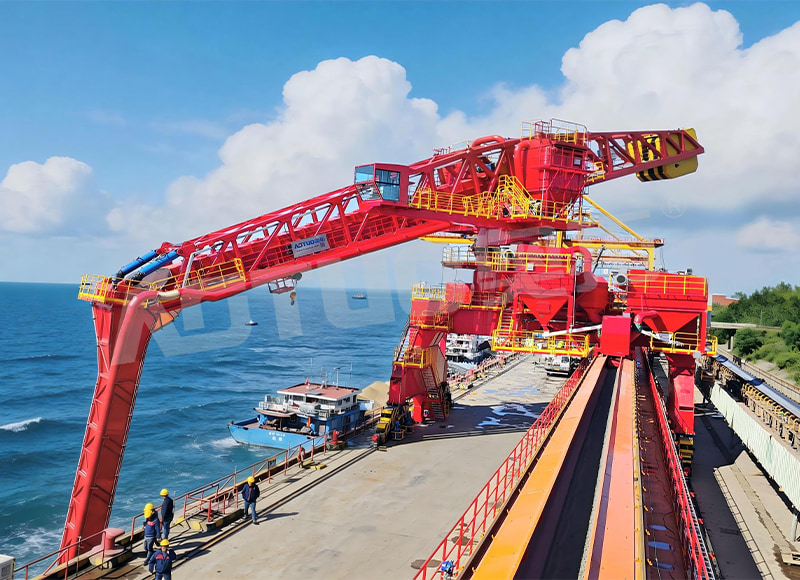
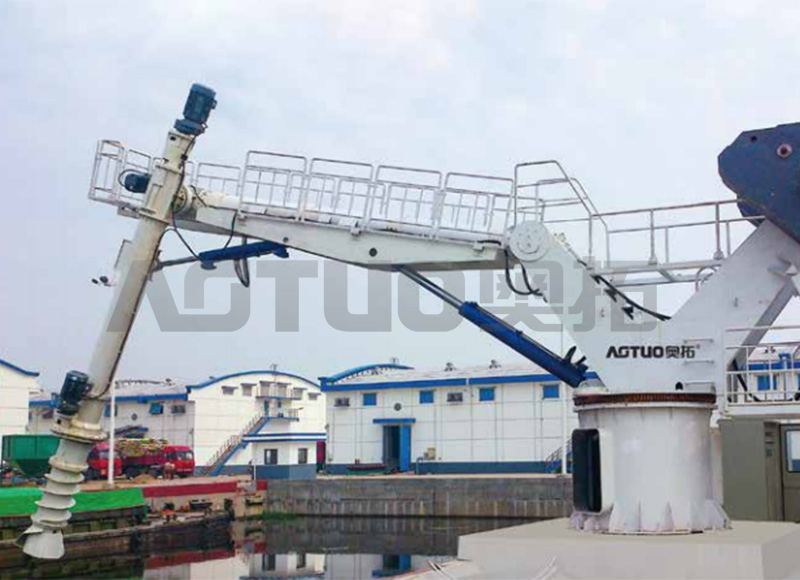
The ATSL-B uses an articulated boom with a horizontal arm and a vertical arm. The horizontal arm slews ±135° and elevates 30° upward and 30° downward; the vertical arm swings 30° inward and 40° outward. This geometry lets the screw intake reach the full hatch area and follow the changing freeboard as the vessel is discharged.
Material is captured at the screw intake shroud and conveyed through an enclosed screw system to the discharge hopper. Integrated dust collection at the intake, transfer chute and discharge hopper maintains dust emission at or below 10 mg/m³, while noise at the operator position is held to 85 dB or less. Energy consumption is below 0.8 kWh per metric ton under the stated capacity basis.
Technical Specifications
| Parameter |
Specification |
| Capacity |
400 – 1,000 t/h |
| Applicable vessel size |
1,000 – 100,000 DWT |
| Unloading materials |
Clinker, coal, stone powder, aggregates, corn, soybeans and similar bulk materials |
| Horizontal arm slewing |
±135° |
| Horizontal arm elevation |
30° up / 30° down |
| Vertical arm swing |
30° inward / 40° outward |
| Energy consumption |
<0.8 kWh/t |
| Noise level |
≤85 dB at operator position |
| Dust emission |
≤10 mg/m³ with integrated dust collection |
| Movement type |
Rail-mounted bogie, transfer between berths |
Configuration Options and Line Integration
We configure the ATSL-B around the required working point, material characteristics and terminal layout. The screw diameter ranges from 550 to 900 mm with a pitch-to-diameter ratio of 0.85 and variable frequency drive control from 30 to 110 RPM. Hardfaced flighting is available for abrasive clinker and coal, and wear parts are selected according to material abrasiveness.
The rail-mounted bogie uses four-point support with a rail gauge of 6,000 to 8,000 mm and a foundation load rating of 35 tonnes per wheel. Rail straightness tolerance is ±3 mm over 10 m. Power supply is 380–690 V, 50/60 Hz three-phase, with installed motor power of 400–750 kW. Cable reel or conductor bar systems are available for rail travel.
For automation integration, the ATSL-B includes a remote monitoring and diagnostic interface and variable frequency drive for flow control. The control system can be configured around the required line interface, including communication with terminal management systems and upstream or downstream conveying equipment.
Application Fit and Material Considerations
The ATSL-B is suited to large cement terminals unloading clinker from Panamax to Capesize vessels, coal import terminals serving power generation, multi-berth ports where one unit serves two to four berths, aggregate terminals handling stone powder and aggregates, and grain export hubs discharging corn and soybeans.
Material handling parameters include a maximum lump size of 80 mm for clinker, 100 mm for coal and 50 mm for aggregates. Moisture content below 5% supports optimal flow. Capacity values are based on clinker bulk density of 1.4 t/m³; for other materials, coal at 0.8 t/m³, aggregates at 1.6 t/m³ and grain at 0.75 t/m³, capacity is adjusted accordingly. The screw speed and dust collection settings can be tuned for each material.
Installation, Commissioning and Acceptance
Installation requires a rail foundation with the specified gauge and load rating, and a power supply matched to the installed motor power. The rail track length is customized per terminal, typically 200 to 800 meters depending on layout and vessel sizes. Transfer speed between berths is 10–15 m/min, with rail clamps engaging automatically during unloading.
Commissioning includes a factory acceptance test at 100% capacity and an on-site 8-hour continuous run test with actual material. Dust emission is validated per local standards. Operator training covers boom controls, dust system operation, emergency procedures and material changeover, with an annual refresher recommended.
Maintenance and Serviceability
Screw flighting inspection is recommended every 400 operating hours, liner plate measurement at 800-hour intervals, bearing lubrication every 200 hours, and a complete screw assessment at 2,000 hours. Dust filter cleaning is performed weekly during operation, with an annual full system inspection.
We support the ATSL-B with spare parts availability and technical service. The integrated predictive maintenance platform includes online fault diagnosis and predictive analysis to help plan maintenance and reduce unplanned downtime.
Information We Use to Configure Your Solution
To prepare a configuration and quotation for the ATSL-B, we need the following project inputs:
- Vessel size range (DWT) and typical cargoes
- Required unloading capacity (t/h) and material bulk density
- Material characteristics: lump size, moisture content, abrasiveness
- Terminal layout: rail length, number of berths, rail gauge
- Power supply available (voltage, frequency, phase)
- Dust emission and noise limits required by local regulations
- Automation and control interface requirements
- Environmental conditions: ambient temperature, wind speed
Our proposal is based on the working point, material and production target. We confirm the technical scope, supply boundary and acceptance criteria before manufacturing.
Related Equipment from Our Range
For projects requiring different mobility or capacity, we also manufacture the 1000-70000 DWT 200-1500t/h Rail mobile Screw Ship Unloader and the 500-200000 DWT 200-3000t/h Rail Mobile Screw Coal Ship Unloader. Our Environmentally Friendly Cement Clinker Ship unloader range covers additional configurations for clinker terminals.
Frequently Asked Questions
What materials can the ATSL-B unloader handle?
The ATSL-B handles clinker, coal, stone powder, aggregates, corn, soybeans and similar bulk materials. Screw speed and dust collection settings are adjusted for each material, and wear parts are selected based on abrasiveness.
How does the rail-mounted configuration benefit port operations?
A single rail-mounted unloader can serve multiple berths, reducing equipment count compared to fixed installations. Transfer between berths takes 5–10 minutes, and rail track length is customized from 200 to 800 meters depending on terminal layout.
What is the dust emission control system?
The system uses three-stage dust capture at the screw intake shroud, transfer chute and discharge hopper. A pulse-jet baghouse filter with PTFE membrane bags achieves high efficiency for particles above 1 micron, maintaining emission at or below 10 mg/m³.
What maintenance is required for the screw assembly?
Screw flighting inspection every 400 operating hours, liner plate measurement at 800-hour intervals, bearing lubrication every 200 hours, and complete screw assessment at 2,000 hours. Dust filter cleaning is weekly during operation.
What information do you need to prepare a proposal?
We need vessel size range, required capacity, material characteristics, terminal layout, power supply, emission limits and automation requirements. Our proposal is based on the working point, material and production target.

 EN
EN English
 中文简体
中文简体 Français