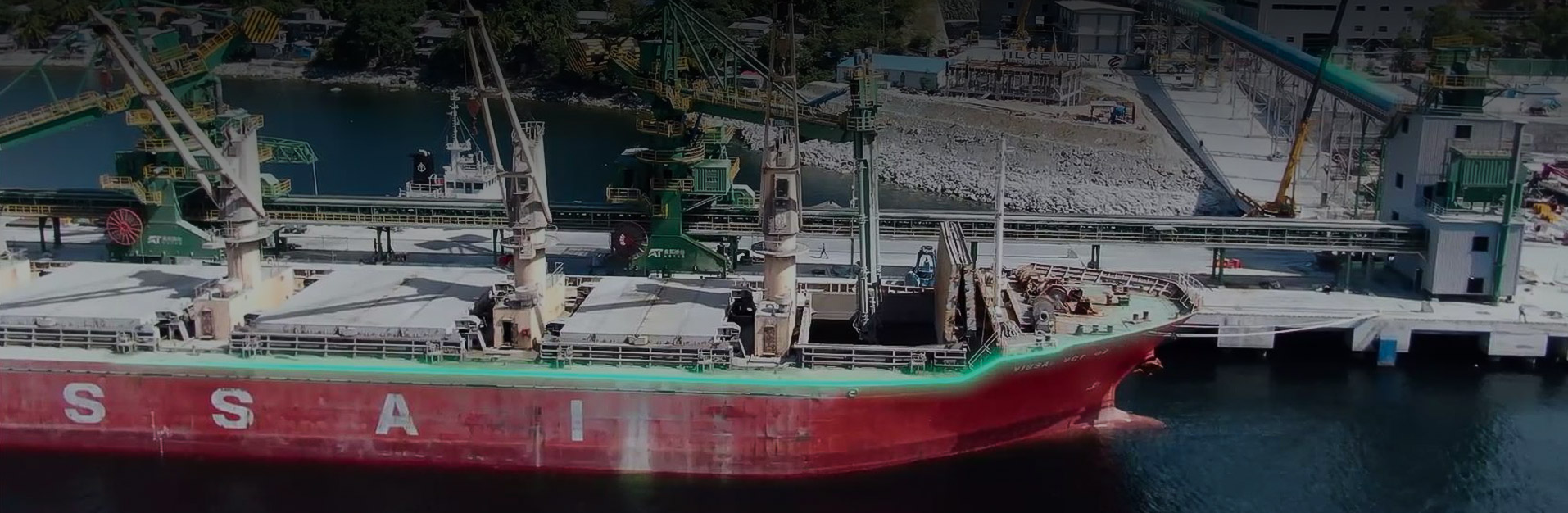
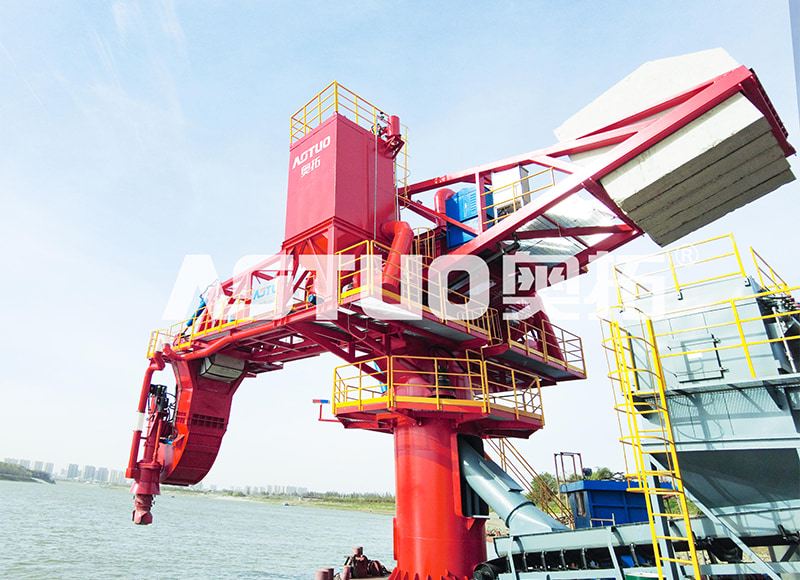
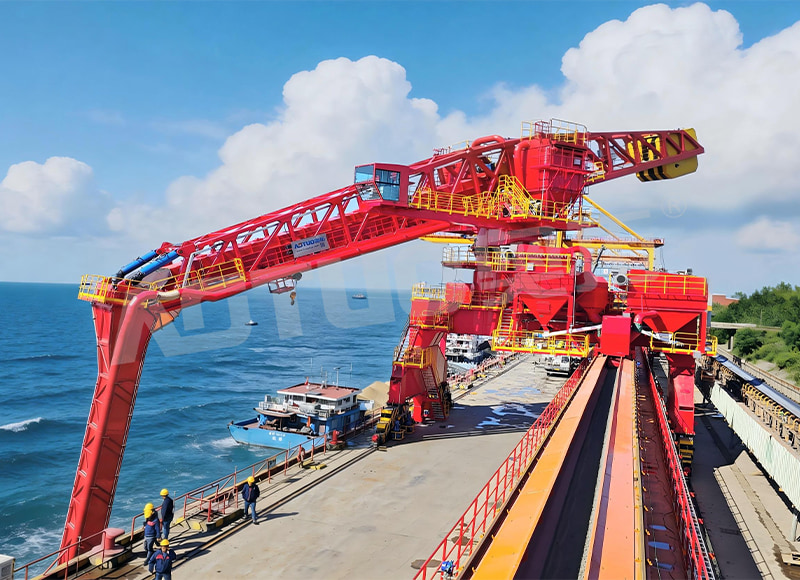
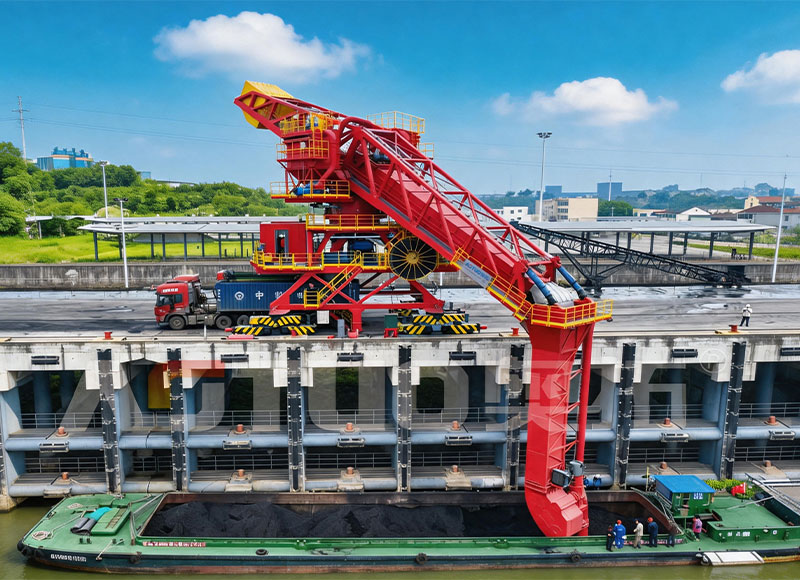
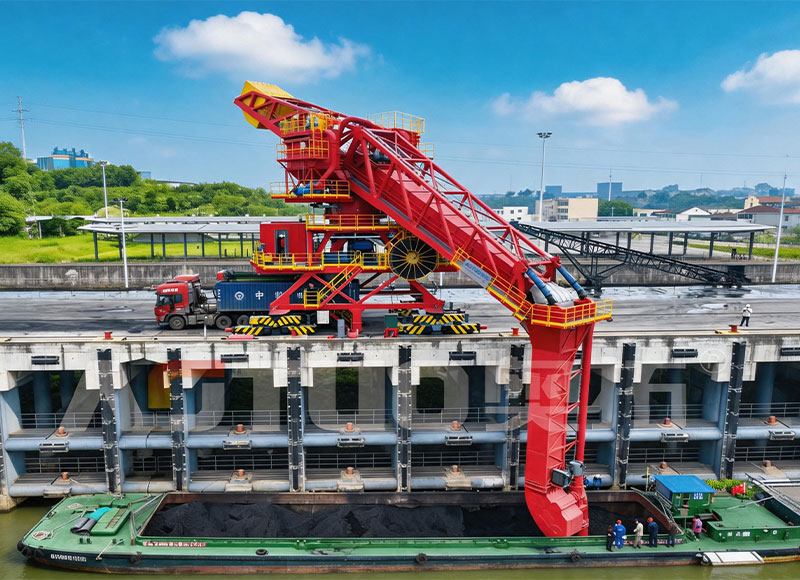
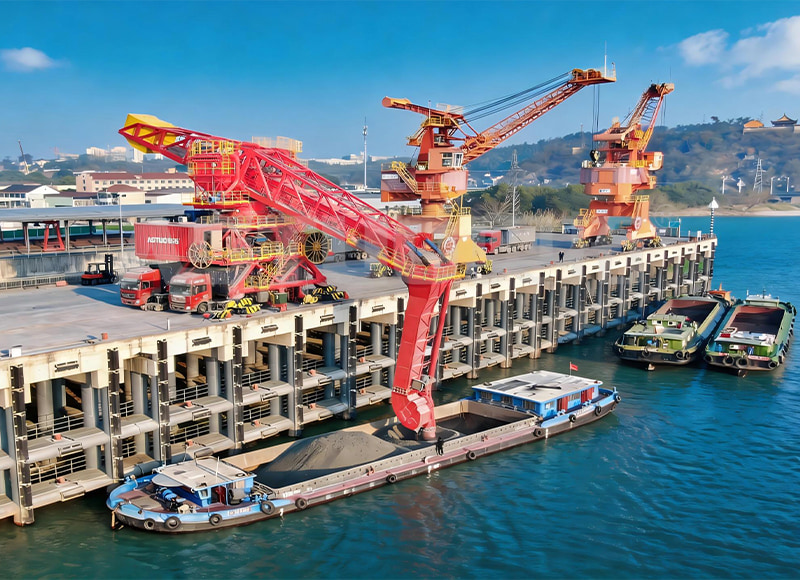
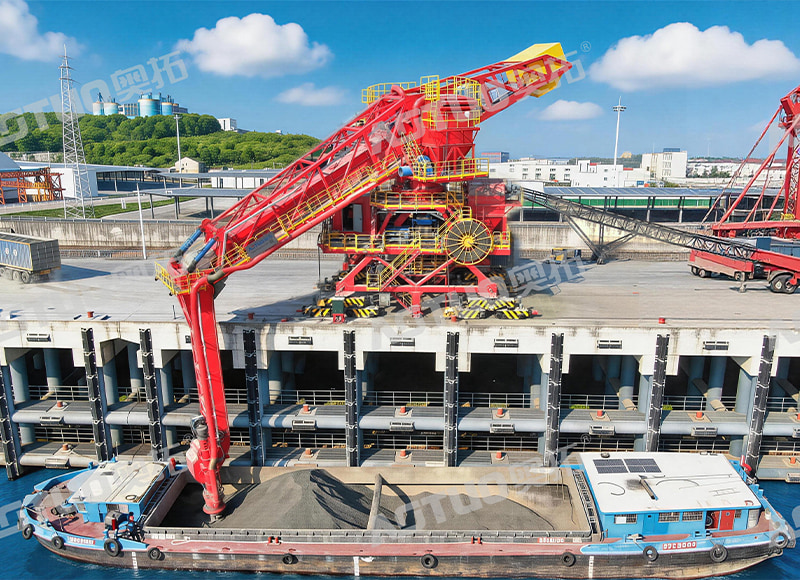
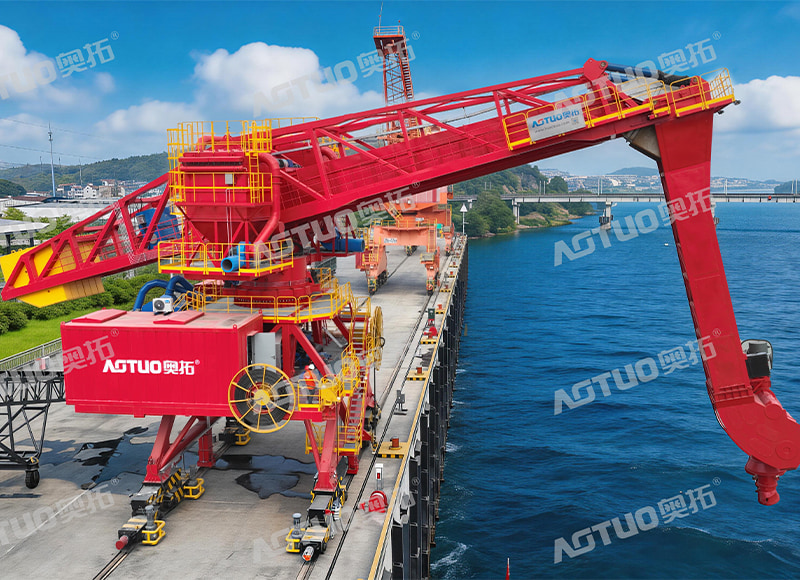
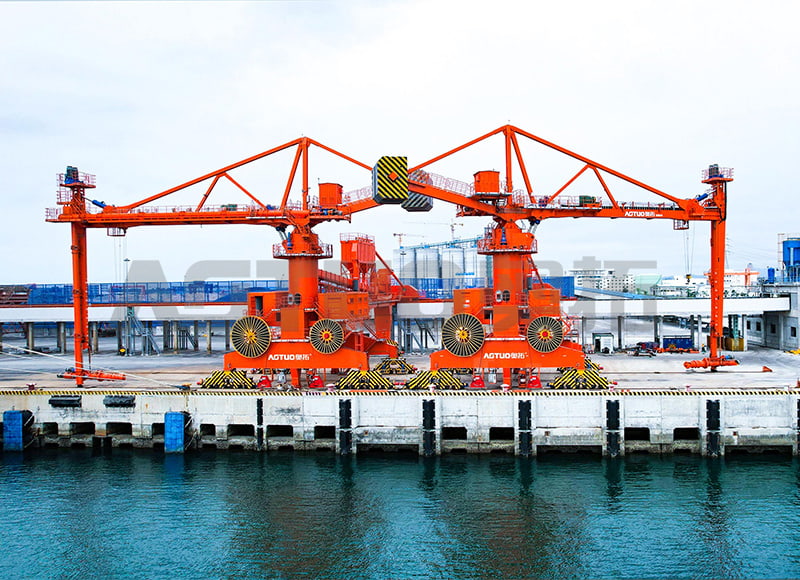
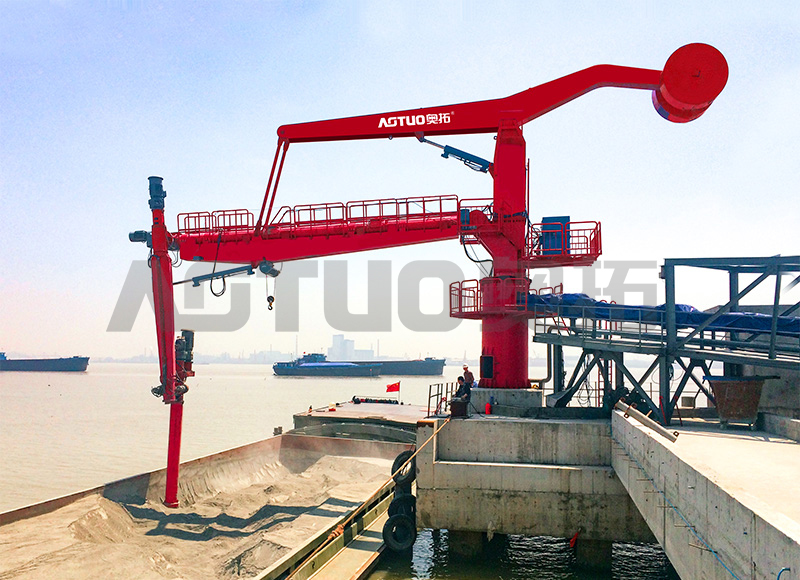
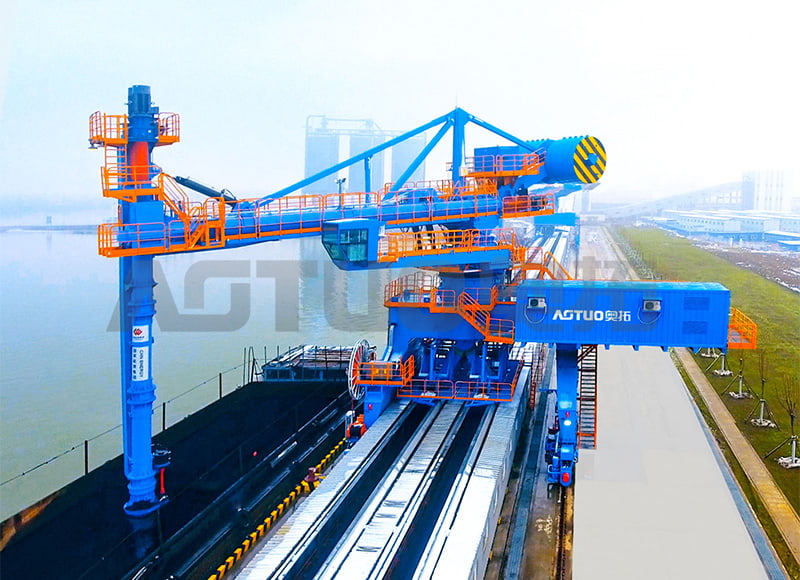
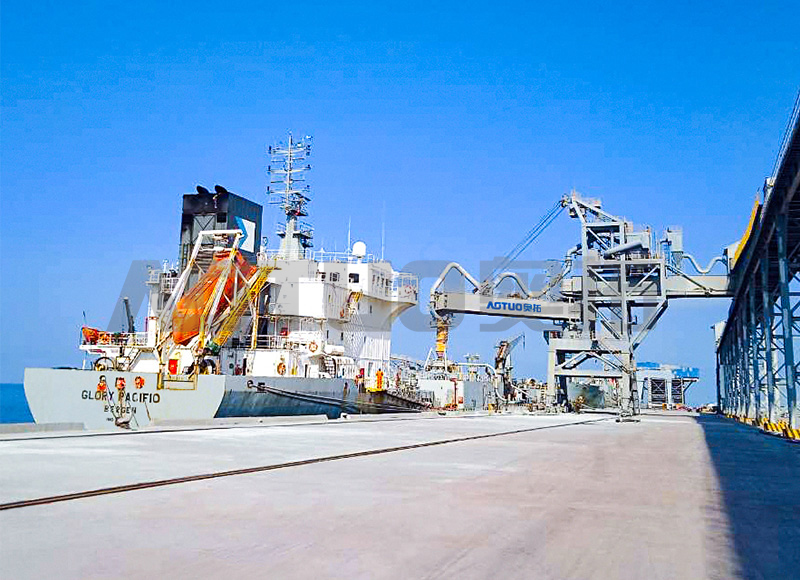
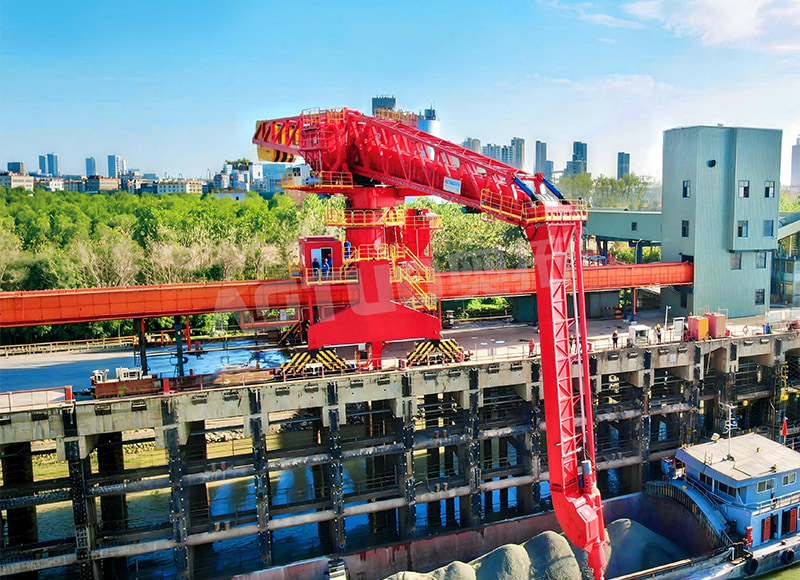
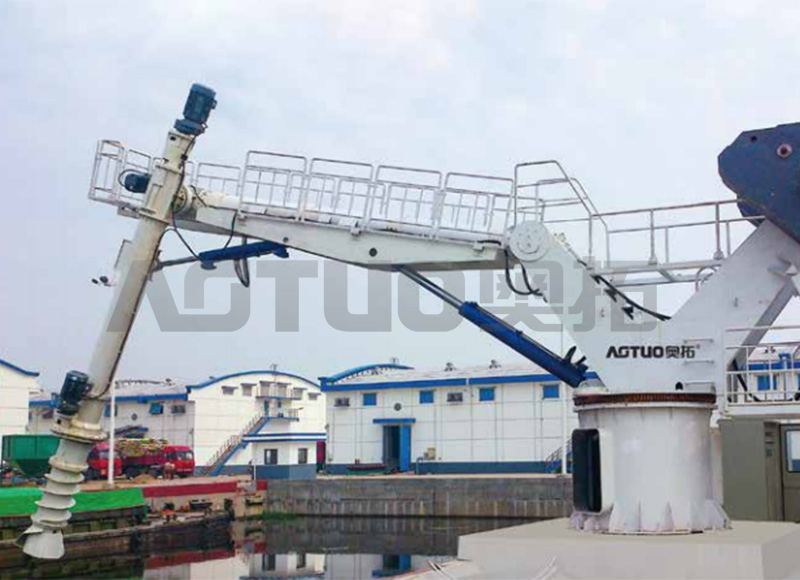
Hangzhou Aotuo Mechanical and Electrical Co., Ltd. (AOTUO) manufactures the Type ATSL-T Tire-type continuous Environment-friendly Multi-Material Ship Unloader, a self-propelled screw-type unloader built for terminals that need to discharge clinker, coal, stone powder, aggregates, corn and soybeans without committing to rail infrastructure.
The ATSL-T is part of our environmentally friendly screw unloader range, which also includes rail-mobile, fixed, vehicle-mounted and shipborne configurations. We design, manufacture, supply, install, commission and performance-test the complete unloading system, from the screw intake to the truck-loading interface.
Product Overview: ATSL-T Tire-Type Continuous Unloader
The ATSL-T is a tire-mounted, self-propelled continuous ship unloader. Its articulated boom and enclosed screw conveying system are engineered for dust-controlled discharge of free-flowing bulk materials at rates from 400 to 1,000 metric tons per hour. The machine serves vessels from 1,000 to 100,000 DWT, covering coasters through Capesize bulk carriers.
Because the chassis runs on pneumatic tires, no rail foundation is required. The unloader transfers between berths on paved surfaces and deploys hydraulic outriggers during operation to stabilize the machine and reduce tire load. This makes the ATSL-T suitable for multi-berth ports, temporary operations and terminals where civil works for rail would be impractical.
Technical Specifications
| Parameter |
Specification |
| Unloading capacity |
400 – 1,000 t/h |
| Applicable vessel size |
1,000 – 100,000 DWT |
| Unloading materials |
Clinker, coal, stone powder, aggregates, corn, soybeans and similar bulk materials |
| Horizontal arm slewing |
±135° |
| Horizontal arm elevation |
30° up / 30° down |
| Vertical arm swing |
30° inward / 40° outward |
| Energy consumption |
<0.8 kWh per metric ton |
| Noise level |
≤85 dB at operator position |
| Dust emission |
≤10 mg/m³ with integrated dust collection |
| Movement |
Tire-mounted, self-propelled, no rail required |
Material Handling and Application Fit
The ATSL-T is configured around the material being discharged. Clinker, coal, stone powder, aggregates and grain differ in bulk density, abrasiveness, lump size and moisture sensitivity, so screw speed, flighting material and dust collection settings are matched to the duty. Capacity ratings are based on clinker at 1.4 t/m³; for coal at 0.8 t/m³, aggregates at 1.6 t/m³ or grain at 0.75 t/m³, the throughput is adjusted accordingly.
- Clinker and cement terminals: hardfaced screw flighting resists abrasion; enclosed conveying keeps dust inside the system.
- Coal import terminals: the unloader discharges coal for power generation and industrial use, with explosion venting available for combustible dust.
- Aggregate and stone powder terminals: the screw and dust system handle higher-density, abrasive materials.
- Grain export hubs: corn and soybean unloading benefits from gentle screw handling and controlled dust release.
- Multi-berth ports: one tire-mounted unit can serve two to four berths without rail investment.
Configuration Options and Range Position
The ATSL-T sits within our broader screw ship unloader range. Where the ATSL-T prioritizes mobility and multi-material flexibility, other models address different project conditions:
| Model / Type |
Capacity |
Vessel Range |
Best Fit |
| ATSL-T tire-type |
400 – 1,000 t/h |
1,000 – 100,000 DWT |
Multi-berth terminals, no rail, mixed materials |
| Rail mobile screw ship unloader |
200 – 1,500 t/h |
1,000 – 70,000 DWT |
Fixed berth with rail, high throughput |
| Fixed screw ship unloader |
100 – 500 t/h |
600 – 15,000 DWT |
Dedicated berth, low civil cost |
| Vehicle mounted screw ship unloader |
150 – 500 t/h |
800 – 5,000 DWT |
Small ports, rapid deployment |
For projects that also require loading, we supply the rail mobile ship loader and auxiliary equipment including dust collectors, belt conveyors and air slides to complete the transfer system.
Controls, Automation and Line Integration
The ATSL-T uses variable frequency drives for screw speed control, allowing the operator to match discharge rate to the receiving conveyor or truck-loading station. The control system supports remote monitoring and diagnostic interfaces, and can be configured around the required line interface, including connection to a mobile bulk truck loading platform.
In a typical truck-loading arrangement, the unloader's bulk loading head connects to a mobile platform with two loading lanes. When one lane signals full load, the system automatically switches to the other lane, maintaining continuous discharge. The scope of work covers design, manufacturing, supply, transportation, installation, commissioning and performance testing.
Installation, Site Requirements and Commissioning
Site preparation is straightforward compared with rail-mounted machines. The ATSL-T operates on reinforced concrete pavement or compacted gravel with a load-bearing capacity of at least 15 t/m² and flatness within ±10 mm per 3 m. Hydraulic outriggers deploy during unloading to transfer weight directly to the ground.
- Power supply: 380–690 V, 50/60 Hz via trailing cable (150–250 m) or optional diesel generator. Installed motor power 400–750 kW.
- Material limits: max lump size 80 mm for clinker, 100 mm for coal, 50 mm for aggregates; moisture below 5% for optimal flow.
- Environment: ambient temperature -20°C to +45°C; operating wind ≤18 m/s; survival wind ≤45 m/s with boom stowed.
- Mobility: self-propelled transfer speed 2–4 km/h, turning radius ≤12 m, outriggers required during unloading.
Commissioning includes a factory acceptance test at 100% capacity, an on-site 8-hour continuous run with actual material, and dust emission validation. Operator training covers boom controls, tire maneuvering, outrigger deployment, dust system operation and emergency procedures.
Quality, Standards and Service Support
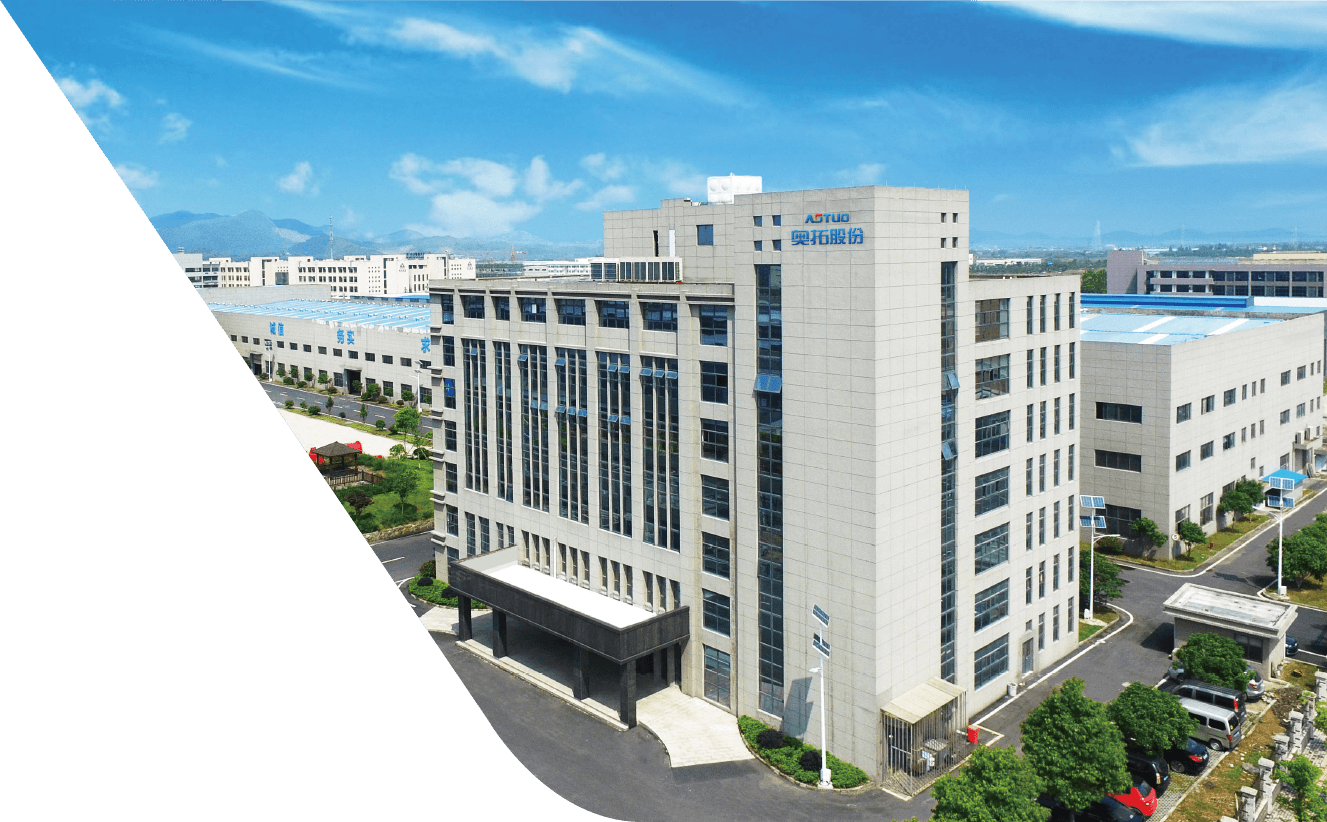
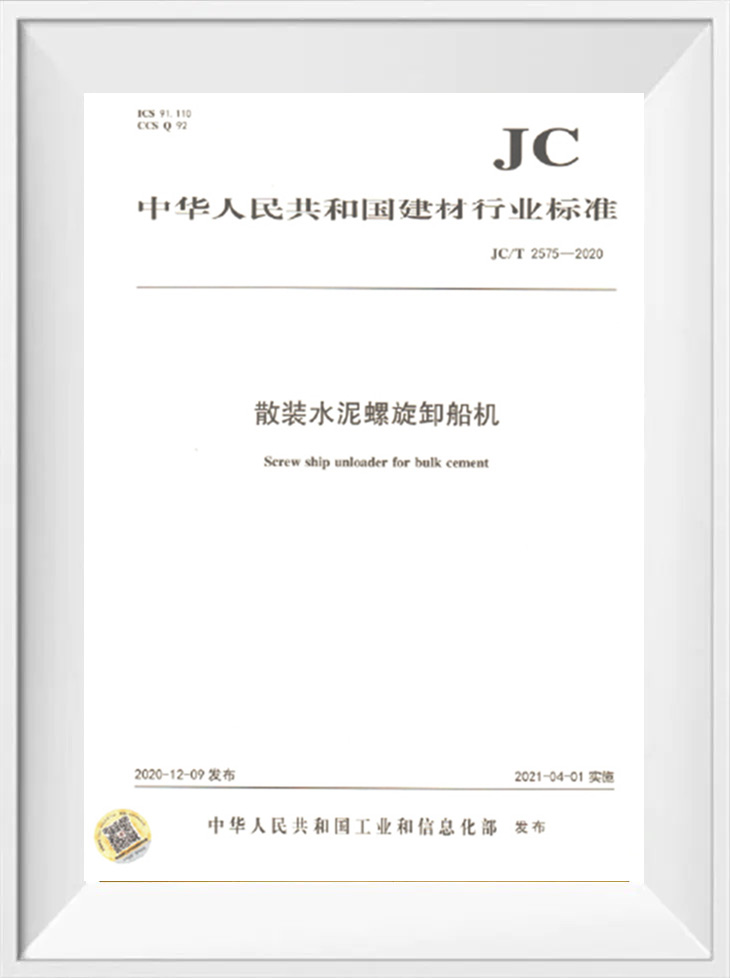
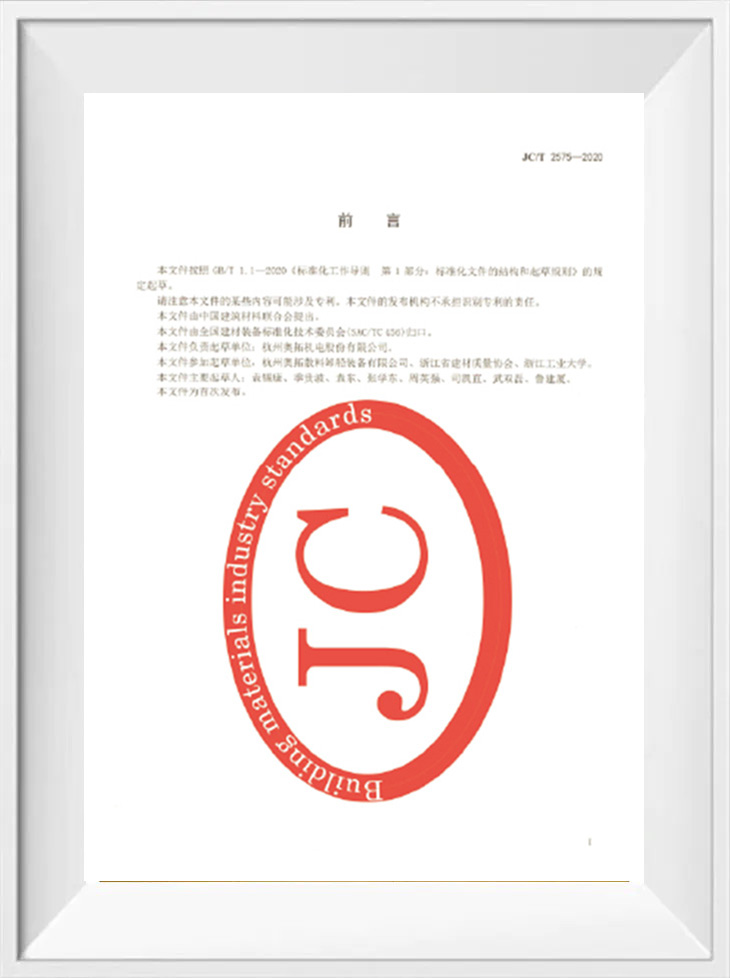
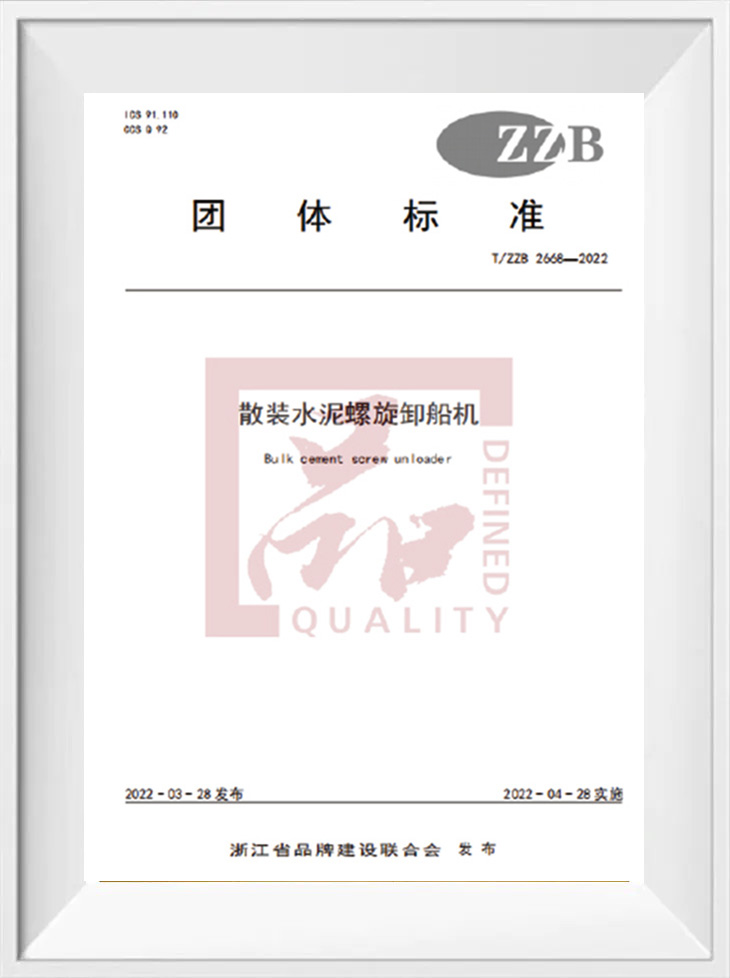
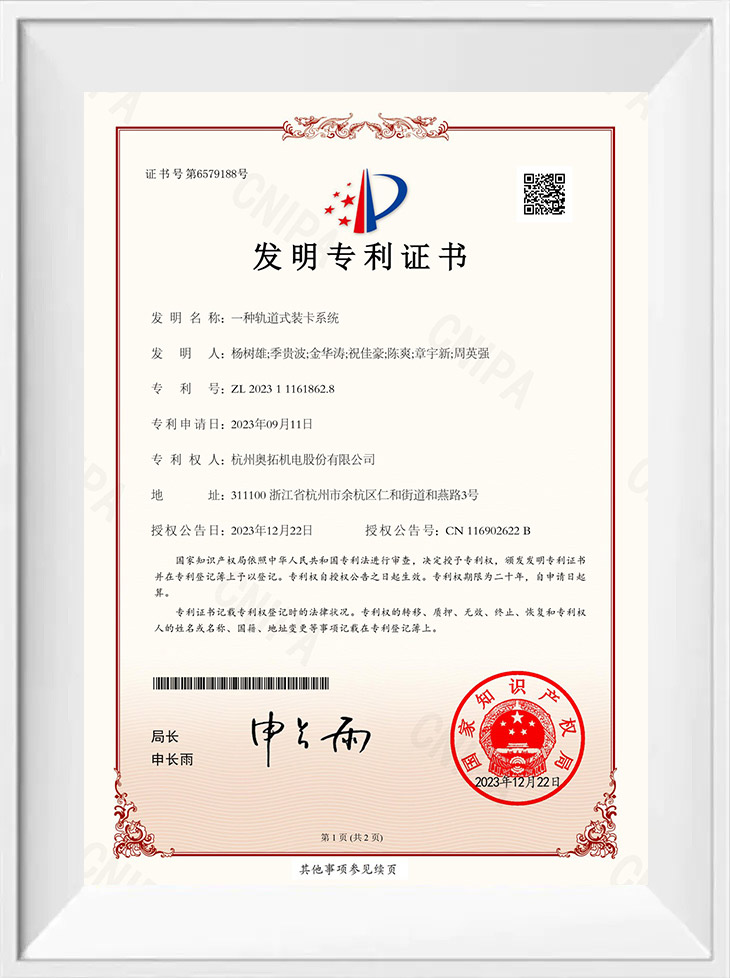
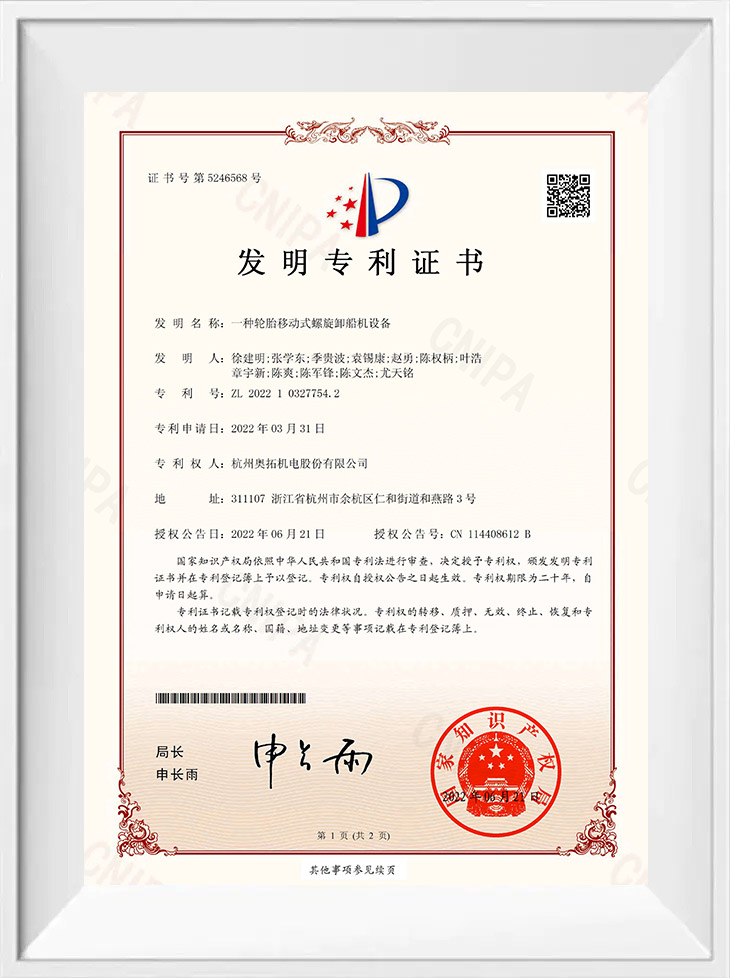
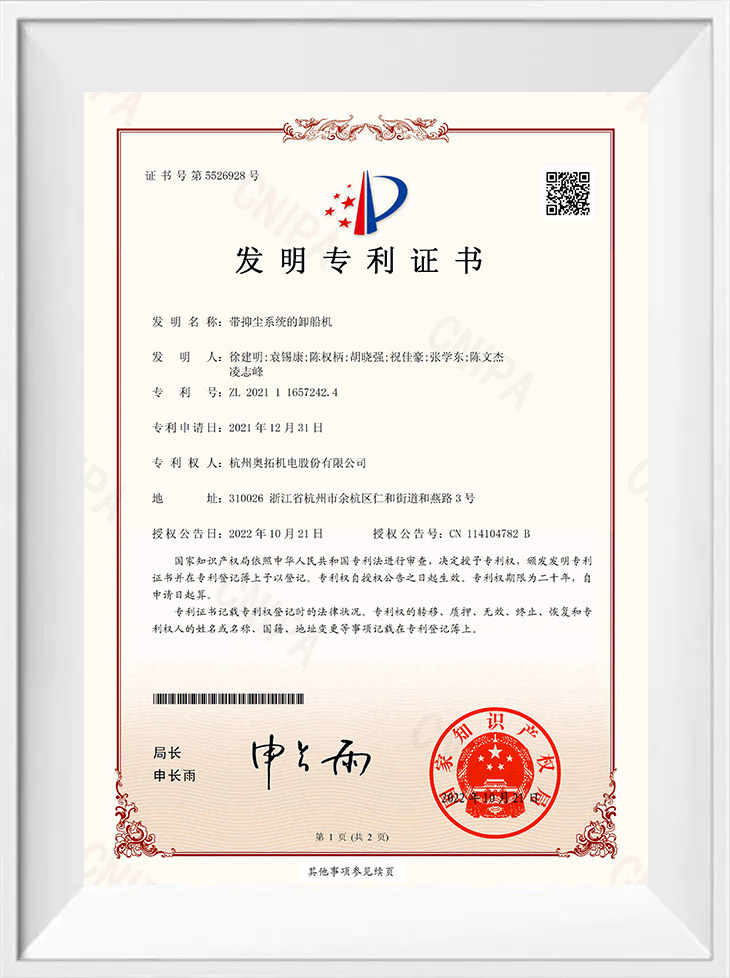
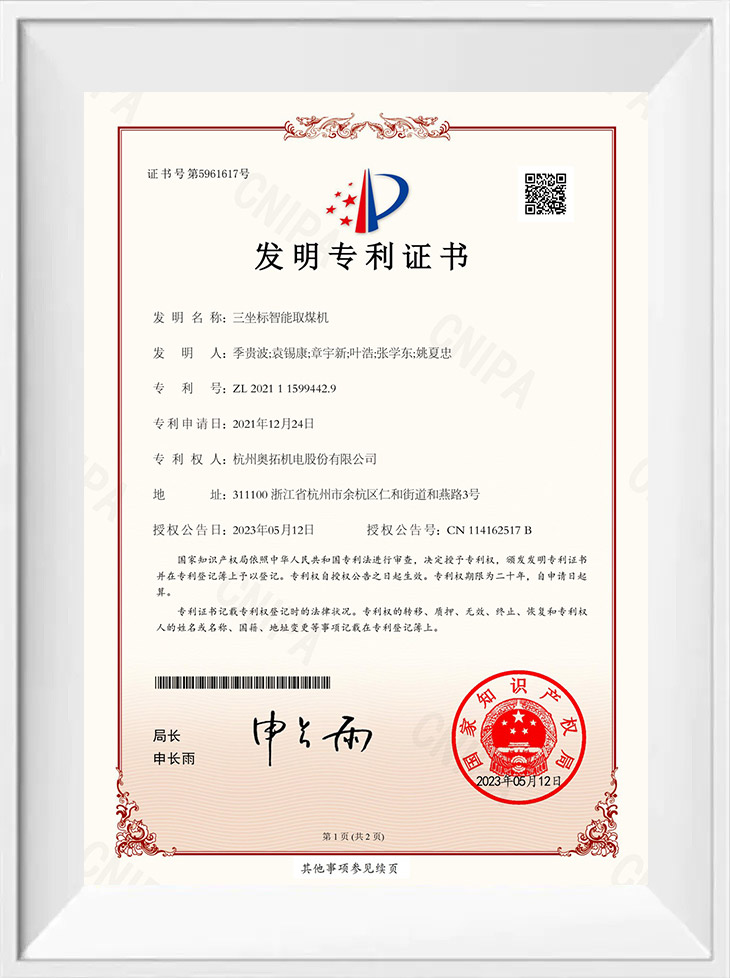
AOTUO is a national high-tech enterprise established in 2003 and the responsible drafting unit for industry standard JC/T 2575 "Bulk Cement Screw Ship Unloader." Our manufacturing base includes a 14,000 m² A-level production workshop with advanced testing equipment, and we hold quality management, environmental management and occupational health and safety management system certificates. With over 100 valid patents and software copyrights, our engineering team covers process, steel structure, machinery, hydraulic, automation and IT disciplines.
Service support includes one-on-one design consultation, installation and commissioning, operator training, spare parts supply and predictive maintenance through our online fault diagnosis system. Our service network has supported projects in Australia, Singapore, the Philippines, Vietnam, Indonesia and Bangladesh.
Information We Use to Configure Your Solution
To prepare a configuration and quotation for the ATSL-T, we need the following project inputs. These determine capacity, boom geometry, screw design, dust collection sizing and the interface with your receiving system.
| Input Category |
Details Required |
| Material properties |
Material type, bulk density, lump size, moisture content, abrasiveness |
| Vessel and berth |
Vessel DWT range, hatch dimensions, berth layout, number of berths to serve |
| Throughput target |
Required t/h, operating hours per day, peak vs. average demand |
| Site conditions |
Pavement type and load capacity, flatness, ambient temperature, wind exposure |
| Power and utilities |
Available voltage, frequency, cable length or generator preference |
| Receiving interface |
Truck loading platform, conveyor connection, storage or silo arrangement |
| Environmental limits |
Dust emission target, noise limit, local regulatory requirements |
Maintenance and Spare Parts
The ATSL-T is designed for serviceability. Tire pressure is checked weekly; hydraulic steering inspection is recommended every 200 hours; outrigger cylinder seals every 1,000 hours. Screw maintenance follows the same schedule as our standard screw unloader range, with wear parts selected according to material abrasiveness. Tire replacement is expected every 2,000–3,000 operating hours depending on travel frequency.
We supply spare parts and provide technical guidance for on-site maintenance. Our predictive maintenance platform uses online fault diagnosis to help plan interventions before unplanned downtime occurs.
Frequently Asked Questions
How does tire mobility compare to rail-mounted unloaders?
Tire mobility eliminates rail foundation costs. The ATSL-T transfers between berths in 15–20 minutes on paved surfaces, and can serve any area without track limitations. It is suited to terminals with two to four berths or irregular vessel schedules.
What ground conditions are required for the ATSL-T?
The unit operates on reinforced concrete pavement or compacted gravel with load-bearing capacity ≥15 t/m² and flatness within ±10 mm per 3 m. Hydraulic outriggers deploy during unloading to transfer weight directly to the ground.
What materials can the ATSL-T unloader handle?
The unloader handles clinker, coal, stone powder, aggregates, corn, soybeans and similar bulk materials. Screw speed and dust collection settings are adjusted for each material, and wear parts are selected based on abrasiveness.
What maintenance does the tire system require?
Tire pressure check weekly, hydraulic steering inspection every 200 hours, outrigger cylinder seals every 1,000 hours. Tire replacement is expected every 2,000–3,000 operating hours depending on travel frequency. Screw maintenance follows the same schedule as our standard units.
What is the dust emission performance of the ATSL-T?
With integrated dust collection and a baghouse filter, dust emission is ≤10 mg/m³. PTFE membrane filter media is available for fine particles, and explosion venting can be specified for combustible dust.
What is included in the scope of supply?
Our scope covers design, manufacturing, supply, transportation, installation, commissioning and performance testing. We also provide operator training, documentation and spare parts support. The unloading system can be integrated with a mobile bulk truck loading platform or conveyor line as required.

 EN
EN English
 中文简体
中文简体 Français