EN
 English
 中文简体
 Français

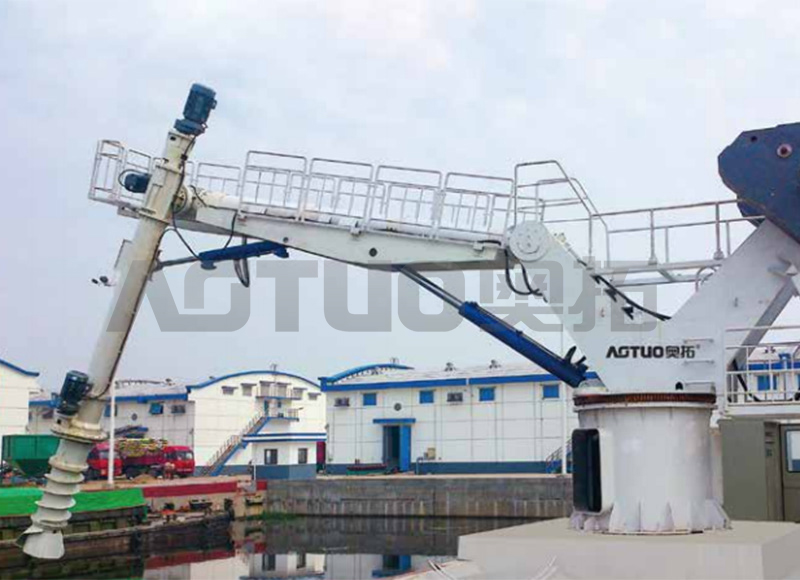
Custom 300-1500t/h 800-50000DWT Rail Mobile Ship Loader For Loading Bulk Materials Manufacturers
Home / Equipment / Ship Loader / 300-1500t/h 800-50000DWT Rail Mobile Ship Loader For Loading Bulk Materials

Capacity: 300 ~ 1500 t/h (calculated by cement proportion)
Applicable ship type: 800-50000 DWT
Energy consumption: <0.1 kWh/T (excluding transport equipment other than ship loader)
Noise: <80 dB
Dust emission concentration:≤10 mg/m³
| Loading capacity | 300-1500 tons per hour (calculated based on cement proportion with bulk density 1.2 t/m³) |
| Applicable ship type | 800 to 50000 deadweight tons (barges to handymax bulk carriers) |
| Energy consumption | Below 0.1 kilowatt-hours per metric ton for ship loader mechanism, excluding upstream transport equipment |
| Noise emission | Below 80 decibels at operator position during continuous operation |
| Dust emission concentration | ≤10 milligrams per cubic meter at loading spout outlet |
| Horizontal arm slewing | ±135 degrees horizontal rotation |
| Horizontal arm elevation | 30 degrees upward and 30 degrees downward |
| Vertical arm swing | Internal swing 30 degrees, external swing 40 degrees |
| Rail gauge | 6000-8000mm (configurable per terminal layout) |
It is focused on the overall solution of dry bulk material port transfer system,
research and development, manufacturing, and service

Professionalism

Quality

One stop solution

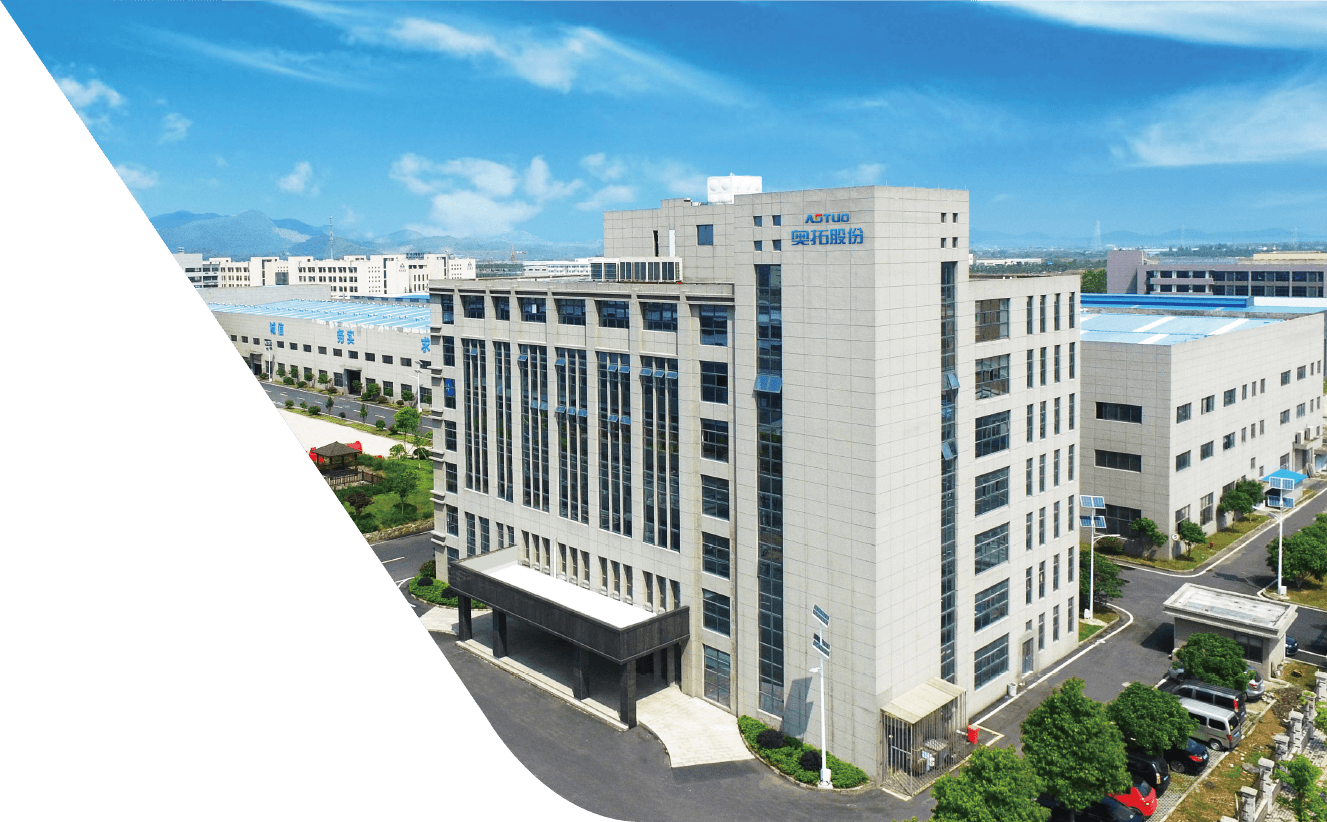

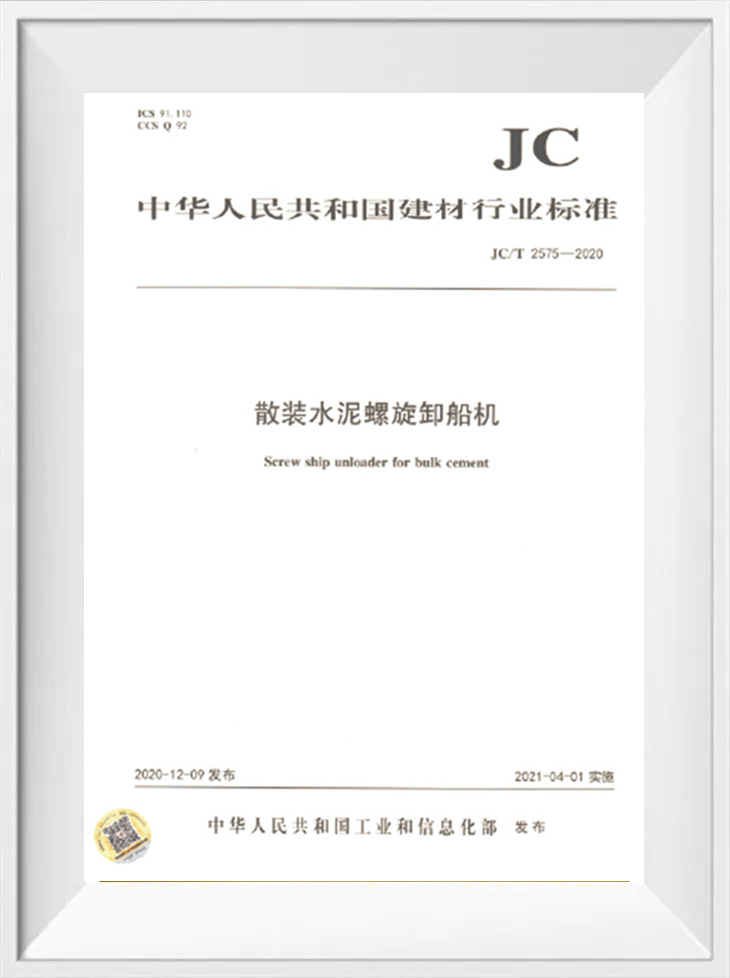
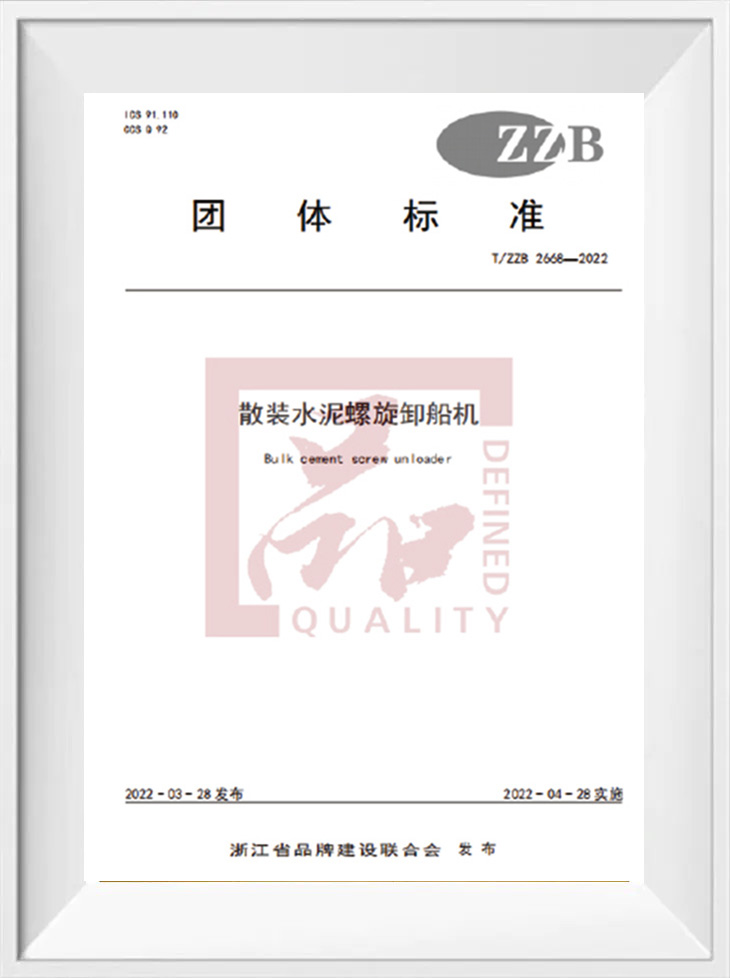
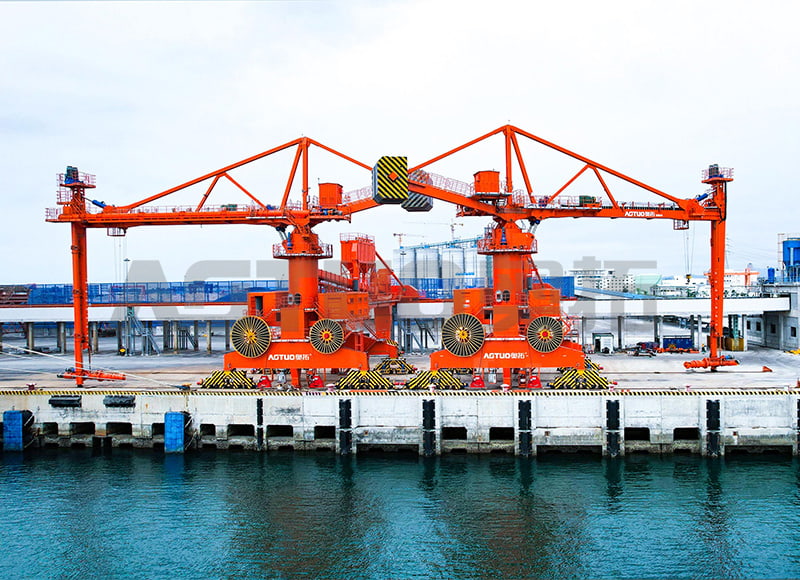
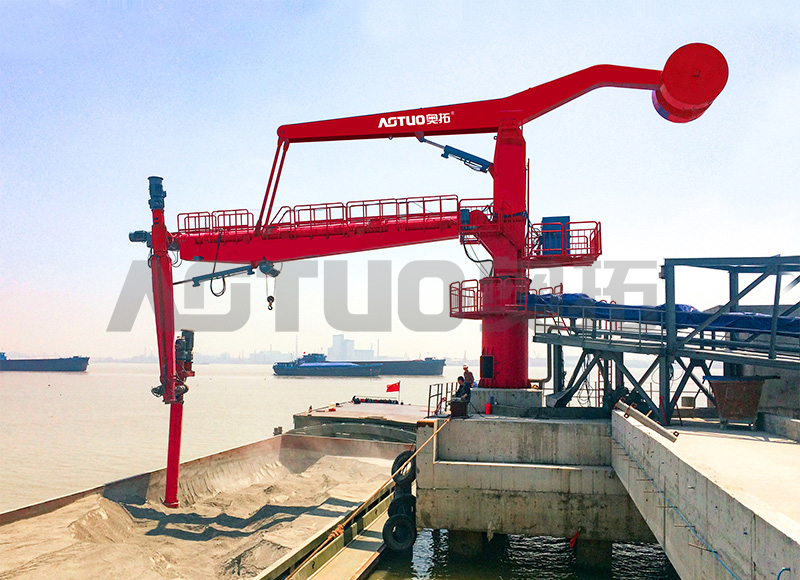
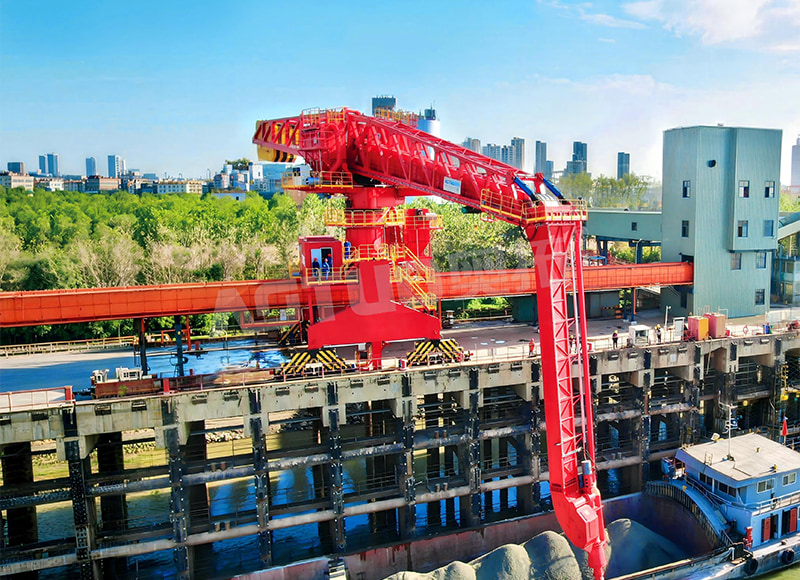
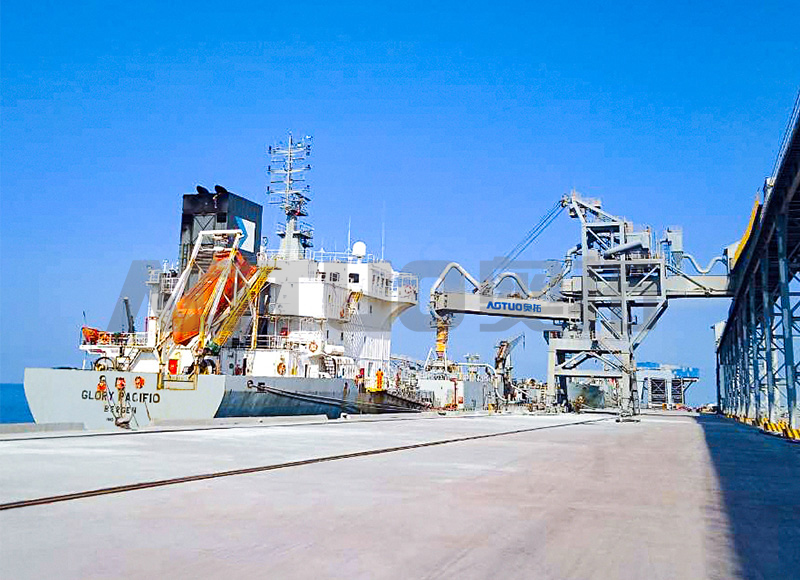
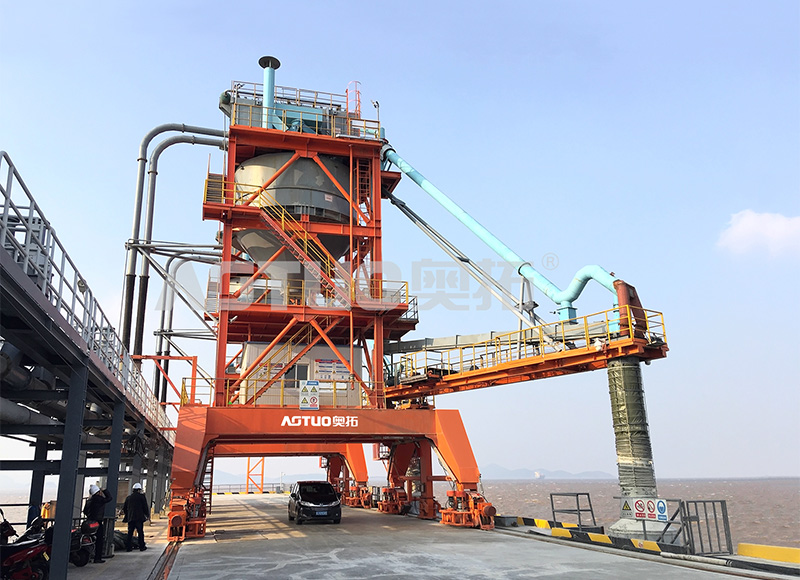
Hangzhou Aotuo Mechanical and Electrical Co., Ltd. (AOTUO) manufactures the 300-1500t/h 800-50000DWT Rail Mobile Ship Loader For Loading Bulk Materials for shore-to-vessel loading of cement, grain, fertilizer, clinker, coal, fly ash and mineral concentrates. The rail-mounted bogie travels along the quay, allowing one loader to serve multiple berths and vessel classes from 800 DWT barges to 50,000 DWT handymax bulk carriers.
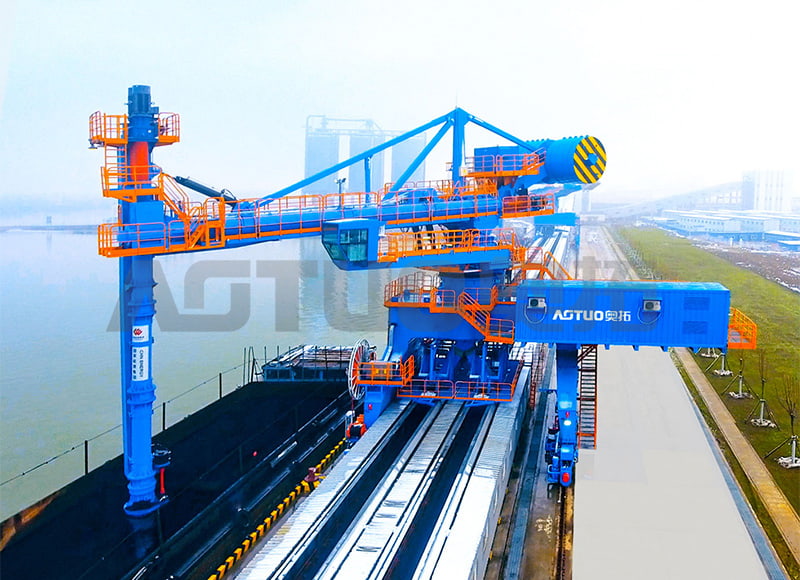
As a China manufacturer of dry bulk port transfer equipment, AOTUO integrates the loading boom, telescopic spout, dust collection, VFD drive and control system into a single rail-travel machine. Capacity is rated at 300–1500 t/h on a cement basis (1.2 t/m³), with energy consumption below 0.1 kWh/t for the loader mechanism and dust emission controlled to ≤10 mg/m³ at the loading point.
This rail mobile ship loader is engineered for continuous, dust-controlled loading from shore silos, hoppers or belt conveyors into vessel holds. The articulated boom provides ±135° horizontal slewing and 30° up / 30° down elevation, covering hatch openings up to 25 m wide and freeboard variations from 1.5 m to 12 m. A vertical arm articulates 30° inward and 40° outward for even hold distribution.
The rail-mounted bogie system with four-point support moves the machine along the quay at 10–15 m/min, so a single unit can be repositioned between loading positions or stowed for maintenance access without interrupting other berth operations. Rail gauge is configurable from 6000 mm to 8000 mm to match terminal layout.
| Parameter | Value | Notes |
|---|---|---|
| Loading capacity | 300–1500 t/h | Cement basis, bulk density 1.2 t/m³ |
| Applicable ship type | 800–50,000 DWT | Barges through handymax bulk carriers |
| Energy consumption | <0.1 kWh/t | Loader mechanism only; excludes upstream conveyors |
| Noise level | <80 dB(A) | At operator position, continuous operation |
| Dust emission | ≤10 mg/m³ | At loading spout outlet |
| Boom slewing | ±135° horizontal | Covers hatch openings up to 25 m |
| Boom elevation | 30° up / 30° down | Freeboard 1.5–12 m |
| Rail gauge | 6000–8000 mm | Configurable per terminal layout |
| Material lump size | ≤50 mm | Standard configuration |
| Bulk density range | 0.6–1.8 t/m³ | Capacity correction applies outside cement basis |
The rail mobile ship loader suits terminals that handle more than one cargo type or vessel class from a shared quay. Capacity correction factors let us match the machine to the actual material: clinker at 1.4 t/m³ reduces volumetric capacity by about 15%, fly ash at 0.8 t/m³ increases volumetric requirement by about 35%, and grain at 0.75 t/m³ requires roughly 40% higher volumetric flow for the same tonnage.
We configure the control system around the required line interface, whether the loader receives material from a silo discharge, a hopper, or an upstream belt conveyor. The loading belt uses variable frequency drive for flow rate modulation from 20% to 100% of capacity, and the telescopic spout carries level sensors for automatic retraction to prevent vessel overfill.
| Configuration Area | Options |
|---|---|
| Power supply | 690 V or 400 V, 50/60 Hz, three-phase; installed motor power 150–250 kW depending on capacity |
| Rail travel power | Cable reel (200–400 m) or conductor bar system; standby connection available |
| Loading spout | Telescopic range 2–12 m; inner diameter 400–600 mm; rubber skirt for fine materials or steel wear ring for abrasive products |
| Dust extraction | 3,000–6,000 m³/h airflow; baghouse filtration with 99.9% efficiency for particles >1 micron |
| Level sensing | Ultrasonic or mechanical sensors for automatic spout retraction |
| Remote monitoring | Loading rate logging and predictive maintenance alerts |
Rail foundation requirements are confirmed during project engineering: rail gauge 6000–8000 mm adjustable, foundation load rating 25 tonnes per wheel, rail straightness tolerance ±3 mm over 10 m, maximum gradient 0.5%. Power rail or cable festoon supplies electrical power along the track.
Commissioning follows a defined protocol. Factory acceptance testing runs at 100% capacity with test material. On-site commissioning includes an 8-hour continuous load test, dust emission validation per EPA Method 5, and noise measurement at the operator position and at 50 m distance. Energy consumption is measured at the main input terminals of the ship loader motor control center at 80% rated capacity over a 4-hour steady-state period; third-party verification is available on request.
Wear components are accessible for scheduled replacement. Spout wear liner inspection is recommended every 300 operating hours; flexible rubber skirts every 800–1,200 hours depending on material abrasiveness; dust extraction duct inspection every 500 hours; telescopic mechanism lubrication every 200 hours. Annual replacement of the spout tip section is recommended for cement and abrasive materials.
AOTUO supports the installed fleet with spare parts supply, technical documentation and operator training. A 40-hour certification program covers loading spout control, hold filling strategy, dust system operation, emergency procedures and collision avoidance; remote operation training is also available.
Our proposal is based on the working point, material and production target. To prepare an accurate configuration and quotation, we need the following project inputs:
Terminals that also need unloading capability can review our 1000-70000 DWT 200-1500t/h Rail mobile Screw Ship Unloader for cement and similar powders, or the 500-200000 DWT 200-3000t/h Rail Mobile Screw Coal Ship Unloader for coal and clinker duties. Auxiliary equipment such as dust collectors, belt conveyors and air slides is available to complete the transfer line.
The value applies to the ship loader mechanism: loading belt drive, boom slewing and elevation motors, and dust collection fan. It excludes upstream yard conveyors, reclaimers and feeders. Testing is conducted at 80% of rated capacity over a 4-hour continuous period. Measured values typically range from 0.08 to 0.12 kWh/t depending on material flow characteristics.
The telescopic loading spout has internal dust extraction channels. Dust is captured at the material drop point within the hold and conveyed to a central baghouse filter. Level sensors keep the spout close to the material pile surface. For free-fall heights exceeding 2 m, an auxiliary dust skirt extends around the spout perimeter. Filter efficiency reaches 99.9% for particles larger than 1 micron.
A single rail-mounted loader can serve multiple vessel loading positions along the quay, reducing the number of loaders required by 30–50% compared with fixed installations. Transfer speed along the rail is typically 10–15 m/min. The unit can be repositioned for vessels of different lengths or moved for maintenance access without interrupting other berth operations.
Spout wear liner inspection every 300 operating hours. Flexible rubber skirts require replacement every 800–1,200 hours depending on material abrasiveness. Dust extraction duct inspection every 500 hours. Telescopic mechanism lubrication every 200 hours. Annual replacement of the spout tip section is recommended for cement and abrasive materials.
Yes. The machine handles clinker, coal, grain, fertilizer, fly ash and mineral concentrates within the stated bulk density range of 0.6–1.8 t/m³, moisture up to 12% for free flow, lump size up to 50 mm and material temperature up to 80°C. Capacity correction factors are applied during configuration to match the actual material.
Operating ambient temperature is −20°C to +40°C. Maximum wind for operation is 20 m/s; survival wind speed is 50 m/s with the boom stowed. A lightning protection system is integrated, and rain covers for electrical cabinets are standard.
Our portfolio also includes View More for applications with different operating ranges, interfaces or integration requirements.
Copyright © Hangzhou Aotuo Mechanical and Electrical Co., Ltd. All Rights Reserved.
Custom 300-1500t/h 800-50000DWT Rail Mobile Ship Loader For Loading Bulk Materials Suppliers