EN
EN English
 中文简体
中文简体 Français
Industry News
Home / News / Industry News / Custom Grain Ship Loader Solutions for Port Projects: Design, Capacity & Compliance

Article Directory
When a port project team starts specifying a new grain export or import terminal, the ship loader is often the last major equipment decision. By that point, the berth structure, the fender line, the conveyor routing and the storage capacity are already fixed. The loader has to fit those constraints, serve the vessel mix the terminal expects, and still achieve the throughput that the commercial contracts assume. An off-the-shelf machine frequently misses on reach, capacity or dust control. That is the case for custom grain ship loader solutions: they are engineered around the operational profile of a specific port project, and they deliver reliable, compliant loading from the first vessel.
Every critical design parameter for a grain ship loader flows from the operational profile of the project. Nominal capacity, boom reach, slew range, spout length, belt speed, mobility and dust extraction are all consequences of the vessel sizes, the cargo types and the berth occupancy targets. If you define the profile correctly at the start, the loader specifications largely write themselves.
A realistic profile for a grain terminal should include at least the following inputs:
Following a structured grain ship loader selection process keeps these inputs ordered and prevents capacity, reach or compliance conflicts from appearing late in the design. A loader selected this way will also be simpler to commission, because the assumptions behind each specification are explicit and testable.
Capacity is stated in tonnes per hour, but the number that matters commercially is the total time at berth. A nominal figure of 1,200 t/h means little if the loading arm stops during trimming, if the spout cannot reach the far hatches without moving the ship, or if the belt feeding the loader cannot sustain the peak rate. Custom engineering matches the loader to the conveyor upstream, the vessel hatches below, and the trimming sequence the terminal actually uses. For large grain carriers, the difference between an effective 900 t/h and an effective 1,400 t/h can be several days of berth time per vessel. At typical demurrage rates, that difference usually justifies a properly sized custom loader.
Grain damage is the silent cost of an aggressive loader. Free fall over long distances, high spout velocities and careless spout positioning crack kernels and generate fines, which reduces the value of the cargo and increases dust. A custom loader addresses this with adjustable telescopic spouts, controlled discharge height and trimming systems that keep the drop distance short as the hold fills. The right design balances mechanical throughput against grain breakage. If your port project serves grain buyers with strict grading, gentle handling is not an optional refinement; it is a contractual requirement that has to be engineered into the machine from the start.
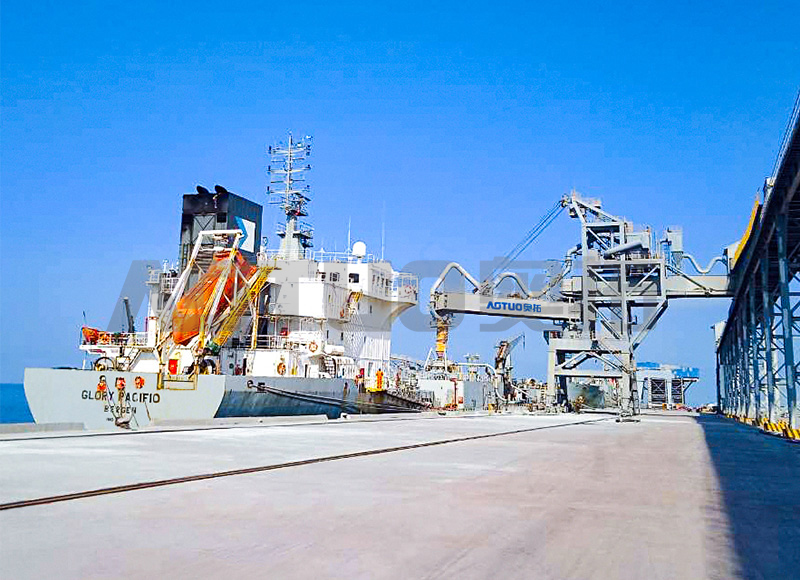
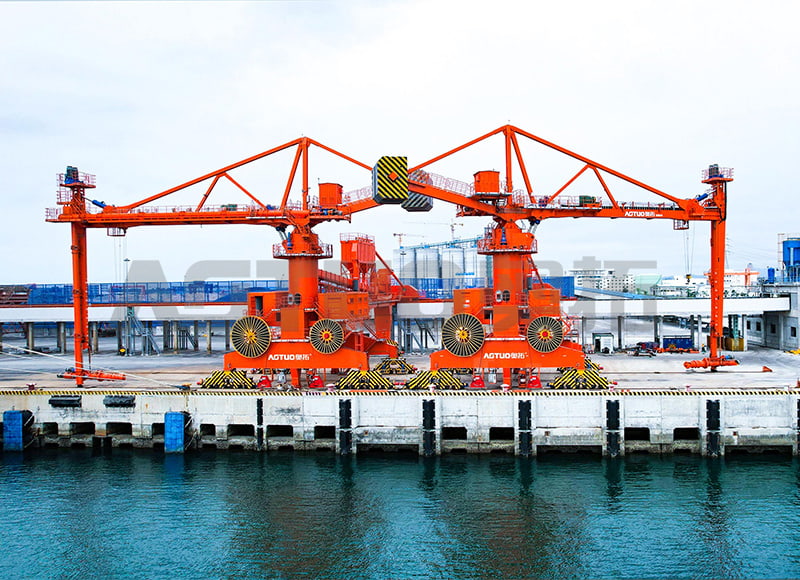
Fixed loaders have a lower capital cost, but they only cover a limited arc. On a berth that receives a mix of vessel lengths, that limitation means frequent ship movements between hatches, longer mooring time and more scheduling pressure. A rail mobile ship loader solves this by travelling along the berth and positioning the spout over every hatch without shifting the vessel. For most new grain terminals, the mobility trade-off is worth the additional civil cost of the rail track. The table below summarizes the main configuration choices and their practical consequences.
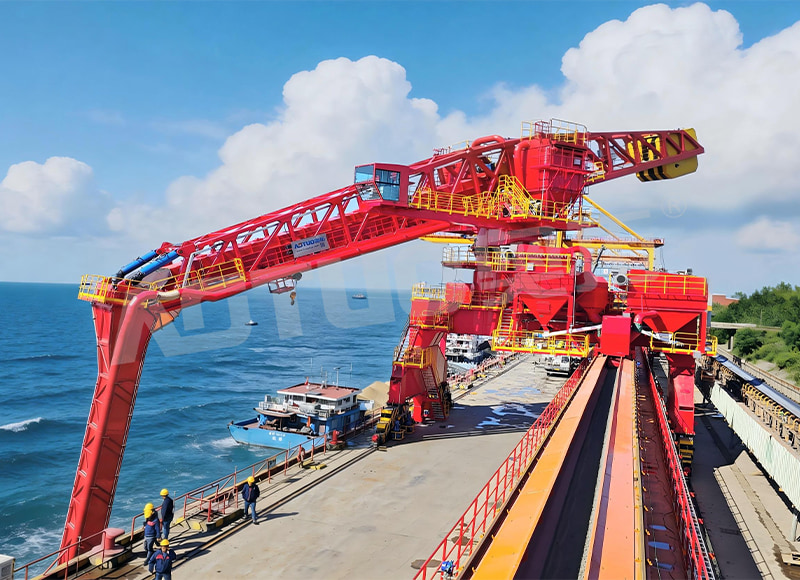
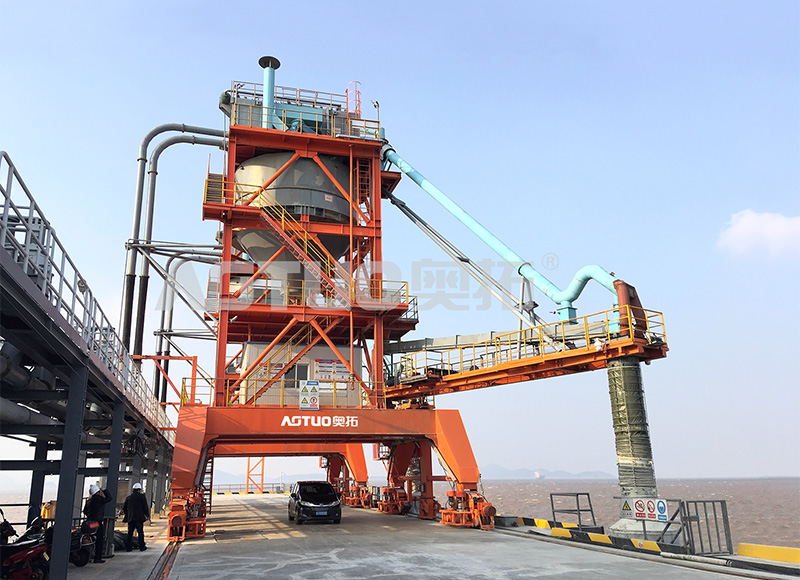 Custom 300-1500t/h 800-50000DWT Rail Mobile Ship Loader For Loading Bulk MateriaCustom 300-1500t/h 800-50000DWT Rail Mobile Ship Loader For Loading Bulk Materials, Hangzhou Aotuo Mechanical and Electrical Co., Ltd. is...View Product →
| Configuration | Berth coverage | Typical application | Main trade-off |
|---|---|---|---|
| Fixed | Limited arc around a single position | Dedicated berths where the vessel can be shifted between hatches | Lowest installed cost, but slower hatch-to-hatch cycles |
| Rail mobile | Full berth length along the quay | High-throughput terminals with mixed vessel lengths | Higher track and civil cost; better scheduling flexibility |
| Tire-mounted mobile | Any prepared quay surface | Multi-purpose and temporary berths | Fast redeployment, but generally lower rated capacity |
Grain dust is explosive, abrasive and subject to increasingly strict limits in most port jurisdictions. A custom loader treats dust control as a structural feature: enclosed transfer points, sealed telescopic spouts, integrated dust extraction and belt cleaning at every transfer. The target is not merely compliance on a test day, but consistent performance across cargoes with different moisture and impurity levels. This means the dust system has to be sized for the worst realistic cargo, not for the average one.
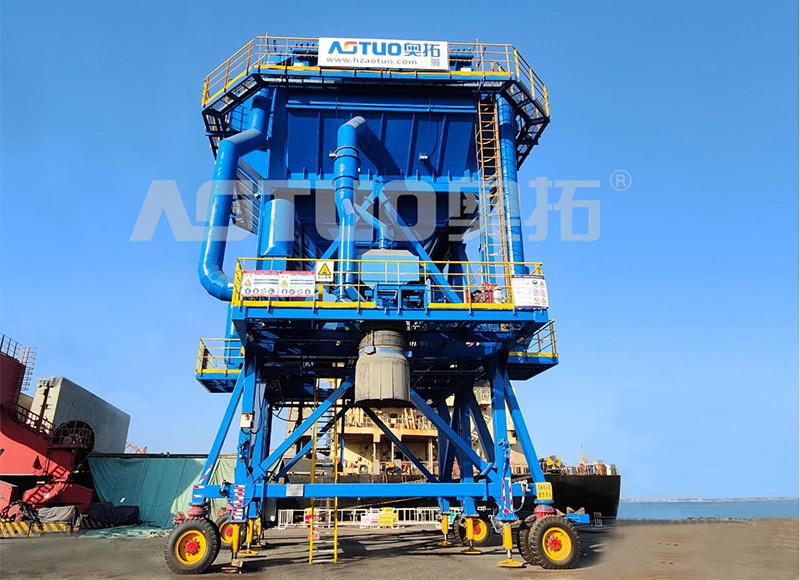
If your project must satisfy the Australian marine grain code or similar national rules, our grain code ship loader compliance guide outlines the inspection points and documentation that apply. Terminal operators should also specify dust collection equipment as part of the same package, so that the loader spout, the transfer towers and the conveyor discharges are covered by one consistent dust control strategy.
Custom loader solutions work only when the whole system is balanced. The receiving pit, the belt conveyors, the samplers, the dust collectors and the loader itself must all share the same design basis. A loader rated at 1,500 t/h is useless if the conveyor behind it delivers only 900 t/h in practice. In many port projects the same berth also handles inbound grain, so an equally capable unloading side matters. For terminals that need both functions, a dedicated grain ship unloader completes the loop and keeps the berth profitable in both directions. Auxiliary equipment such as belt conveyors, elevators and continuous receiving devices are then selected to match the same nominal capacity, so that no single transfer point becomes a bottleneck.
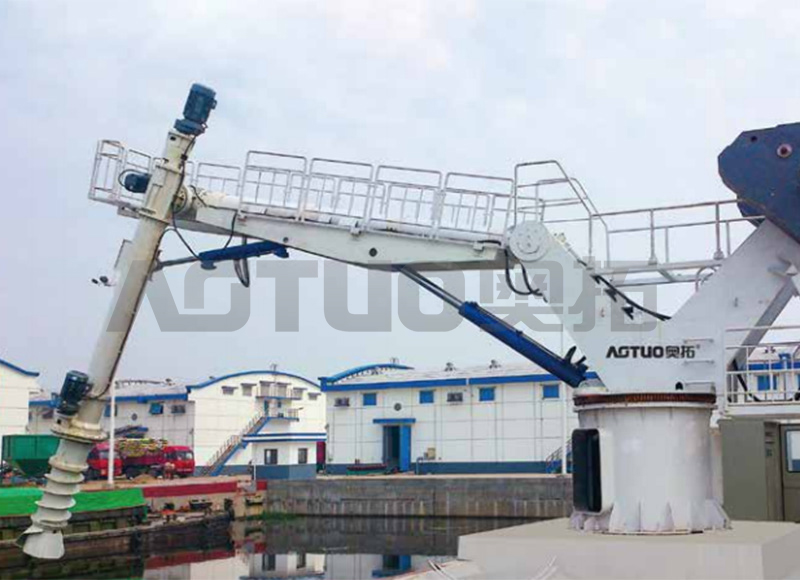 Custom Grain Ship Unloader Manufacturers, SuppliersCustom Grain Ship Unloader, Hangzhou Aotuo Mechanical and Electrical Co., Ltd. is China Grain Ship Unloader Manufacturers and Suppliers, ...View Product →
Custom equipment is only as reliable as the engineering behind it. AOTUO has spent two decades manufacturing dry bulk port machinery, holds more than 100 patents and software copyrights, and led the drafting of the JC/T 2575 industrial standard for screw ship unloaders. That experience shows up in weld quality, drive selection, sealing details and commissioning schedules. When a project demands a specific reach, a specific spout arrangement or a specific control interface, the manufacturer's depth of prior work determines how smoothly those requirements are converted into drawings and then into a running machine.
The practical test is installed performance. AOTUO's equipment operates in ports in Australia, Singapore, the Philippines, Vietnam, Indonesia and Bangladesh, including the bulk handling equipment installed at the Port of Brisbane. Overseas projects also reveal the difference between quoting a spec and supporting a project: local sea conditions, electrical codes, spare parts logistics and operator training all affect whether the loader runs at its rated capacity. When you evaluate a manufacturer, ask for references on similarly sized grain projects and for details on how commissioning was handled, not just for a data sheet.
A custom grain ship loader is a system engineered to a project's real conditions. When the operational profile, the grain handling constraints and the compliance requirements are defined up front, the right manufacturer can turn those inputs into a machine that meets your throughput targets and operates predictably for decades. That should be the goal of every port project specification.
It is focused on the overall solution of dry bulk material port transfer system,
research and development, manufacturing, and service
Copyright © Hangzhou Aotuo Mechanical and Electrical Co., Ltd. All Rights Reserved.
Custom Material Conveyor Transfer Systems Manufacturers