EN
EN English
 中文简体
中文简体 Français
Industry News
Home / News / Industry News / Grain Ship Loader Maintenance Guide: 5 Checks That Prevent Costly Downtime

Article Directory
Your rail-mounted grain loader has just dropped a telescopic spout liner during the third hatch. The hydraulic luffing arm is holding position, but the belt at the tail pulley is tracking 15 mm off-center, and the dust collector pressure gauge has climbed above the normal operating band. The vessel master is looking at this list and deciding whether to accept the loading plan.
In grain terminals, this is the typical failure pattern. Rarely does a loader stop because of a single catastrophic break. It stops because several wear-related issues accumulate until one of them finally trips a limit switch or tears a belt. A 1,000 tph unit can shift 20,000 tonnes in a single 20-hour loading window; a bearing failure at that moment can cost more in vessel waiting time than the loader's monthly maintenance budget.
The conclusion is simple: grain ship loader maintenance is not an inspection form. It is a targeted program that manages wear limits, lubrication, conveyor alignment, hydraulic cleanliness, and dust-tight enclosures. When those basics are controlled, the loader stays where it belongs—working alongside the vessel.
Every grain loader has the same broad operating cycle: material moves from the port conveyor to a belt ladder and then drops through a telescopic spout into the hold. Wear concentrates where grain contacts steel, where speed changes, and where movement is controlled.
The telescopic spout liner is the first part to wear because grain is abrasive at velocities above 4 m/s. The liner is a steel or wear-resistant insert that guides grain from the upper chute into the hold; it also limits grain free-fall and reduces breakage. Planned replacement cycles in most 1,000–1,500 tph loaders are tied to tonnage, not calendar days. At 1,000 tph, a typical liner can last around 3–5 years depending on grain hardness and moisture, but a single abrasive cargo can shorten it significantly.
Belt conveyors are a second major wear area. Grain conveying creates edge wear at the transfer points, roller fatigue, and a constant risk of misalignment. Weekly checks should measure belt tracking at loading and return runs; the allowable offset is normally less than 10 percent of belt width. If you see edge damage on the return path, the belt is either overtensioned or the idler set is out of square.
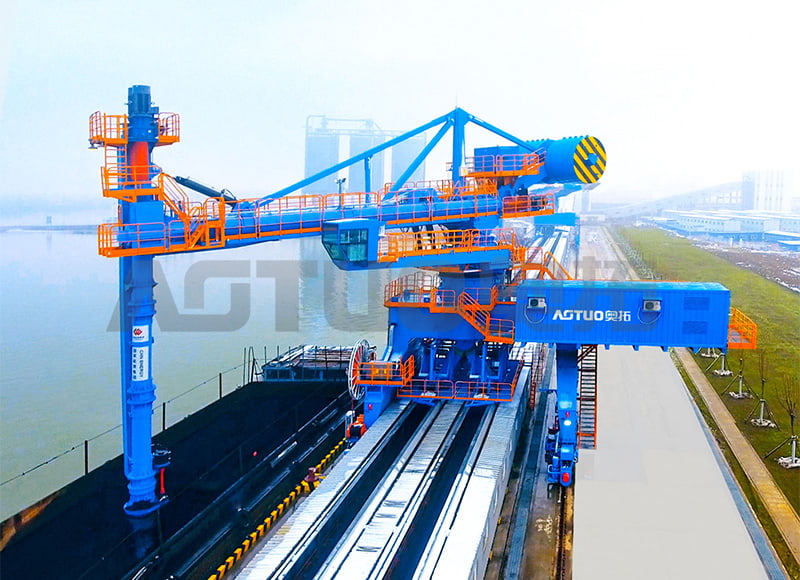
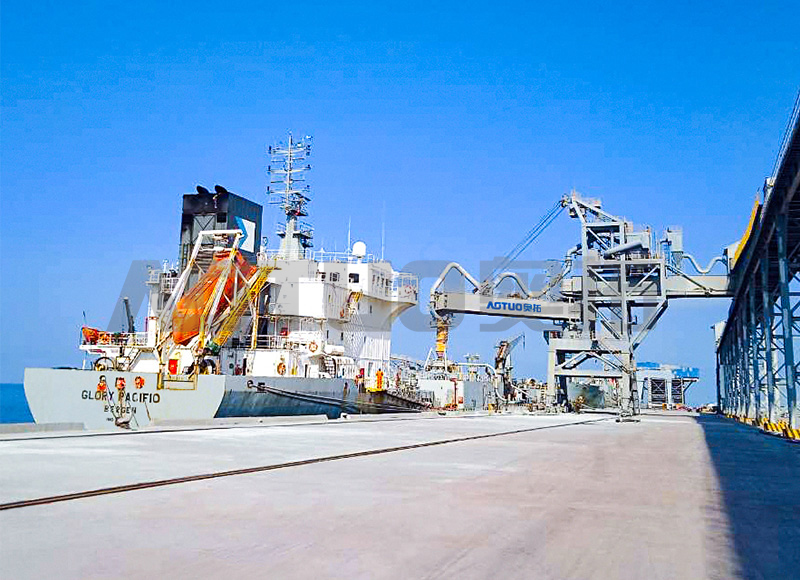
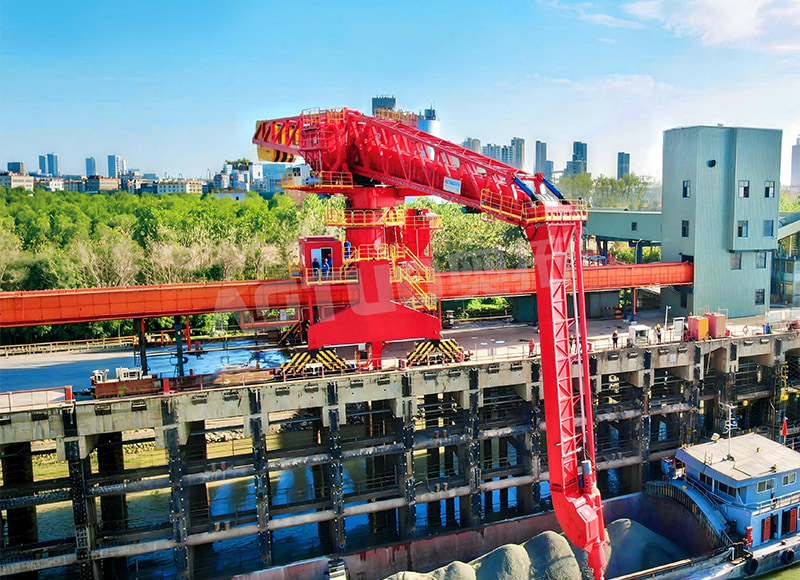
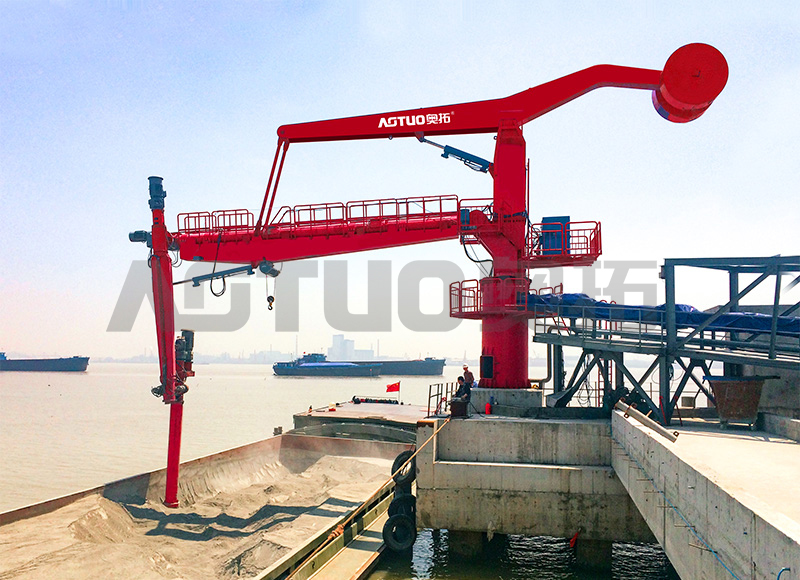
For a purpose-built continuous loading unit, the mechanical deck also includes slewing and luffing drives. A rail-mounted loader such as the AOTUO rail mobile ship loader keeps those drives inside enclosed, maintenance-friendly housings. That design makes oil sampling and shaft alignment checks practical during normal shifts rather than during breakdowns.
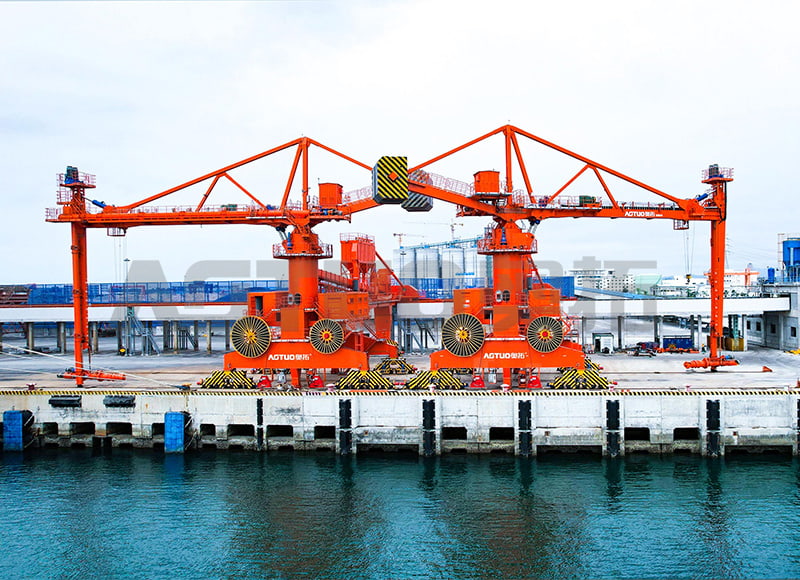
 Custom 300-1500t/h 800-50000DWT Rail Mobile Ship Loader For Loading Bulk MateriaCustom 300-1500t/h 800-50000DWT Rail Mobile Ship Loader For Loading Bulk Materials, Hangzhou Aotuo Mechanical and Electrical Co., Ltd. is...View Product →
Grain dust is the enemy of relay contacts, VFDs, and position sensors. Moisture from the cargo or the marine environment accelerates corrosion in junction boxes and cable trays. Control and safety systems—emergency stops, belt pull cords, spout position limit switches—should be verified daily because a disabled safety switch gives the same result as a mechanical jam: a stopped loader.
Terminal electricians should perform quarterly thermal imaging of the switchgear and motor terminal boxes. Loose lugs are common in high-vibration machines, and they generate heat before a trip. A single thermal anomaly can identify a loose connection before it causes a phase failure during busy loading windows.
Grain loaders are designed to handle grain without releasing visible dust. The spout hood and dust collection duct are integral to that. The dust collector filter bags load up over time; the pressure drop across the bags is the main indicator. A sudden high differential means the bags need cleaning or replacement. Filter maintenance is not just an environmental issue—if the dust collector cannot draw air, the spout will overflow and the loader will jam.
Use the schedule below as a baseline for a typical 1,000–1,500 tph grain loader. Adjust specific intervals based on local cargo moisture, tonnage per year, and the loader's condition.
| Subsystem | Interval | Main check | Typical wear signal |
|---|---|---|---|
| Telescopic spout liner | Every 50,000 t or quarterly | Remaining liner thickness; crack at weld seams | Visible edge wear, grain streaks outside the spout |
| Belt conveyor tracking | Weekly | Tracking at head and tail pulley; tension | Edge damage, belt wander, visible dust on return side |
| Hydraulic system | Monthly oil sample; 250 h filter check | Oil particle count, filter differential pressure | Pressure drop, slow luffing/slewing motion |
| Slewing drive gearbox | Every 500 h | Oil level, vibration | Abnormal noise, play in the bearing ring |
| Dust collector | Weekly | Differential pressure, filter bag condition | High-pressure alarm, visible emissions at spout hood |
| Emergency stops and safety switches | Daily before first load | Function test of belt pull cord, spout limit switches | Switch fails to stop in 2–3 seconds |
This is a baseline. A terminal operating 24/7 in a warm, humid climate should shorten the hydraulic sampling interval to every two weeks. A unit running seasonal grain exports can use a more condensed pre-season checklist and a deeper yearly overhaul.
Grain is not a uniform material. Maize and rice are more abrasive than wheat; soybeans carry a higher percentage of fine particles; high-moisture grain increases friction inside the spout and creates a sticky deposit on the belt. Bulk grain is also hygroscopic, so it can absorb moisture from the port air. That moisture changes the material's flow behavior and accelerates corrosion on the equipment. The relationship between spout speed and the risk of grain damage is explained in our grain ship loader speed and breakage guide.
If the loader operates at a port where grain, cement, and coal share the same berth, wear doubles because residual dust from the previous cargo changes the abrasiveness of the next one. In a mixed-cargo terminal, the same maintenance schedule may need to be tightened. Consider adding a full inspection after any coal operation and before grain loading.
Marine environment also affects the electrical system and structural steel. Salt spray will attack unpainted fasteners and hinge pins. A maintenance program should include periodic torque checks on the slew bearing bolts and visual inspection of the paint system at the end of each month. Surface rust is not the failure; the failure occurs when rust allows water into the pin and bearing contact surfaces.
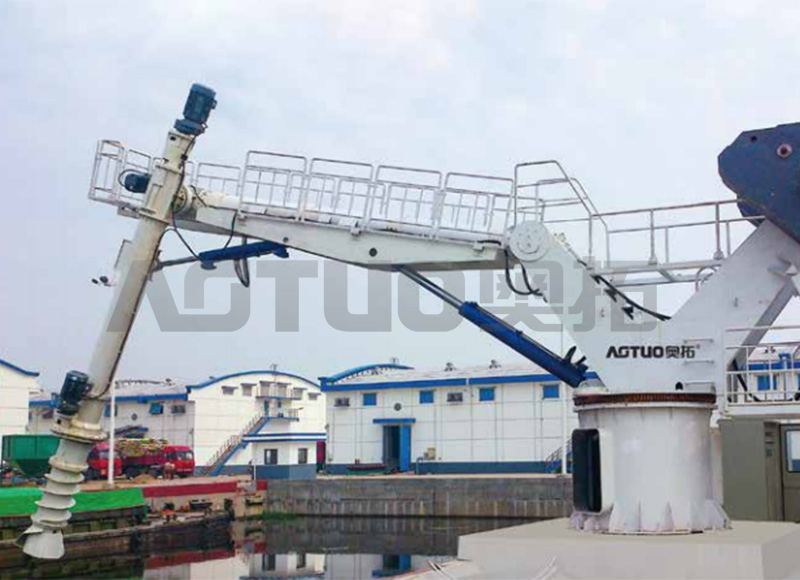
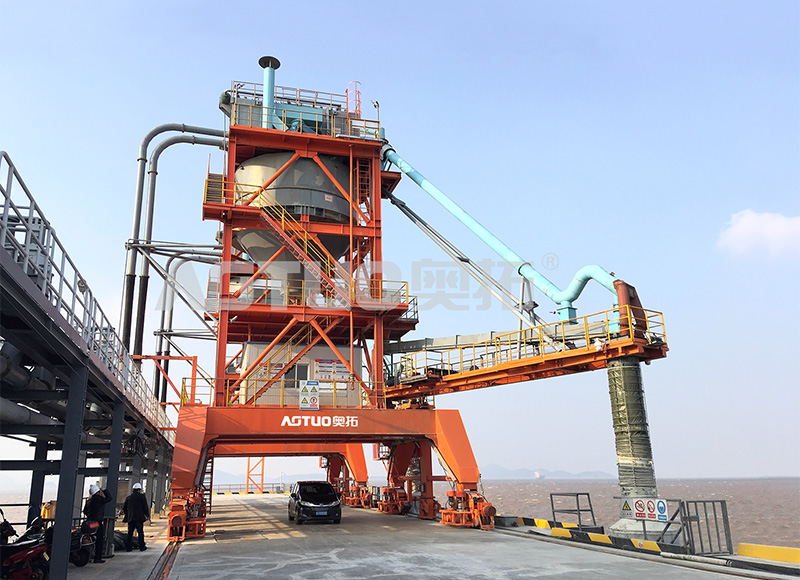
For ports that also need to receive grain back into storage from vessels, the same care applies to unloading equipment. A grain screw ship unloader is a different machine, but its maintenance philosophy is the same: monitor screw tip wear, inspect the filtering screen, and verify the discharge conveyor. The link between loading and unloading maintenance is important, because a breakdown on either side stops the terminal's revenue stream.
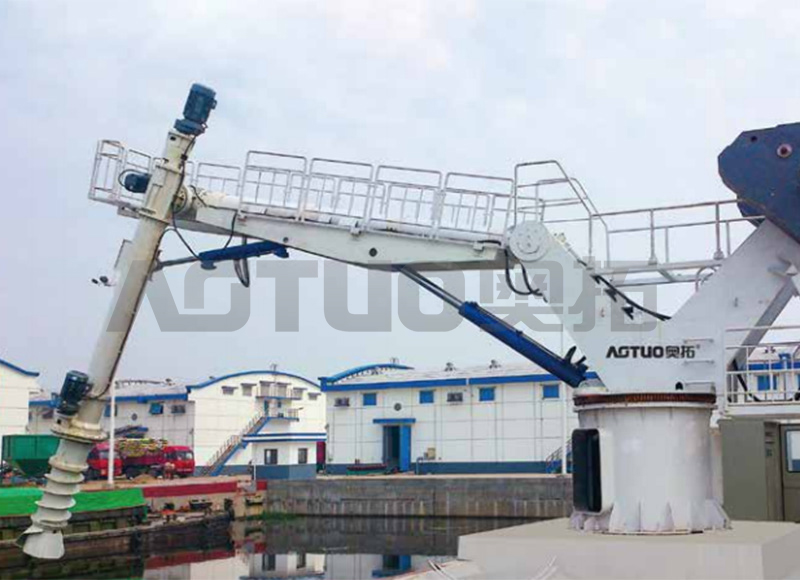 Custom Grain Ship Unloader Manufacturers, SuppliersCustom Grain Ship Unloader, Hangzhou Aotuo Mechanical and Electrical Co., Ltd. is China Grain Ship Unloader Manufacturers and Suppliers, ...View Product →
Shipping regulators and port authorities watch the condition of the cargo-handling equipment that contacts the vessel. Grain cargo regulations require the ship to be structurally sound and grain-tight. If the loader's spout cannot retract and extend smoothly, if it leaks grain into the hatch gap, or if it cannot control its rate within the approved loading plan, the master will stop the operation.
This is not theoretical. A misaligned spout can strike the hatch coaming, causing structural damage. A loader that drops grain from too high a height increases grain breakage, which can lead to cargo heating and caking during the voyage. Port inspectors often check the loader's condition when they check the vessel's readiness. A visible maintenance backlog—oil leaks, missing fasteners, reported dust emissions—can delay the issuance of the readiness certificate and push the vessel's berth slot to the next day.
Our experience from commissioning equipment at Port of Brisbane grain handling installations is that the terminals with the fewest loading delays are the ones that involve the loader operator in the pre-loading inspection, not only the ship's officers. The operator can confirm that the spout hood seals against the hatch coaming, the dust collector is drawing correctly, and the trim chute is positioned to maintain the vessel's stability.
There is no single schedule that fits every grain loader, but a workable program has four layers:
For terminals with limited resident maintenance staff, the manufacturer's service team can fill the gap. AOTUO's engineering and field service work, backed by 20 years of dry-bulk handling experience, is involved in planning scheduled overhauls for rail mobile ship loaders. The advantage of manufacturer-led planning is that you get specific wear limits and torque values for your exact machine, not a generic checklist.
Spare part management is a recurring weakness in grain ports. The most important parts are the ones that fail at 3–7 year intervals: spout liners, belt rollers, hydraulic cartridge filters, and slewing ring seals. Keep at least one set of each in stock, and order the next set when the first one goes into service. This simple rotation avoids the two-week lead time that turns a three-day maintenance window into a demurrage claim.
Grain ship loader maintenance has a direct effect on the terminal's commercial performance. The cost of a liner is small; the cost of a stopped loader is not. A loader that stays within its designed tolerances loads vessels faster, keeps grain quality high, and gives the port a reputation for reliable turnaround.
Start by measuring the right things. Record spout liner thickness at the end of each month. Log belt tracking offset and dust collector pressure daily. Sample hydraulic oil monthly and compare the trend, not just the limit values. Do not wait for the failure—replace parts when they reach the wear limit, not when they stop working.
A grain loader is a large investment, but its value is realized only when it is running. The maintenance program is the guarantee that the loader is ready for the vessel, and the vessel is ready for the loader.
It is focused on the overall solution of dry bulk material port transfer system,
research and development, manufacturing, and service
Copyright © Hangzhou Aotuo Mechanical and Electrical Co., Ltd. All Rights Reserved.
Custom Material Conveyor Transfer Systems Manufacturers