Article Directory
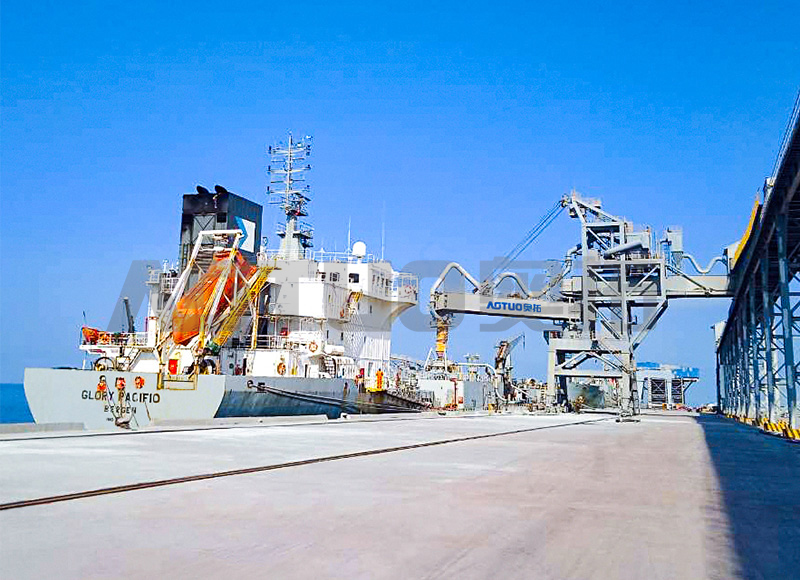
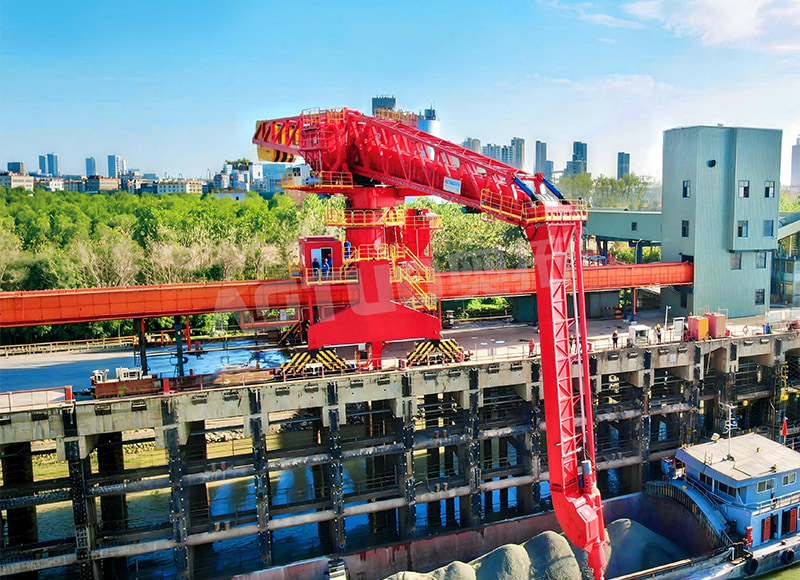
A grain ship loader is a bulk material handling machine installed at port terminals to transfer grain — wheat, corn, soybeans, barley, and similar commodities — from shore-side conveyors directly into the holds of bulk carrier vessels. Modern units combine high-capacity belt or chain conveyors with articulating booms and telescopic chutes to achieve loading rates between 500 and 3,000 tonnes per hour while minimizing grain breakage and dust emissions.
A grain ship loader is a purpose-engineered port machine that bridges the gap between land-based grain storage and ocean-going vessels. It receives grain from a quay conveyor or surge hopper and meters it through a luffing boom — a pivoting arm that raises and lowers to match the vessel's freeboard — and into a telescopic spout that descends into each hold.
The defining characteristic of a grain ship loader, compared to a general bulk loader, is its enclosed conveying path and controlled drop height. Grain is a friable commodity: kernels fracture when dropped more than 1–2 metres at speed. Every component from feed hopper to spout tip is engineered to reduce velocity and cushion impact, preserving test weight, germination rates, and market grade.
A grain ship loader is a bulk terminal machine that conveys grain from shore storage to vessel holds via a luffing boom and telescopic spout, at rated capacities of 500–3,000 t/h, with enclosed grain paths to control breakage and dust.
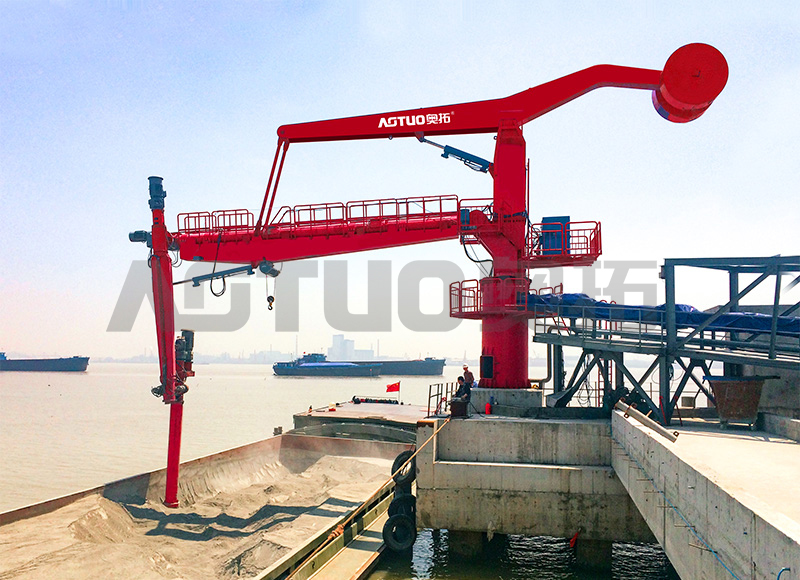
Loading speed for a grain ship loader is rated in tonnes per hour (t/h) and varies significantly by machine class, grain type, and vessel hold geometry. Entry-level fixed machines at inland river terminals handle 500–800 t/h. Mid-range radial units at regional export ports operate at 1,000–1,500 t/h. High-throughput machines at major export hubs — such as those on the Mississippi River system or in Brazilian soybean ports — are rated at 2,000–3,000 t/h.
| Terminal Type | Typical Rate (t/h) | Vessel Size | Loading Time (50,000t) |
| Inland river / barge | 500–800 | Barge / coaster | 62–100 hours |
| Regional export port | 1,000–1,500 | Handymax / Supramax | 33–50 hours |
| Major export hub | 2,000–2,500 | Panamax | 20–25 hours |
| High-capacity terminal | 2,500–3,000 | Capesize | 17–20 hours |
Actual throughput is further constrained by vessel hold sequencing, trim and list corrections, and the dwell time spent repositioning the boom between holds. Terminals using two loaders working a single vessel simultaneously can cut total berth time by up to 45%.
The choice between a mobile and stationary grain ship loader determines terminal layout, capital cost, operational flexibility, and long-term maintenance strategy. Neither type is universally superior — the correct selection depends on berth length, vessel mix, and annual throughput targets.
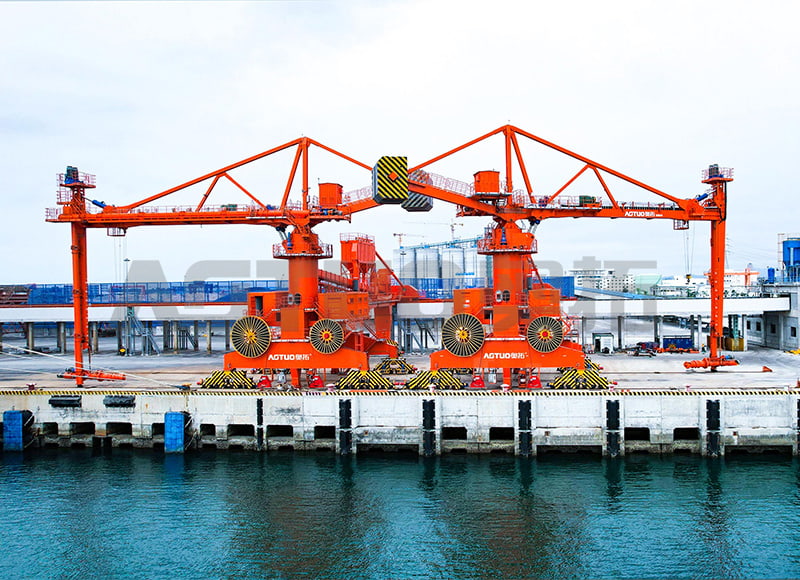
Most large greenfield grain export terminals specify stationary loaders on rail-mounted travelling structures — a hybrid approach that provides the reach of a mobile machine at the capacity of a fixed installation. This configuration allows the boom to slew up to 180 degrees and travel along the berth to address all six to eight holds of a Panamax vessel from a single loading point.
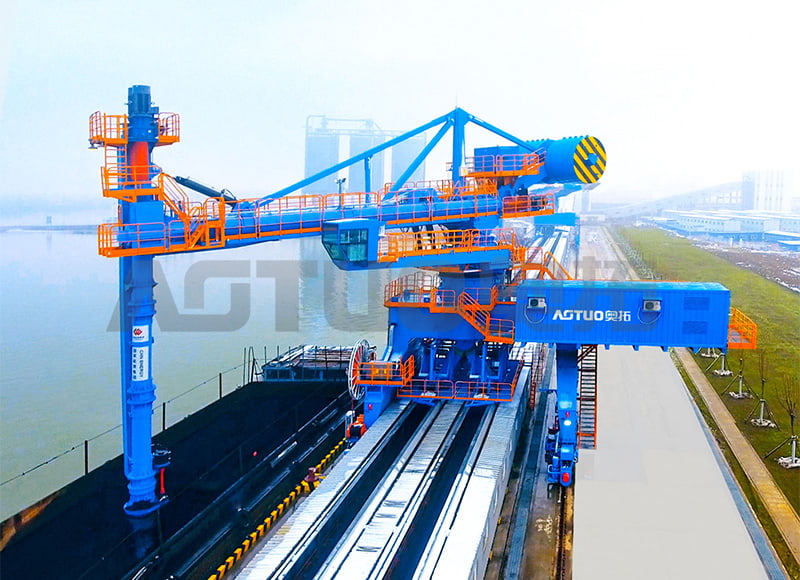
A telescopic grain ship loader uses a multi-section extendable spout — typically two to four nested tube sections — that descends into the vessel hold as grain is loaded, maintaining a constant and minimal drop height between the spout discharge point and the rising grain surface. This is the single most effective structural feature for controlling grain breakage.
As the hold fills, the outer control system — either position sensors or weighbridge feedback — automatically retracts the spout sections at a rate matched to the rising grain level. The grain free-fall distance is held to less than 500mm throughout the loading cycle, compared to drops of 10–30 metres that occur with fixed-length chutes at the start of loading an empty hold. Telescopic spouts on high-capacity machines extend to 30–35 metres to reach the bottom of deep Capesize holds.
Grain breakage during ship loading occurs at five identifiable points in the conveying path. A well-specified grain ship loader addresses each one through equipment selection, speed control, and operator training.
A grain ship loader is designed for all major bulk cereal and oilseed commodities: wheat, corn (maize), soybeans, sorghum, barley, oats, rice, and sunflower seed. The key design variable is bulk density, which ranges from approximately 580 kg/m3 for oats to 780 kg/m3 for wheat, affecting belt loading and structural calculations. Most machines are specified for the full commodity range at a terminal rather than a single crop.
The fundamental difference is the enclosed, low-velocity conveying path required for grain. Coal and cement loaders tolerate high drop heights and open chutes because breakage and dust suppression requirements are less stringent. Grain loaders add telescopic spouts, sealed transfer hoods, dust collection systems, and speed-regulated belts that are unnecessary — and unnecessarily expensive — for mineral bulk commodities.
A well-maintained stationary grain ship loader at a major export terminal has a structural service life of 25–35 years. Wear components — belt covers, spout liners, transfer hoods, and slewing ring bearings — require planned replacement on 3–7 year cycles depending on throughput. Mobile machines on rubber tyres typically see tyre and travel gear replacement every 5–8 years at high-utilization terminals.
Yes, with material compatibility checks. Many grain terminals load diammonium phosphate (DAP) and urea fertilizers in non-grain seasons using the same loader, provided the conveyor belting, spout liners, and dust collection are compatible with the material's chemistry and abrasiveness. Fertilizer loading typically requires a thorough wash-down protocol between campaigns to prevent cross-contamination and corrosion from residual moisture.
It is focused on the overall solution of dry bulk material port transfer system,
research and development, manufacturing, and service
Copyright © Hangzhou Aotuo Mechanical and Electrical Co., Ltd. All Rights Reserved. Custom Material Conveyor Transfer Systems Manufacturers