EN
EN English
 中文简体
中文简体 Français
Industry News
Home / News / Industry News / How to Optimize TPH Efficiency When Selecting a Bulk Ship Loader for Iron Ore or Coal?

Article Directory
In the high-stakes environment of dry bulk port terminals, the efficiency of a bulk ship loader is measured primarily by its Tons Per Hour (TPH) performance. Whether handling high-density iron ore or abrasive coal, selecting the right equipment is a critical engineering decision that impacts the entire logistics chain. Hangzhou Aotuo Mechanical and Electrical Co., Ltd. (AOTUO), a national high-tech enterprise established in 2003, specializes in these high-end port transfer solutions. With over 20 years of R&D experience and more than 100 patents, we lead the industry in providing environmentally friendly and efficient ship loading and unloading systems. Our technology supports vessels up to 200,000 DWT, ensuring that port operators can achieve maximum throughput with minimal downtime.
Optimizing TPH starts with identifying the mechanical and operational bottlenecks within the bulk ship loader system. For heavy materials like iron ore, the torque requirements of the conveying components are immense. According to the 2024 Global Port Equipment Technology Review by the International Association of Ports and Harbors (IAPH), the integration of variable frequency drives (VFDs) and real-time material flow sensors has enabled a 15% increase in average TPH efficiency by maintaining a consistent belt load regardless of material moisture content. This is essential when deploying a high capacity ship loader for iron ore, where material density fluctuations can otherwise lead to motor strain or belt slippage.
Source: IAPH - World Ports Technology and Operations Report 2024
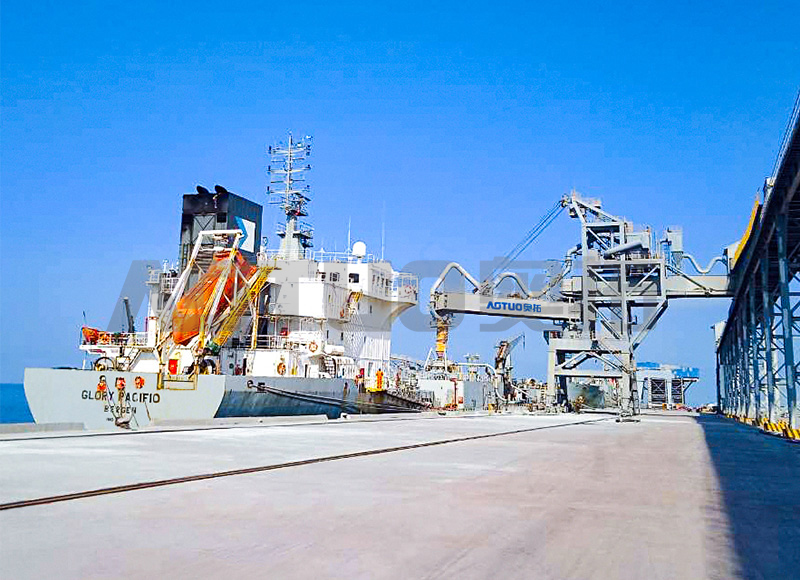
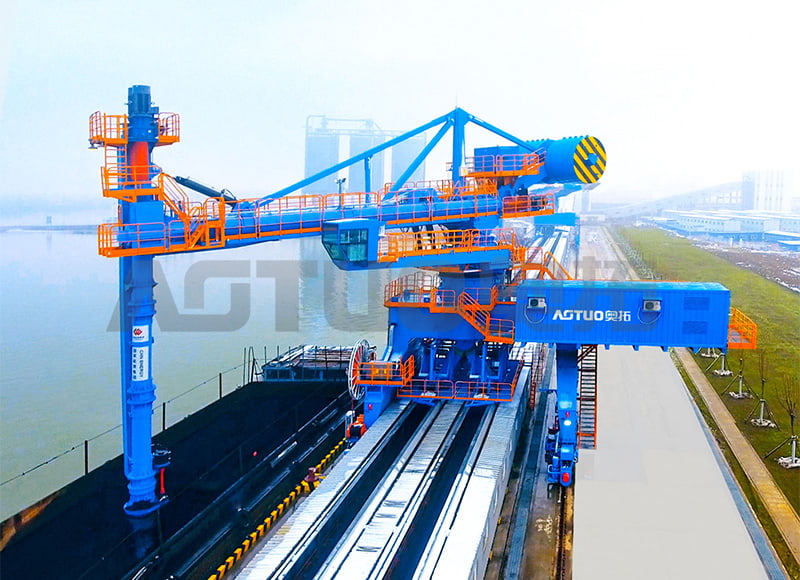
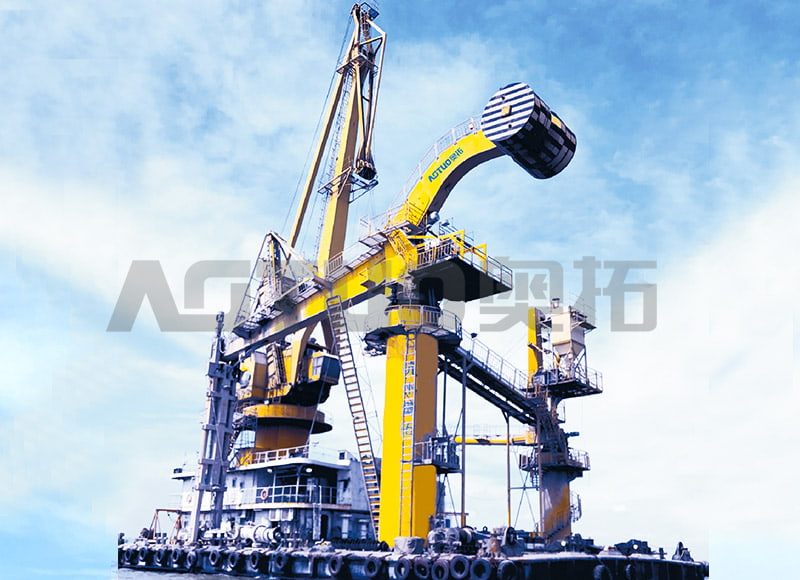
While fixed loaders offer high structural stability for massive throughput, a mobile telescopic bulk ship loader provides the flexibility to move between hatches, significantly reducing the "non-productive" time spent repositioning the vessel. In terms of pure hourly output, fixed systems generally lead, but mobile systems often achieve a higher "effective" TPH across a full loading cycle for 50,000 to 100,000 DWT ships.
| System Feature | Fixed Gantry Loader | mobile telescopic bulk ship loader |
| Peak TPH Capability | Very High (up to 6000+ t/h) | High (up to 3000 t/h) |
| Repositioning Time | Vessel must be warped/moved | Loader moves along the pier |
| Capital Expenditure | High (Requires heavy civil works) | Moderate (Lower infrastructure needs) |
| Operational Flexibility | Limited to specific berths | Adaptable to different ship types |
To reach an efficiency bulk ship loader for coal, engineers must focus on dust suppression and flow control. Coal's low density and high dust potential require specialized chutes. Modern systems utilize automated dry bulk ship loading systems that integrate laser scanning to map the ship's hold. This prevents "pyramiding" of material, ensuring a more even distribution and maximizing the ship's stowage factor. As a pioneer in the localization of bulk material equipment and the drafting unit for industry standard JC/T 2575, AOTUO ensures that our loaders integrate intelligent control systems to synchronize the feeder and the loader for seamless TPH delivery.
The transition point between the conveyor and the ship's hold is where TPH is often lost due to turbulence or blockage. A customized bulk ship loader for port terminals typically features a telescopic, 360-degree rotating chute. This allows for precise placement, which, when compared to traditional fixed chutes, reduces the need for manual trimming and increases the net loading rate.
| Design Factor | Standard Gravity Chute | Telescopic Rotating Chute |
| Material Segregation | High (Fines separate from lumps) | Controlled (Maintains mixture integrity) |
| Dust Emission | High (Significant air displacement) | Low (Closed-loop suppression) |
| Trimming Requirement | High (Requires manual labor) | Minimal (Automated hold filling) |
Environmental regulations in 2025 are becoming as stringent as production targets. A dust free bulk ship loader for 200000 DWT vessel is no longer an option but a requirement for modern port concessions. According to the latest ISO 15001:2025 standards for port machinery, new equipment must adhere to stricter noise and particulate emission limits while operating at peak load. AOTUO's intelligent control systems are designed to meet these domestic and international levels, combining industrial automation with metering control to ensure that every ton is accounted for accurately without environmental degradation.
Source: ISO - International Standards for Automation and Environmental Control 2025
Our unloading capacity can reach up to 3000t/h, and our bulk ship loader solutions are engineered to match high-volume port requirements for coal, ore, and cement, supporting vessels up to 200,000 DWT.
A mobile telescopic bulk ship loader reduces the need for expensive berth modifications and allows the port to use the same berth for multiple ship types, increasing the overall utilization and ROI of the terminal infrastructure.
Coal requires greater dust suppression and anti-corrosive materials due to its sulfur content, whereas cement requires a completely sealed screw-type or pneumatic system. At AOTUO, we provide a customized bulk ship loader for port terminals tailored to the specific material characteristics.
Yes. Our automated dry bulk ship loading systems are built with intelligent control and industrial automation interfaces, allowing them to communicate with port-wide management software for real-time monitoring of TPH and equipment health.
Absolutely. Our high capacity ship loader for iron ore is designed with the reach and structural rigidity necessary to load ships up to 200,000 DWT, ensuring deep-water terminal capabilities are fully utilized.
It is focused on the overall solution of dry bulk material port transfer system,
research and development, manufacturing, and service
Copyright © Hangzhou Aotuo Mechanical and Electrical Co., Ltd. All Rights Reserved.
Custom Material Conveyor Transfer Systems Manufacturers