EN
EN English
 中文简体
中文简体 Français
Industry News
Home / News / Industry News / Which Type of Bulk Ship Loader—Mobile, Radial, or Telescopic—is Best for Terminals with Limited Berth Space?

Article Directory
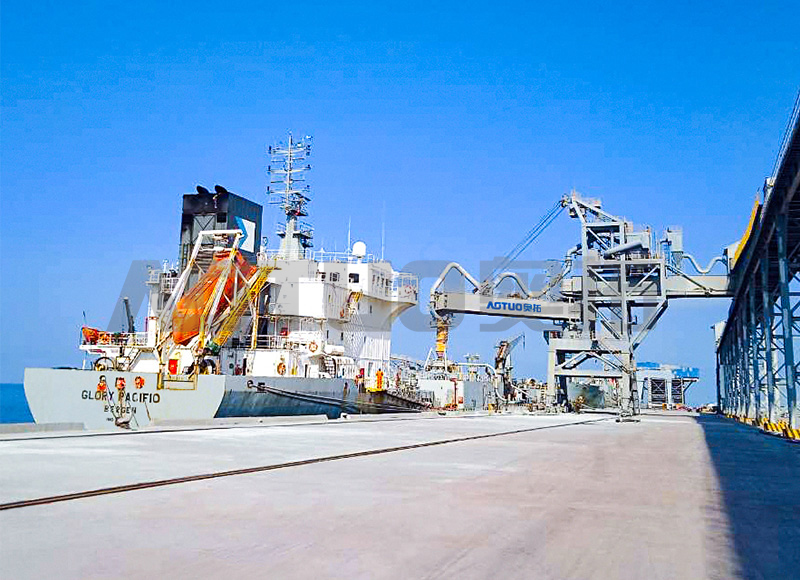
In the high-stakes environment of maritime logistics, berth utilization is the primary driver of port profitability. For terminals facing the constraints of limited berth space, the selection of a bulk ship loader is a critical engineering decision that dictates throughput capacity and operational flexibility. Hangzhou Aotuo Mechanical and Electrical Co., Ltd. (AOTUO), a national high-tech enterprise with 20 years of R&D experience, specializes in the overall solution of dry bulk material port transfer systems. Our high-end equipment, ranging from grain and cement loaders to 3000t/h screw unloaders, is designed to meet the rigorous demands of modern ports handling vessels up to 200,000 DWT. Understanding the spatial mechanics of loading systems is essential for optimizing restricted port footprints.
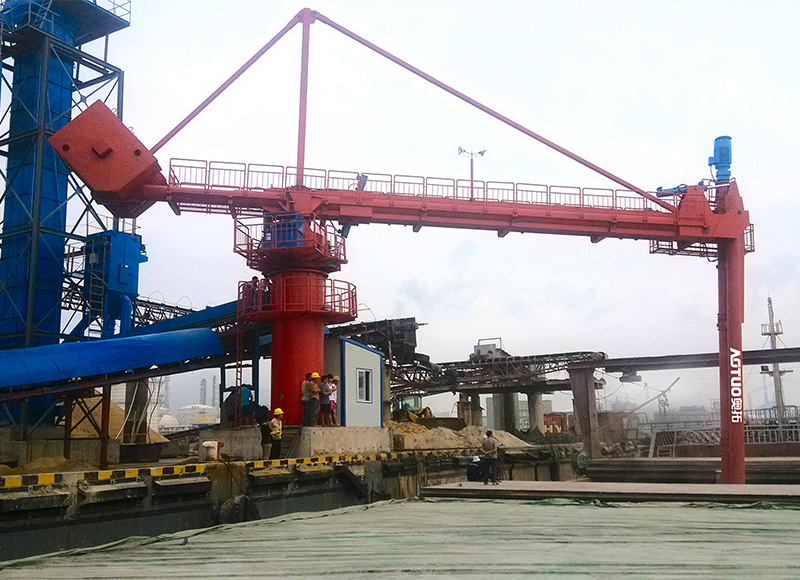
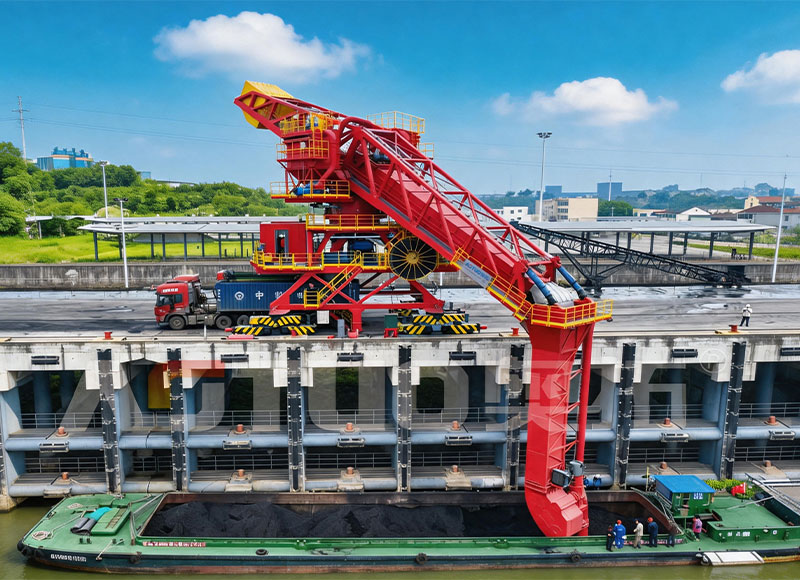
For terminals where a permanent fixed installation is structurally or spatially impossible, the mobile bulk ship loader offers the highest degree of adaptability. These units are often rubber-tired or track-mounted, allowing them to be moved off the berth when not in use. A common technical query is how to improve bulk ship loader efficiency in tight spaces; the mobile unit answers this by allowing other port activities to occur on the same berth.
While fixed loaders require a dedicated quay section, a mobile loader can be repositioned along the vessel's length, reducing the need for constant ship warping (moving the ship). However, it generally requires a wider quay surface to maneuver compared to rail-mounted systems.
| Feature | Mobile Bulk Ship Loader | Fixed Stationary Loader |
| Space Requirement | High quay width; low permanent footprint | Low quay width; high permanent footprint |
| Versatility | Can be stored away from the berth | Permanent fixture on the berth |
| Vessel Maneuvering | Minimal ship warping required | Requires frequent ship warping |
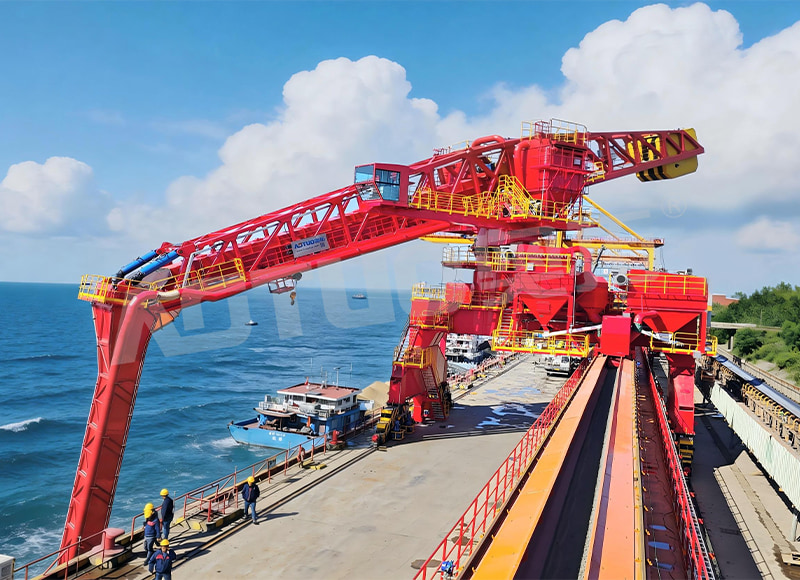
When the berth length is the limiting factor rather than the quay width, the radial bulk ship loader and telescopic bulk ship loader become the preferred choices. A radial loader pivots from a single point, covering a large arc of the vessel's hatches without moving the main chassis. Evaluating radial vs telescopic ship loader for narrow berths reveals that telescopic models provide the best "reach-to-footprint" ratio. The telescopic boom can extend or retract to reach the far side of the ship's hold, which is vital for maintaining vessel stability during the loading process.
Telescopic systems provide superior dust control compared to simple radial booms, as the discharge height can be adjusted to minimize the free-fall distance of the material, a core specialty of AOTUO's environmentally friendly equipment.
| Technical Metric | Telescopic Ship Loader | Radial Ship Loader |
| Hatch Coverage | Excellent (X and Y axis adjustment) | Good (Arc-based coverage) |
| Dust Emission Control | Superior (Variable discharge height) | Moderate (Fixed or luffing boom) |
| Mechanical Complexity | High (Requires telescopic drive) | Moderate (Single pivot point) |
Small-scale terminals often prioritize capital expenditure (CAPEX) alongside space constraints. When considering what is the best bulk ship loader for small scale terminals, engineers must look at the integration of the conveyor system. AOTUO's intelligent control systems allow for the seamless synchronization between the bulk ship loader and the feeding conveyors. For berths with restricted length, a combination of a radial pivot with a telescopic boom provides the "3D coverage" needed to fill hatches on a 200,000 DWT vessel without requiring the ship to move more than once.
A frequent point of debate among port authorities is the bulk ship loader vs ship warping cost comparison. In limited berth spaces, every hour spent moving a vessel is an hour of lost loading time. A high-end bulk ship loader with radial and telescopic capabilities might have a higher initial cost but drastically reduces the operational expense of tugboats and pilotage required for ship warping. AOTUO, as the responsible drafting unit for industry standards like JC/T 2575, focuses on minimizing these hidden costs through localized, high-efficiency engineering.
Yes. Depending on the boom length and luffing angle, a bulk ship loader can be configured to load everything from small barges to 200,000 DWT bulk carriers.
Our loaders are equipped with advanced dust collectors and enclosed screw or belt conveying systems to ensure that materials like cement, coal, or grain do not contaminate the port environment.
Our loading and unloading technology can reach capacities of up to 3000t/h, significantly reducing the vessel's turnaround time in the port.
Absolutely. AOTUO holds over 100 patents and specializes in customized solutions. We can design bulk ship loader systems that integrate with existing port infrastructure and specific berth constraints.
Telescopic booms require regular inspection of the drive cables or hydraulic cylinders and the wear liners of the internal conveyors. AOTUO's intelligent control systems provide real-time monitoring to predict maintenance needs before they cause downtime.
It is focused on the overall solution of dry bulk material port transfer system,
research and development, manufacturing, and service
Copyright © Hangzhou Aotuo Mechanical and Electrical Co., Ltd. All Rights Reserved.
Custom Material Conveyor Transfer Systems Manufacturers