EN
EN English
 中文简体
中文简体 Français
Industry News
Home / News / Industry News / Screw Ship Unloader vs. Pneumatic Conveying: Which Continuous Unloading Technology Offers the Lowest Material Breakage Rate?

Article Directory
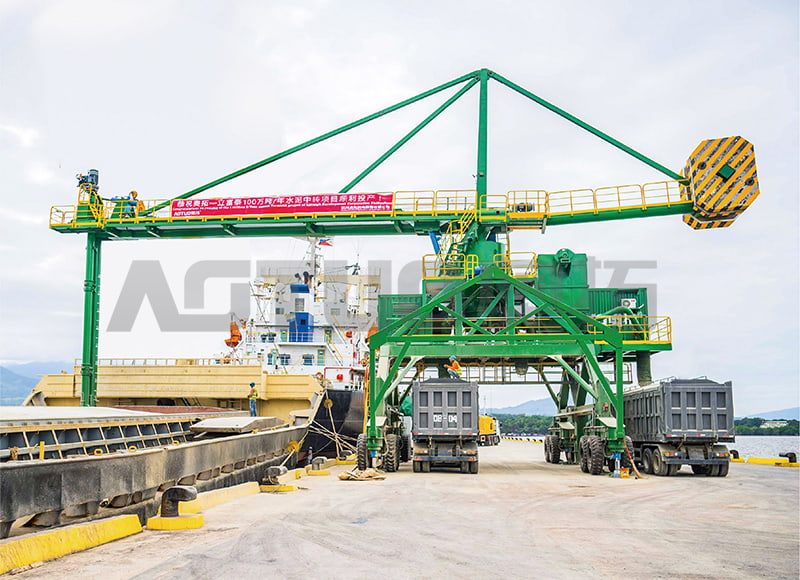
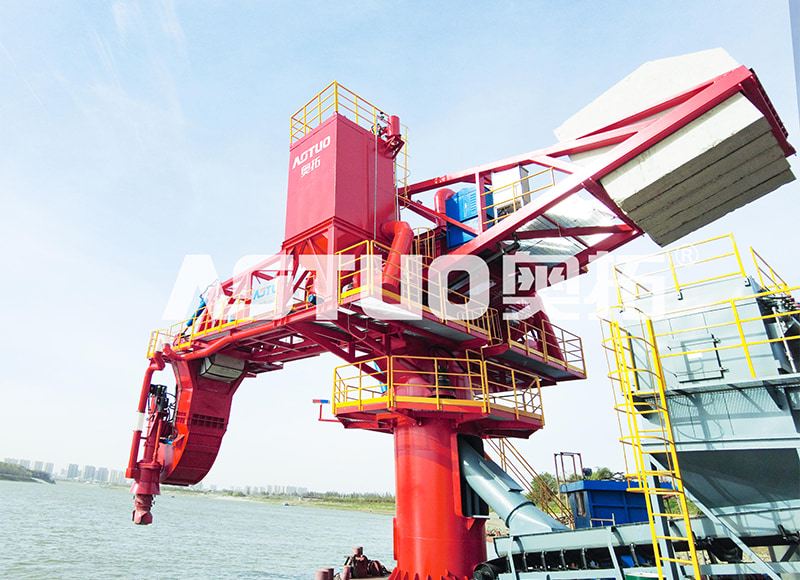
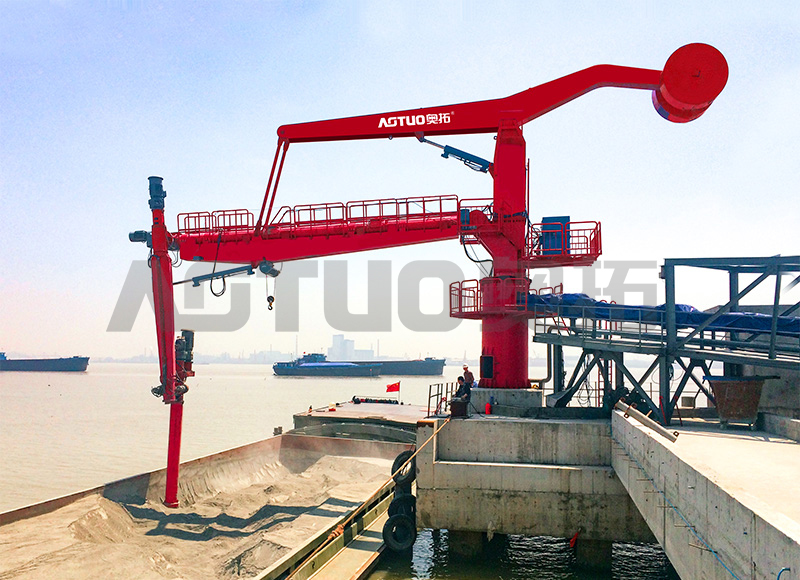
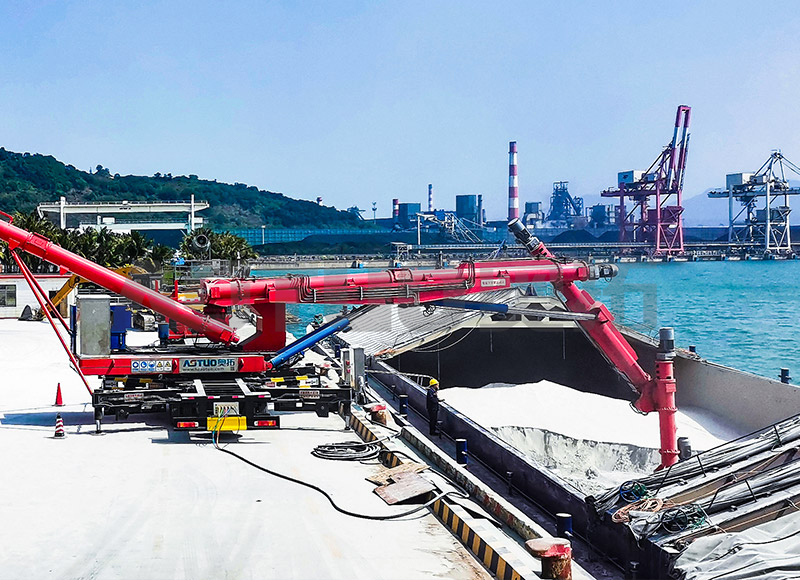
In the global dry bulk logistics sector, maintaining the physical integrity of cargo during port transfer is a critical performance indicator. For fragile materials such as grain, specialized fertilizers, or delicate minerals, the choice between mechanical and pneumatic systems can dictate the commercial value of the shipment. Hangzhou Aotuo Mechanical and Electrical Co., Ltd. (AOTUO), a national high-tech enterprise with over 20 years of R&D experience, has been at the forefront of this technological evolution. As the responsible drafting unit for the industry standard JC/T 2575, AOTUO specializes in the Screw Ship Unloader, providing solutions with capacities up to 3000t/h for vessels up to 200,000 DWT. This article provides a technical comparison of continuous ship unloading technology, focusing specifically on how mechanical vs pneumatic ship unloader mechanics influence material degradation and breakage rates.
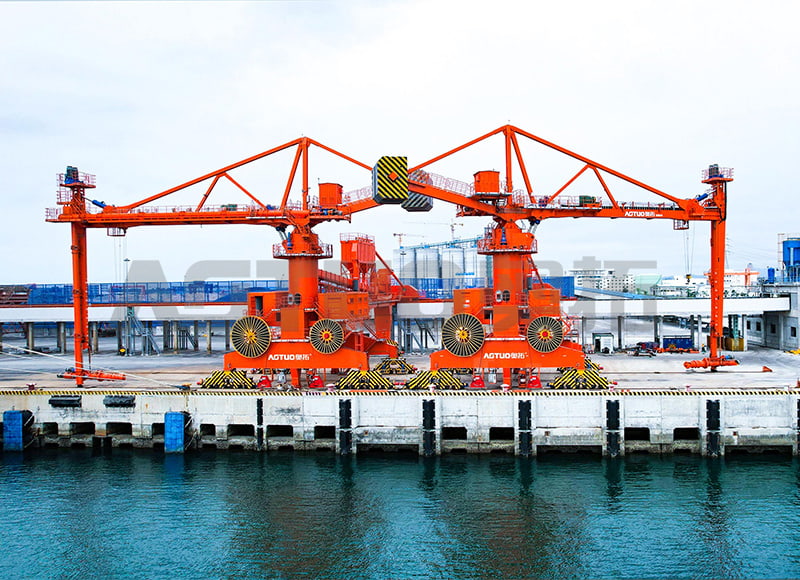
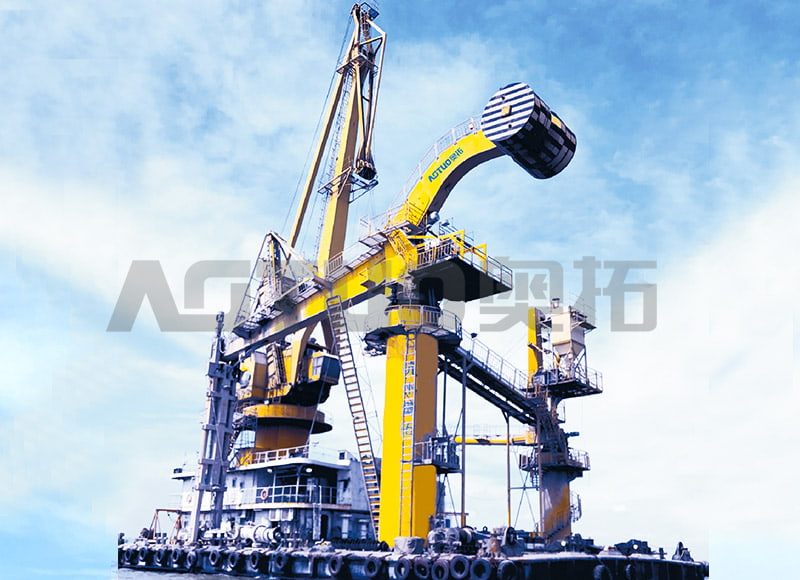
The fundamental engineering difference between the two systems lies in particle velocity. A Screw Ship Unloader operates using a rotating Archimedean screw within a vertical and horizontal casing. The material is conveyed in a "dense phase" state at relatively low velocities, where particles are supported by the screw flighting and move as a cohesive column. In contrast, pneumatic ship unloader working principle relies on high-velocity airflow to suspend and transport particles. These particles often reach velocities of 20-30 m/s, leading to high-impact collisions at pipe bends. While the screw unloader maintains a gentle mechanical lift, the pneumatic system subjects the material to significant kinetic energy release upon contact with the conveyor walls, increasing the grain ship unloader breakage rate for sensitive crops.
The mechanical screw unloader ensures a controlled, low-velocity ascent, whereas pneumatic systems require high speeds to prevent material saltation and line plugging.
| Parameters | Screw Ship Unloader | Pneumatic Conveying System |
| Average Particle Velocity | Low (typically < 5 m/s) | High (20 - 35 m/s) |
| Material State | Dense phase / Mechanical lift | Dilute phase / Air suspension |
| Impact Frequency | Minimal (Constant contact) | Extreme (Frequent collisions at bends) |
| Breakage Risk | Very Low | Moderate to High |
Material breakage is not only caused by impact but also by inter-particle attrition. In a bulk cement screw unloader, the material fills the cross-section of the screw, meaning the primary friction occurs between the material and the screw flight, with a stabilized boundary layer. For clinker ship unloader maintenance considerations, the low-speed rotation significantly reduces the abrasive wear on the material. Conversely, in pneumatic systems, the turbulent nature of the airflow causes constant "sandblasting" of the material against the ductwork. When handling sensitive cargo, the benefits of screw ship unloader technology become apparent as the mechanical column prevents the individual particle turbulence that characterizes pneumatic transport.
ROI in port operations is heavily influenced by energy consumption per ton. AOTUO's environmentally friendly screw coal unloader systems are designed to maximize throughput while minimizing power draw. A Screw Ship Unloader typically consumes 0.4 - 0.5 kWh/t, while pneumatic systems often require 2-3 times that energy to maintain air pressure and velocity. When comparing screw vs pneumatic unloaders for 200,000 DWT vessels, the mechanical system's ability to maintain high fill rates without increasing particle velocity makes it the more sustainable choice for high-volume operations. Furthermore, the efficiency of screw ship unloader units remains consistent even as the ship is emptied, whereas pneumatic efficiency often drops as the suction head reaches the ship's bottom.
Mechanical screw systems scale more efficiently for ultra-large bulk carriers (ULBC) due to their lower specific energy requirements and higher volumetric efficiency.
| Metric | Screw Ship Unloader | Pneumatic Unloader |
| Specific Energy (kWh/t) | 0.4 - 0.7 | 1.2 - 2.5 |
| Max Capacity (t/h) | Up to 3000 (AOTUO Tech) | Usually < 1000 per pipe |
| Environmental Impact | Dust-free / Fully enclosed | Requires massive filtration/dust collection |
A versatile continuous ship unloading technology must handle various moisture levels and particle sizes. AOTUO has localized the bulk cement screw unloader and expanded the technology to handle coal, grain, and clinker. The grain ship unloader breakage rate is a specific concern for soy and corn; the mechanical screw prevents the "shattering" effect seen in pneumatic nozzles. For heavier materials, an environmentally friendly clinker unloader utilizes hardened screw flights to manage abrasive particles without the high-speed pipe erosion associated with pneumatic conveying of hard minerals.
For port operators prioritizing material quality and operational ROI, the Screw Ship Unloader remains the superior choice for continuous dry bulk handling. By maintaining low particle velocities and minimizing high-energy impacts, it offers a significantly lower breakage rate compared to pneumatic systems. Hangzhou Aotuo Mechanical and Electrical Co., Ltd. continues to lead the industry with localized, high-end equipment that combines 20 years of manufacturing excellence with state-of-the-art intelligent control, ensuring your dry bulk material port transfer system is both efficient and environmentally friendly.
Yes. Systems designed by AOTUO are fully enclosed from the suction head to the discharge point. Combined with integrated dust collectors, they represent the peak of environmentally friendly screw coal unloader technology.
Absolutely. AOTUO designs equipment capable of unloading ships up to 200,000 DWT with a reach and capacity (up to 3000t/h) that far exceeds traditional pneumatic or grab-bucket systems.
Breakage in grain is caused by high-velocity impacts. The Screw Ship Unloader moves grain at less than 1/5th the velocity of a pneumatic system, keeping the kernels intact and maintaining their grade for the food and feed industries.
Maintenance focuses on the rotating parts and the suction head's wear-resistant liners. Because the screw operates at low RPMs, the wear is predictable and significantly lower than the erosion found in pneumatic pipe bends.
As the responsible unit for the JC/T 2575 industry standard and a pioneer in localization, AOTUO provides 20 years of proven reliability and holds over 100 patents in dry bulk material port loading and unloading.
It is focused on the overall solution of dry bulk material port transfer system,
research and development, manufacturing, and service
Copyright © Hangzhou Aotuo Mechanical and Electrical Co., Ltd. All Rights Reserved.
Custom Material Conveyor Transfer Systems Manufacturers