EN
EN English
 中文简体
中文简体 Français
Industry News
Home / News / Industry News / Understanding Bulk Grain Loading Systems: How Ports Move Grain to Ships

Article Directory
A Panamax bulk carrier sits alongside a grain export berth. The deck crew has opened the hatches, and thousands of tonnes of wheat in the terminal silos are waiting to be moved into the hold below. Over the next 24 hours, terminal operators, cargo surveyors, and one continuous loading system must transfer roughly 60,000 tonnes of grain from silo to stow — accurately weighed, correctly trimmed, and without exceeding the vessel's structural limits.
The conclusion first: a bulk grain loading system operates on a continuous-flow principle, not a batch principle. Grain is drawn from storage silos, passes through weighing equipment, travels along a network of belt conveyors to the berth, and finally reaches the ship loader, which drops the grain through a telescopic loading spout into the cargo hold. System performance is measured in tonnes per hour, and at a well-designed export terminal the entire hold-filling job is completed in well under a day.
For the port engineer, the value of the system lies not in any single machine but in the uninterrupted flow from silo to ship. Grain that stops moving costs berth time, and berth time is the most expensive asset a grain port owns.
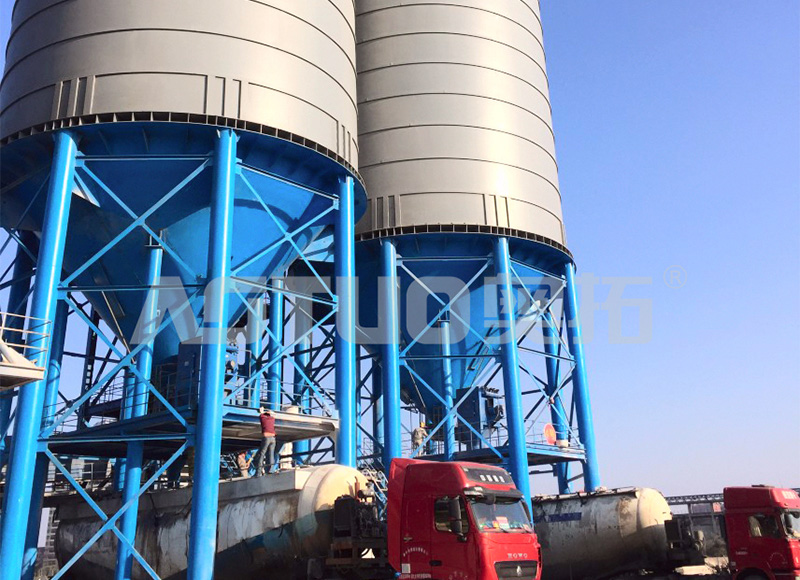
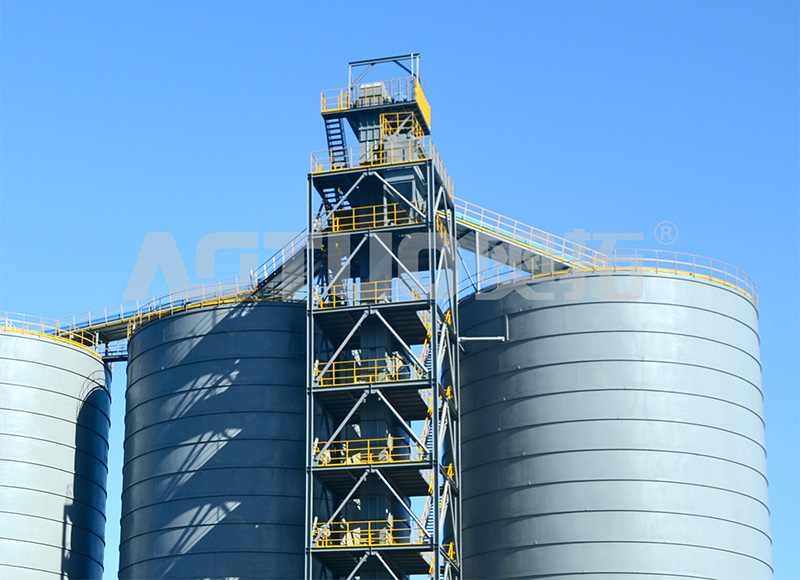
Grain usually arrives at the terminal by rail, truck, or barge. It is tipped into a receiving pit fitted with a grid to stop large contaminants, then passed through cleaning equipment that removes stones, broken kernels, and dust. Bucket elevators and belt conveyors then carry the cleaned grain into storage silos, where it remains until a vessel is ready.
When loading starts, the discharge valves at the bottom of selected silos open and the grain falls onto a conveyor in the underground gallery. The reclaim rate is matched to the rated capacity of the loading system. In a large silo bank, several hoppers feed a single collector belt, and the combination of valves is chosen to maintain a constant, controlled flow rate downstream.
Before grain reaches the ship loader, it passes through a high-capacity weighing system — typically a gravity batch weigher or a hopper scale — that records how many tonnes have been loaded. Trade contracts are often written to a precise tonnage, and even a one percent weighing error can mean a significant financial discrepancy on a 60,000-tonne cargo. Automatic samplers tap the flow to capture representative portions for analysis of moisture, protein content, and kernel damage.
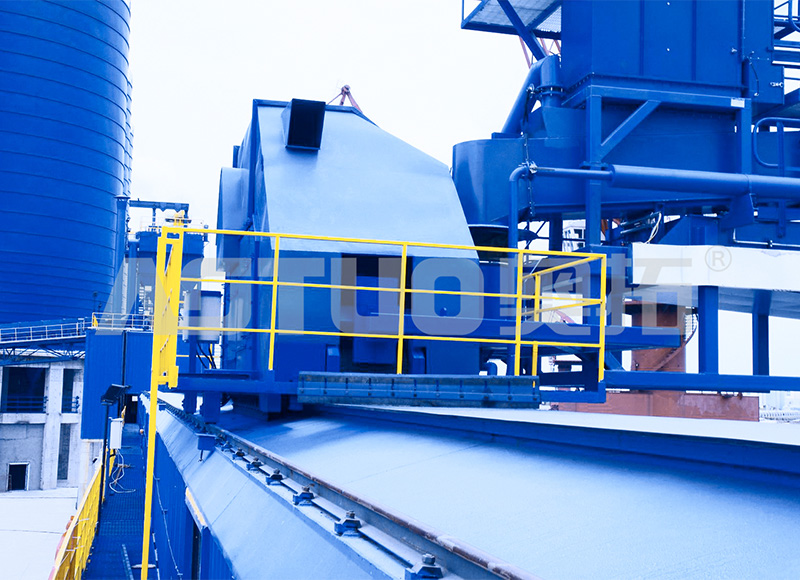
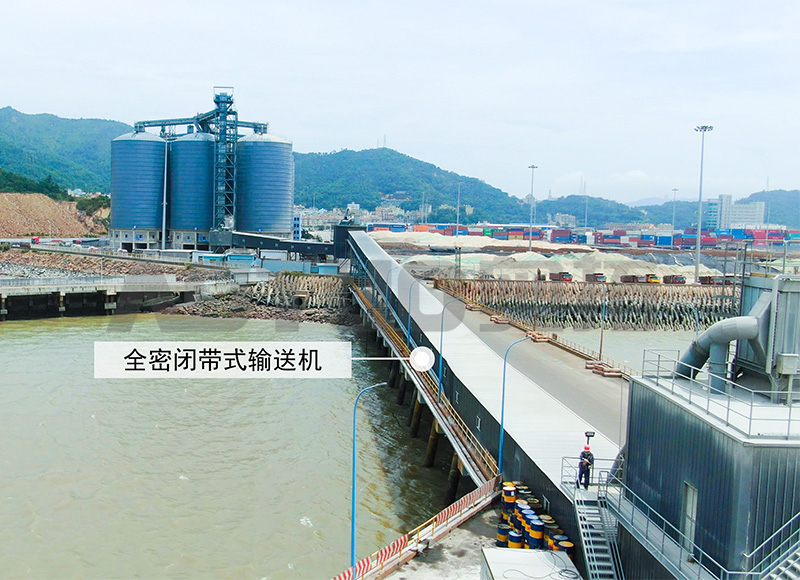
From the weighing system, grain moves to the wharf through a combination of belt conveyors, bucket elevators, and air slides. Belt conveyors handle long horizontal and slightly inclined runs; bucket elevators provide the vertical lift when the conveyor route must climb to the loader's feed height. The design goal at every transfer point is to keep the grain moving without degradation or segregation.
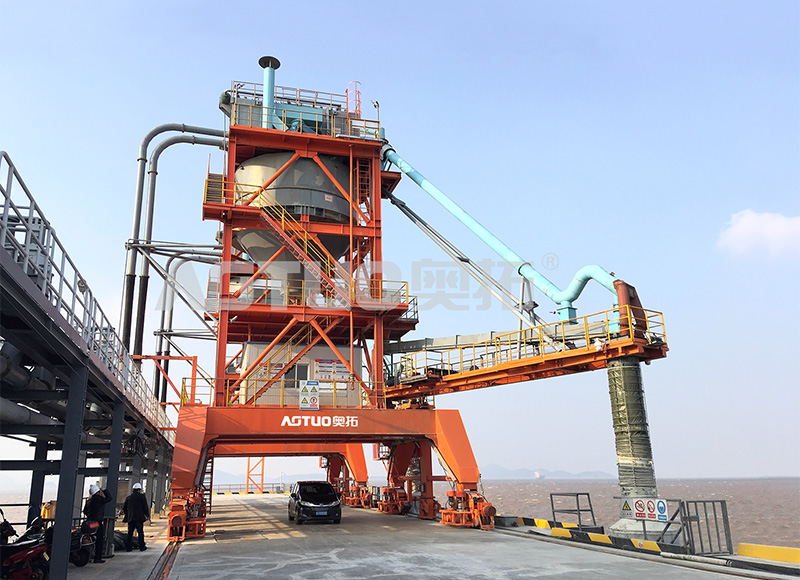
At the wharf edge, the ship loader receives the grain and transfers it onto a boom conveyor. The grain travels along the boom and falls into a telescopic loading spout, which lowers to just above the surface of the cargo. Keeping the drop distance short limits kernel breakage, reduces dust generation, and gives the operator better control over the stacking pattern. The loader then travels along the berth and the spout is swung to each position in the hatch to build an even pile.
As each hold nears full capacity, the operator uses the spout slewing motion or a small trimmer to spread the remaining grain evenly around the hatch. Untrimmed grain forms a cone that concentrates loads at the hatch edge and wastes usable cargo space. The sequence of filling holds is set by the approved loading plan, and the ship's draught is monitored throughout so that the hull remains within permitted bending moments and shear forces.
No component matters more to a grain export system than the belt conveyor that connects storage to ship. From the silo gallery to the loader feed belt, conveyors carry the full material flow. A conveyor designed for grain service needs adequate belt strength for start-up torque, accessible maintenance walkways, and drives that perform reliably in a dusty atmosphere. For a terminal planning a new berth, the conveyor network is often the single largest equipment cost after the ship loader. AOTUO's belt conveyor systems are designed specifically for continuous grain transfer over the long distances found at port facilities.
 Custom Versatile Alone/Multiple Units Belt Conveyor ManufacturersHangzhou Aotuo Mechanical And Electrical Co., Ltd. Is China Custom Versatile Alone/Multiple Units Belt Conveyor Manufacturers, Suppliers,...View Product →
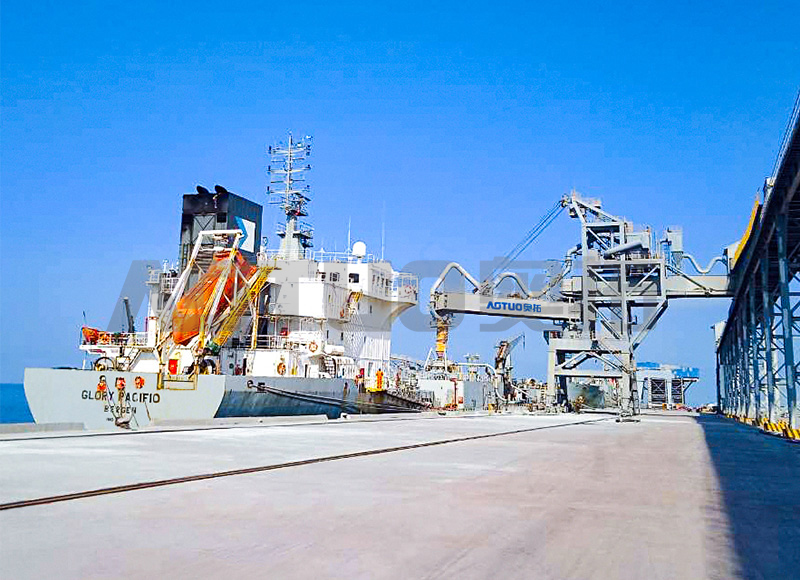
The ship loader is the valve through which every tonne must pass, making it the most visible and most operationally demanding part of the system. The rail-mobile configuration is the industry standard for grain berths because one machine can serve every hatch of a vessel by travelling along the wharf. The boom's reach, slewing range, and spout length must match the range of vessels expected at the berth. The practical importance of this matching is visible at facilities such as the grain handling operations at the Port of Brisbane, where loader geometry directly affects how quickly different ship sizes can be turned around. AOTUO's rail-mobile ship loader is built around the same continuous-flow principle, with a telescopic spout designed to limit free fall and dust at the point of loading.
 Custom 300-1500t/h 800-50000DWT Rail Mobile Ship Loader For Loading Bulk MateriaCustom 300-1500t/h 800-50000DWT Rail Mobile Ship Loader For Loading Bulk Materials, Hangzhou Aotuo Mechanical and Electrical Co., Ltd. is...View Product →
For a deeper look at how these machines are classified by throughput and specification, the operating details of grain ship loader capacity are best understood from the system perspective rather than from a single component spec sheet.
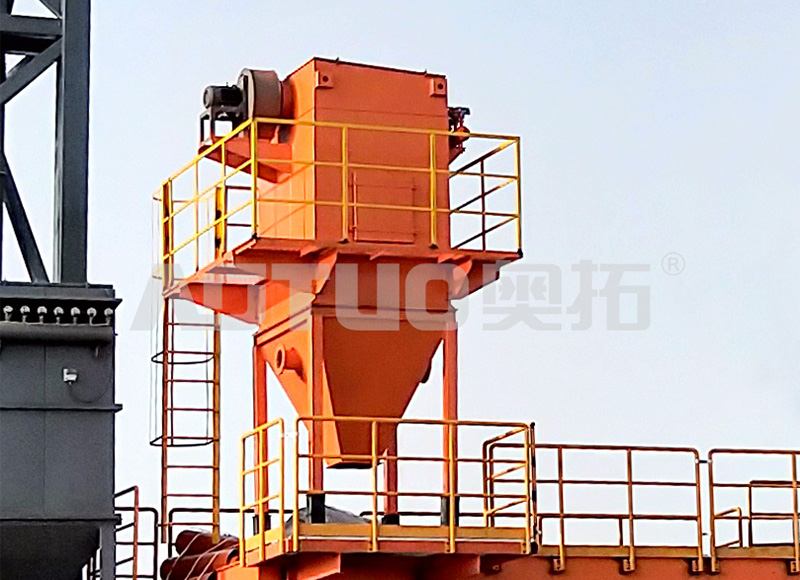
Every transfer point in a grain loading system — the silo discharge, the bucket elevator head, the conveyor transfer towers, and the loading spout — is a potential dust source. Bag filters and cartridge dust collectors are installed at these points to keep airborne dust below permitted levels. The telescopic spout also contributes by maintaining a short drop distance and by venting displaced air through a dust return duct. In terminals subject to strict environmental limits, dust collection capacity is as carefully engineered as conveying capacity.
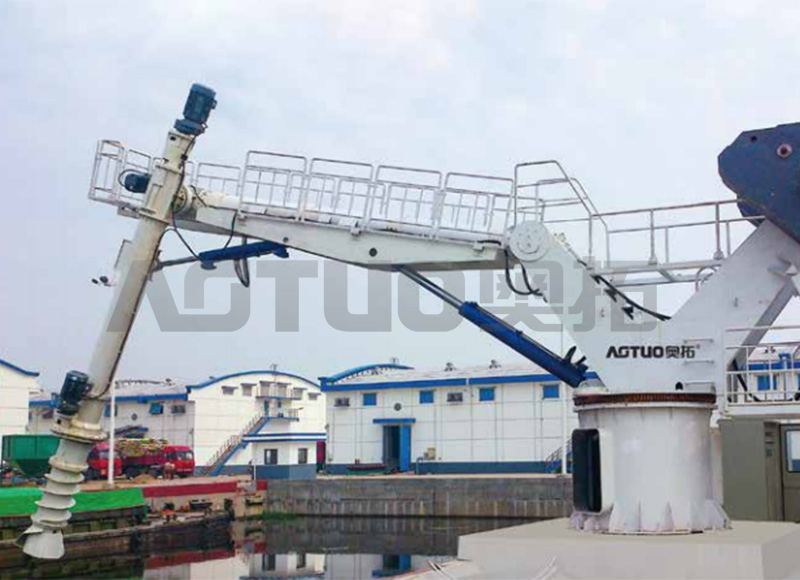
Not every grain flow is outward. Import terminals receive grain from ships and must transfer it from the hold to shore. A continuous screw-type unloader suits this duty well because it can reach into the far corners of a hold, handles free-flowing grain with minimal degradation, and recovers the cargo down to a thin remaining layer without requiring manual sweepings. AOTUO's grain ship unloader is one example of this continuous-flow approach applied to the import direction, using a vertical screw to elevate grain from the hold to the shore conveyor system.
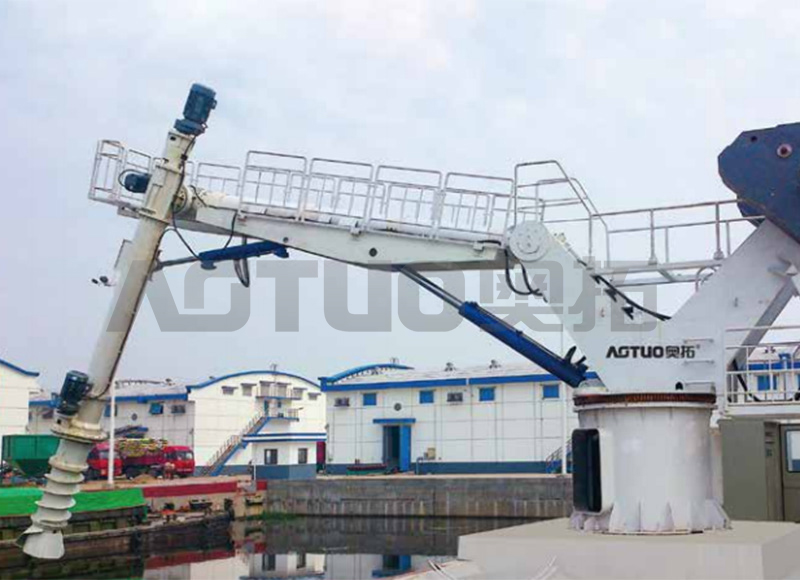 Custom Grain Ship Unloader Manufacturers, SuppliersCustom Grain Ship Unloader, Hangzhou Aotuo Mechanical and Electrical Co., Ltd. is China Grain Ship Unloader Manufacturers and Suppliers, ...View Product →
Grain is a free-flowing cargo. If a ship heels, a pile of grain in a partially filled hold can shift to one side and stay there, creating a permanent angle of list and, in serious cases, enough loss of stability to capsize the vessel. International maritime regulations therefore treat bulk grain as a high-risk cargo and require stability calculations before loading begins.
The core risks are straightforward:
Before any grain is loaded, a cargo surveyor inspects the vessel to confirm that it is ready. The inspection typically follows this sequence:
The approved loading plan is not a formality. It governs the order in which holds are filled, how much grain is placed in each hold at each stage, and the maximum draught at each point in the operation. If the plan is followed correctly, the hull remains within its permissible bending moment and shear force limits. On completion, a second inspection confirms that the ship meets the stability requirements for departure. On multi-port loading voyages, stability must be recalculated before the ship leaves each port.
Weighing is the commercial backbone of the entire operation. The bill of lading is issued on the basis of measured tonnage, and charter-party terms, customs declarations, and sales contracts all refer back to the same numbers.
Two measurement principles are common in grain terminals. In a batch weigher, grain is accumulated in a large hopper, weighed, and then released onto the load-out conveyor. This is simple, accurate, and well suited to high capacities. In a continuous belt scale system, load cells and speed sensors calculate the mass passing beneath them on the conveyor at any instant, allowing a total to be accumulated without stopping the flow. Many large terminals use a batch weigher as the commercial reference and belt scales for secondary monitoring.
The same data feed the terminal's control room, where operators track the current loading rate in tonnes per hour and compare the loaded quantity against the vessel's draught survey. The two independent checks, one by scale and one by draught, protect the shipper, the receiver, and the ship against disputes.
Grain loading looks like a collection of separate machines, but its real economics sit in the interfaces between them. The silo discharge rate must match the weigher's cycle time. The loading spout must be able to trim the hold without slowing down the conveyor behind it. Dust control must be engineered into the same system that maximises throughput.
That is why port owners with a new grain berth on the drawing board benefit from engaging a supplier that understands the entire dry-bulk flow chain, not just one machine. In practice, experienced equipment manufacturers bring measurable value to project planning, installation supervision, and commissioning. AOTUO's 20 years of dry-bulk port handling experience, combined with its ship loader and unloader product lines bridging the loading and unloading directions, reflects exactly the system-level engineering discipline that keeps grain terminals operationally and commercially competitive.
It is focused on the overall solution of dry bulk material port transfer system,
research and development, manufacturing, and service
Copyright © Hangzhou Aotuo Mechanical and Electrical Co., Ltd. All Rights Reserved.
Custom Material Conveyor Transfer Systems Manufacturers