EN
EN English
 中文简体
中文简体 Français
Industry News
Home / News / Industry News / Travelling Ship Loader: Key Structural and Mobility Requirements Guide

Article Directory
A rail-mounted travelling ship loader in continuous export service traverses the berth dozens of times during a single vessel call, indexing its loading spout from hatch to hatch on every pass. Buyers tend to compare rated tonnage first, but the real performance ceiling sits in structure and mobility: how the gantry spreads wheel loads, how the luffing boom reaches across the beam of a 200,000 DWT vessel, and how accurately the machine stops over an open hatch. This guide answers the key structural and mobility requirements for anyone specifying, upgrading, or evaluating this type of dry bulk handling equipment.
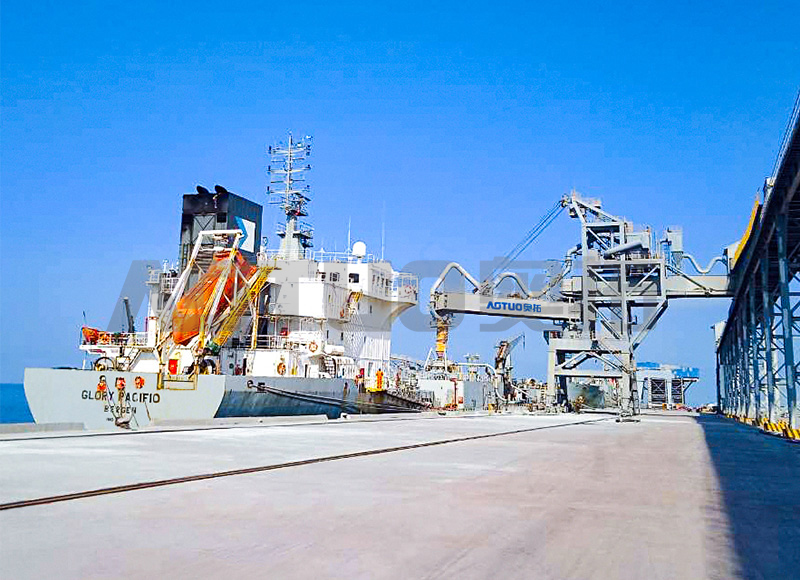
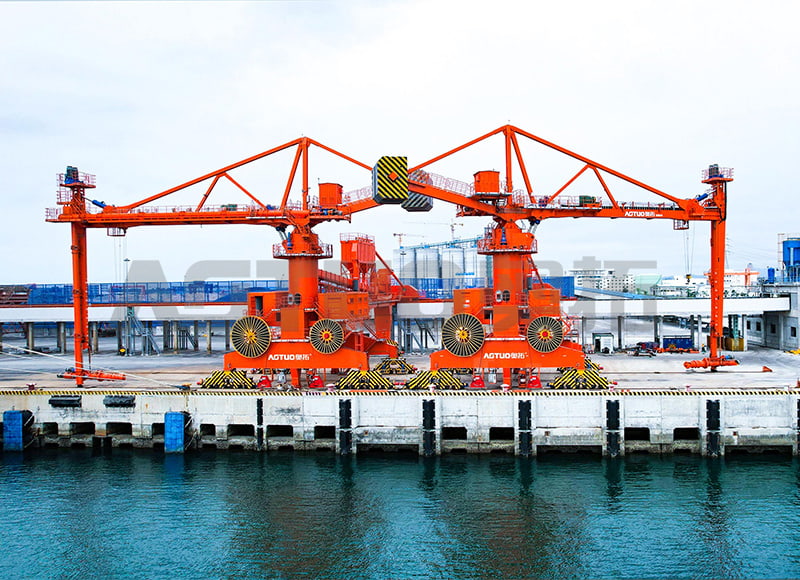
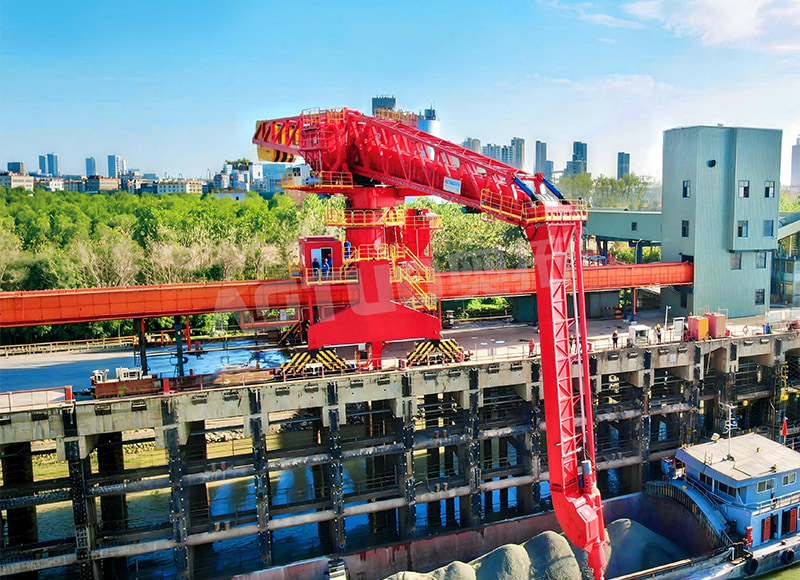
A travelling ship loader is a rail-mounted continuous bulk handling machine that moves parallel to the berth to load dry bulk material into a ship's holds.
A travelling ship loader combines a load-bearing gantry, a luffing and slewing boom conveyor, a telescopic loading spout, and a rail travel system into a single machine that indexes along the quay and covers the full length of a moored vessel.
In a fixed or shuttle configuration, the vessel must be winched along the berth, or the loader needs a very long boom to reach successive hatches. A travelling design inverts that logic: the machine moves, the ship stays put. Material flows from the shore conveyor into the loader's receiving tower, transfers onto the boom belt, and drops through the telescopic spout into the hold. This operating model gives the loader three defining traits:
Five structural subsystems determine the working envelope and service life of a travelling ship loader: the gantry frame, the luffing boom, the slewing structure, the counterweight, and the telescopic chute.
On a typical 2,000 t/h loader, the moving mass carried by the rail wheels can exceed 300 tonnes. A consistent 100 mm positioning error at the spout creates uneven trimming across the hold, which translates directly into additional labour or slower final trimming.
Mobility on a travelling ship loader is defined by rail gauge, travel speed, positioning accuracy, and storm restraint, in that order of operational importance.
Rail gauge on terminal loaders typically ranges from 6 m to 12 m. A wider gauge improves stability and allows a heavier boom, but it raises the load on the quay's rail beams and the civil cost of the berth. Travel speed is split into two regimes: a working or positioning speed of 10-20 m/min for accurate hatch stops, and a traversing speed of 25-40 m/min to move quickly between hatches. Positioning is closed by encoders, limit switches, and a final creep speed; a spout tolerance of plus or minus 50 mm is a common contract value.
Two mobility requirements are frequently underestimated. The first is storm restraint: rail clamps and storm pins must hold the full machine against the design wind speed, often 55 m/s in cyclone-prone ports. The second is cable management: a cable reel or festoon system feeds power and control signals along the travel path, and its maximum travel length should be checked against the full berth length, not the vessel length.
For a terminal operator, the travelling design is the standard answer when the berth must accept a range of vessel lengths without re-mooring. Manufacturers such as Hangzhou Aotuo Mechanical and Electrical Co., Ltd. (AOTUO), with two decades of dry bulk handling experience, supply this machine as a rail-mobile configuration with the travel drive, luffing, and spout controls integrated into a single operator cab.
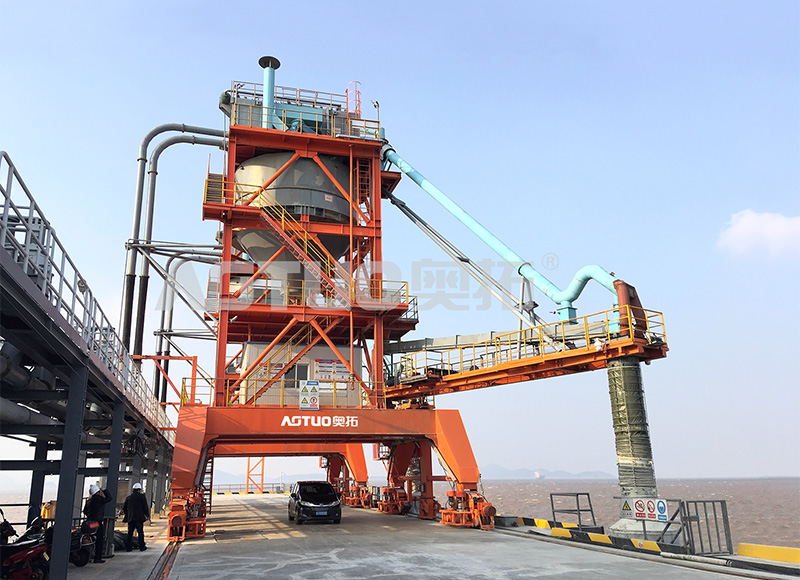 Rail-Mobile Ship Loader for Bulk Materials, 300-1500 t/hThis rail-mounted loader suits vessels from 800 to 50,000 DWT, with a capacity up to 1,500 t/h. Its integrated cab controls travel, luffing, and spout, making it a practical choice for berths handling varied ship lengths.View Product →
Vessel size drives the two distances that define the loader's geometry: the outreach from the berth rail to the far hatch, and the vertical clearance from the boom hinge to the ship's deck at any draft.
| Design parameter | Typical range | Why it matters in practice |
| Berth length | 150-400 m | Sets the rail travel length and cable-management system |
| Vessel class | 10,000-200,000 DWT | Beam and freeboard determine outreach and luffing range |
| Hatch spacing | 6-15 m | Defines the indexing accuracy needed to clear hatch coamings |
| Loading rate | 300-3,000 t/h | Governs belt speed, boom cross-section, and chute size |
| Material | Grain, coal, clinker, ore | Dust behaviour, angle of repose, and abrasion set chute and belt design |
The relationship between vessel capacity and machine reach is covered in more detail in this capacity-to-DWT compatibility guide. The practical rule is simple: check reach at the far hatch of the largest beam vessel, and check luffing clearance at the lightest draft condition, because the difference can be several metres of vertical travel.
When the same berth also needs discharge capability, the rail system can be shared with an unloader of identical gauge and wheel geometry. AOTUO builds a rail-mobile screw coal ship unloader on exactly that premise, so a combined terminal can load and unload on one track without civil rework.
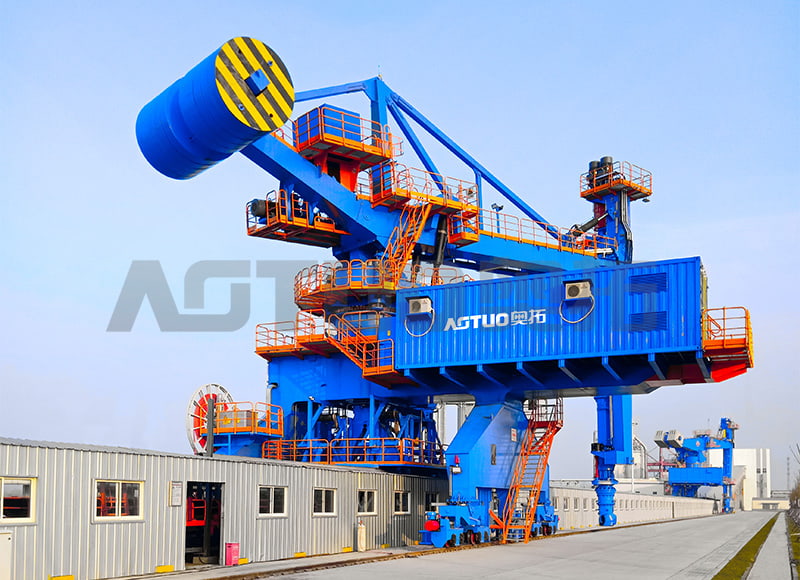 Rail-Mobile Screw Coal Ship Unloader, 200-3000 t/hDesigned for coal discharge from ships up to 200,000 DWT, this unloader shares the same rail gauge as AOTUO's loaders, enabling combined loading and unloading on one track without civil rework.View Product →
Every travelling ship loader also depends on a steady feeding system from the stockyard or silo. Belt conveyors transfer material to the loader's receiving point at a rate the boom belt can accept; mismatched feed and boom capacities are a leading cause of cycle-time loss in export terminals.
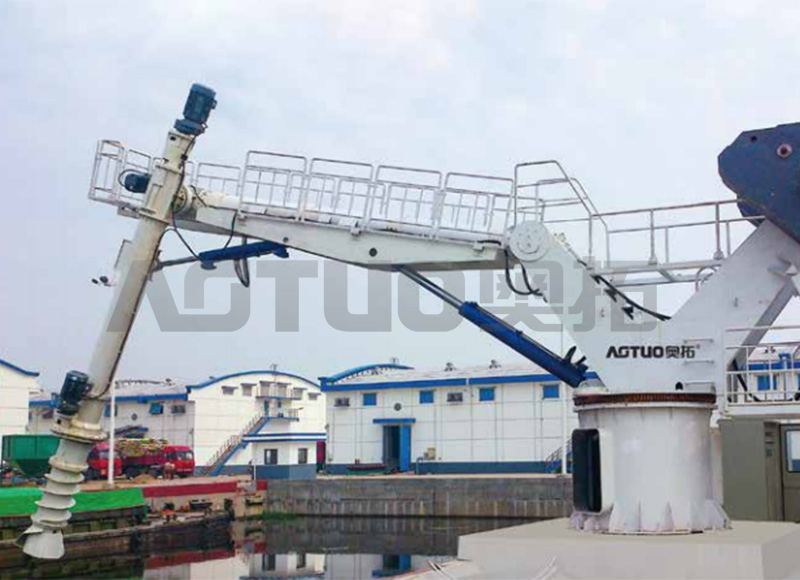
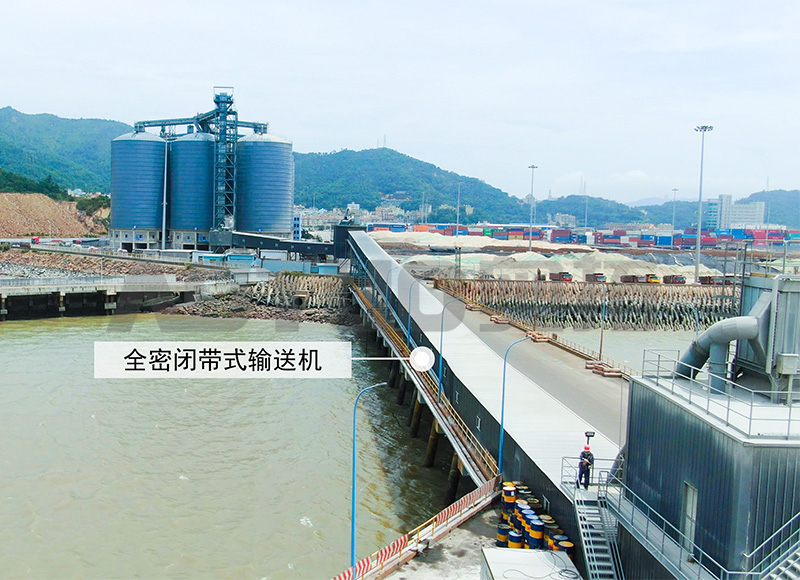 Belt Conveyor for Loose and Finished Materials, 10-3000 t/hWith a bandwidth from B400 to B2200 and conveying capacity up to 3,000 t/h, this belt conveyor reliably feeds ship loaders, helping prevent cycle-time losses from mismatched feed and boom capacities.View Product →
On a travelling ship loader, environmental and safety requirements are structural inputs rather than accessories: the chute, the luffing envelope, and the rail restraint system all change when dust limits tighten.
Port engineering practice shows that an enclosed telescopic spout, extended to keep the drop height below one metre, can reduce visible dust emissions at the hatch by more than 80 percent compared with an open drop pipe on the same machine.
Evaluate a travelling ship loader supplier on demonstrated project evidence, the maximum vessel class handled, visible manufacturing capability, and participation in technical standards, rather than on brochure tonnage alone.
A recent example is the AOTUO installation at the Port of Brisbane, where rail-mounted handling equipment operates under Australian port compliance requirements. Case evidence of this kind answers the two questions that matter most: does the machine hold its positioning accuracy in real service, and does the supplier support the equipment after commissioning.
A travelling loader runs on rails along the berth and serves every hatch without moving the vessel. A fixed loader relies on a long boom reach or on winching the ship along the berth, which is slower and consumes berth-occupancy time.
Plus or minus 50 mm at the spout is a typical working target. Beyond that, the spout can drag on hatch coamings, trimming becomes uneven, and the dust hood loses its seal against the hatch opening.
No single machine performs both duties efficiently, but a berth can share the same rail gauge between a loader and an unloader. Matching wheel spacing and rail geometry allows both machines to operate on one track without civil modification.
Rail alignment, wheel flange wear, brake torque verification, and cable-reel slip rings are the highest-wear items. Worn rail develops vibration that accelerates gearbox and bearing failures across the whole gantry.
It is focused on the overall solution of dry bulk material port transfer system,
research and development, manufacturing, and service
Copyright © Hangzhou Aotuo Mechanical and Electrical Co., Ltd. All Rights Reserved.
Custom Material Conveyor Transfer Systems Manufacturers