EN
EN English
 中文简体
中文简体 Français
Industry News
Home / News / Industry News / OEM Grain Ship Loader Design and Manufacturing Guide | Port Bulk Handling

Article Directory
A grain export terminal in Southeast Asia recently faced a common problem. The berth could accommodate 65,000 DWT Supramax vessels, but the loader options on the market either could not reach the far hatches or forced the vessel to be repositioned twice per hatch. Instead of buying a stock machine, the terminal owner commissioned an OEM to design a grain ship loader around the actual vessel fleet, grain types, and throughput targets. That difference — an engineered machine versus a catalogue product — is what this guide explains.
An OEM grain ship loader is not a conveyor mounted on a gantry. The design scope covers the structural frame, the rail-mounted gantry, the shuttle boom, the telescopic loading spout, the belt conveyor system, the dust collection network, the electrical drives, and the control and monitoring system. Every subsystem must be engineered as part of one machine that matches the berth layout, the vessel classes, and the cargo characteristics.
The design phase normally begins with a site survey and a technical specification review. The OEM converts terminal data — vessel dimensions, tide levels, berth length, grain types, and peak throughput — into a machine configuration. Then come structural calculations, drive sizing, electrical schematics, and manufacturing drawings. For the buyer, the essential output is a clear equipment definition covering capacity, geometry, environmental performance, and automation level before any steel is cut.
| Design deliverable | What it determines |
|---|---|
| Rated capacity and loading cycle | Vessel turnaround time and demurrage exposure |
| Boom length and shuttle throw | Hatch coverage and berth positioning flexibility |
| Dust collection and spout design | Compliance with local emission limits |
| Control and automation level | Manning requirements and loading accuracy |
| Structural and fatigue design | Service life under daily cyclic loading |
Rated throughput is the headline figure in any tender, but it rarely tells the full story. A loader rated at 1,500 TPH only achieves that rate when hatch size, shuttle throw, and trimming operations are aligned. The OEM should model a complete loading cycle for each vessel class the terminal plans to serve, including hatch changes and travel time between hatches. A realistic cycle analysis is more valuable than a theoretical maximum rate because it directly affects demurrage costs. Buyers who need a closer look at how capacity figures are calculated should review the key facts on grain ship loader capacity specifications before finalizing the tender.
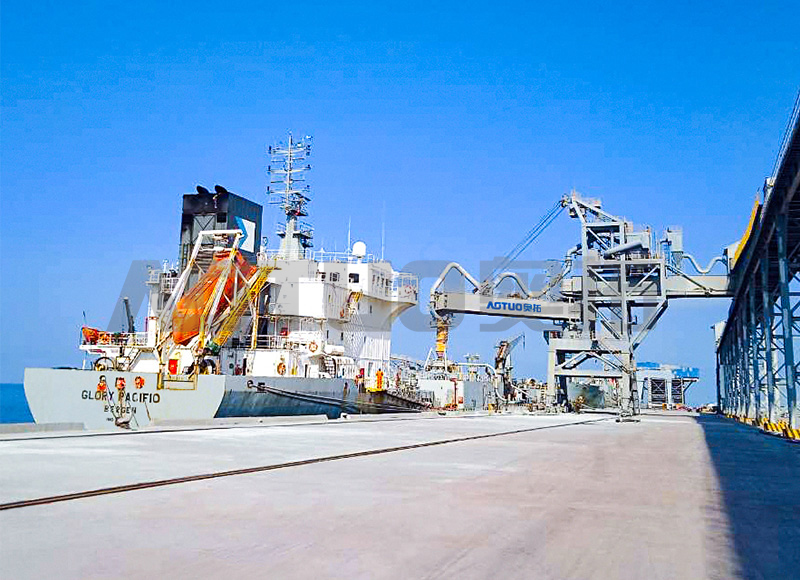
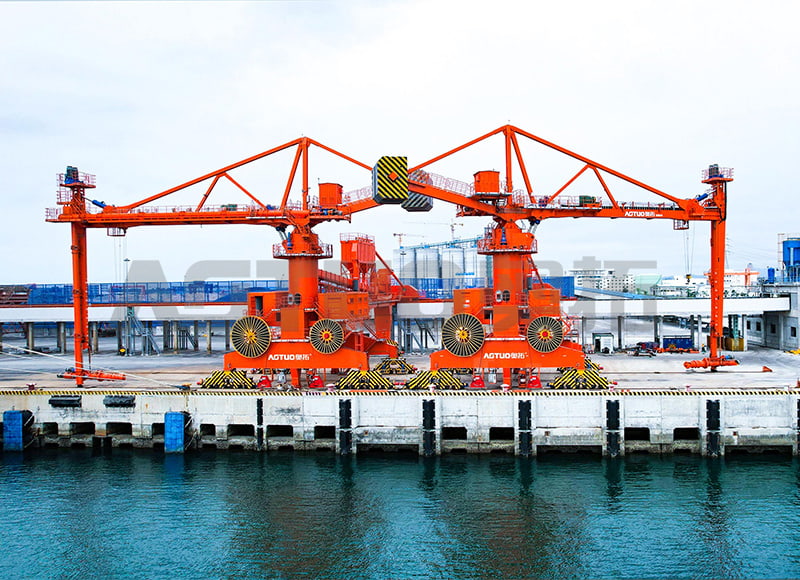
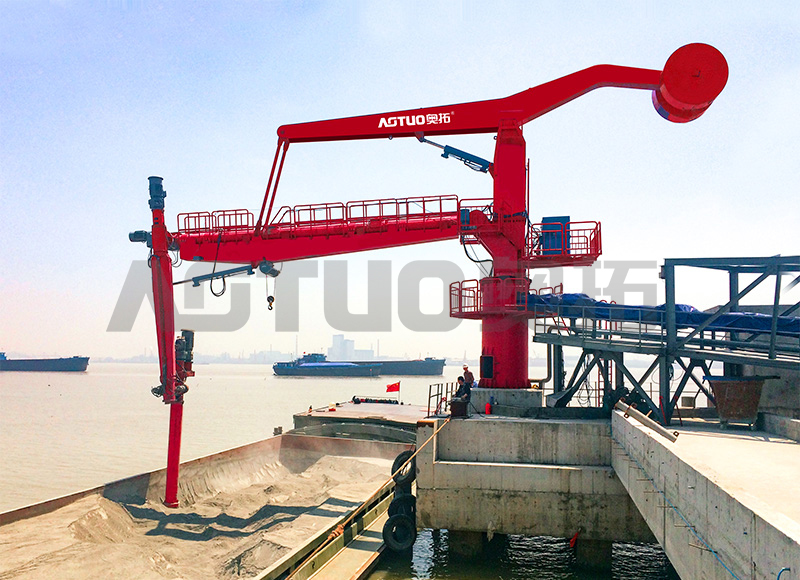
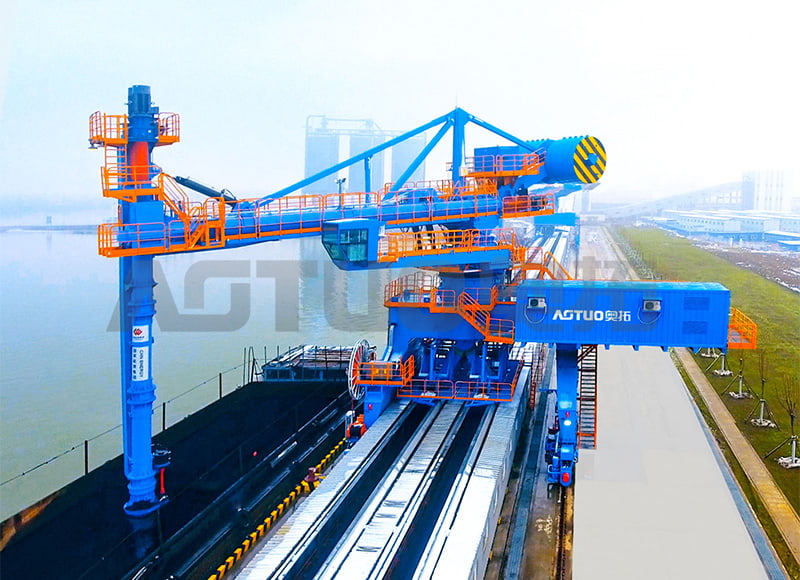
Grain carriers range from small coastal vessels to Panamax bulk carriers. The loader boom's length, luffing range, and shuttle travel determine how many hatches can be served from one position. An undersized boom forces frequent relocation of the whole machine and slows the operation. An oversized boom adds steel weight, foundation cost, and power demand. The rail span and travel distance must also match the berth layout, and the outreach must clear the beam of the largest vessel in the fleet. For projects with multiple vessel classes and long berths, AOTUO's rail mobile ship loader is a common starting point for the design evaluation.
 Custom 300-1500t/h 800-50000DWT Rail Mobile Ship Loader For Loading Bulk MateriaCustom 300-1500t/h 800-50000DWT Rail Mobile Ship Loader For Loading Bulk Materials, Hangzhou Aotuo Mechanical and Electrical Co., Ltd. is...View Product →
Different grains behave differently inside a loader. Wheat and barley flow freely; maize and soybeans are heavier and more sensitive to impact. Most breakage occurs at transfer points, at changes in belt speed, and where grain falls into the hold. An experienced OEM controls drop height with a telescopic loading spout, limits belt speed at critical points, and uses flow-control gates to keep the material stream even. For multi-grain terminals, the design should provide quick adjustments to spout length and flow rate, not a fixed setting that suits only one commodity.
| Project input | Example value | Why it matters |
|---|---|---|
| Vessel class | 35,000 to 90,000 DWT | Determines boom reach and loading height |
| Grain type | Wheat, maize, soybeans, barley | Affects flowability and breakage tolerance |
| Peak berth throughput | 1,500 TPH | Sets belt width and drive power |
| Emission limit | 10 mg/m3 particulate | Defines the dust collection system |
| Climate | Tropical, high humidity | Drives corrosion protection and condensation control |
The gantry, boom, and supporting structure of a grain ship loader are welded steel assemblies that carry dynamic loads from luffing, slewing, traveling, and wind. Fatigue life depends on weld quality, material traceability, and dimensional accuracy. A capable OEM controls fabrication with documented welding procedures, qualified welders, and staged dimensional inspections. Buyers should ask which fabrication codes apply and how weld inspection is documented, because these details determine how long the structure will last under daily loading cycles.
Coastal terminals combine salt-laden air, humidity, and abrasive grain dust. The coating system is therefore a structural protection measure, not a cosmetic detail. Marine-grade systems typically combine zinc-rich primers, intermediate coats, and polyurethane topcoats, with stainless steel specified for fasteners, access platforms, and the loading spout. The OEM should issue a coating specification matched to the site environment and provide a repair plan for coating damage during transport and installation.
Substantial factory assembly before shipment catches problems where they are cheapest to fix. Drives are aligned, conveyors are run empty, electrical panels are energized, and control logic is simulated before the machine is dismantled for shipping. Factory acceptance tests give the buyer an early opportunity to verify key functions, review documentation, and confirm that the delivered equipment matches the approved design.
Dust is the dominant environmental concern in grain loading. The main sources are the transfer point where grain enters the belt, the telescopic spout where grain falls into the hold, and the air displaced from the hold during loading. A well-designed loader encloses the transfer point, connects the loading spout to a dust collection system, and keeps the spout tip close to the grain surface. Filter units or bag collectors capture the dust, and many terminals now require continuous monitoring rather than occasional spot checks. Automated control systems can also adjust spout height and belt speed based on hold level sensors, which reduces dust generation and improves loading consistency across different operators.
Port authorities are tightening emission limits, and the requirements summarized in the automated grain ship loader dust emission standards now drive design choices in ventilation, filtration, and control logic. An OEM must design the system around the strictest limit the project will face, because retrofitting dust control after commissioning is significantly more expensive than getting it right in the original design.
Because an OEM loader is a long-term capital asset, the selection process should examine four areas before contract signature:
These questions separate a true OEM from a fabricator that builds from someone else's drawings. A practical way to assess the delivery record is to review operating installations. AOTUO's Brisbane port equipment project, for example, shows how a customized bulk handling installation is commissioned and supported outside the manufacturer's home market.
The decision to commission an OEM grain ship loader is a decision about who carries technical risk. A purpose-engineered machine matches the vessel fleet, the berth, and the commodity, and it arrives with manufacturing discipline already built in. Capacity, geometry, grain protection, dust control, automation, and fabrication quality should all be settled in the design phase instead of discovered during commissioning. That risk sharing matters most when electrical, mechanical, and control issues surface in parallel with vessel schedules.
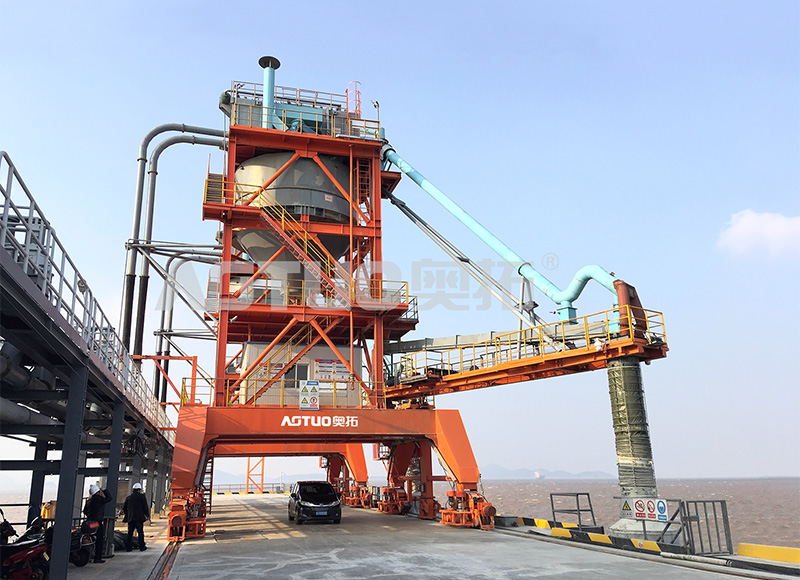
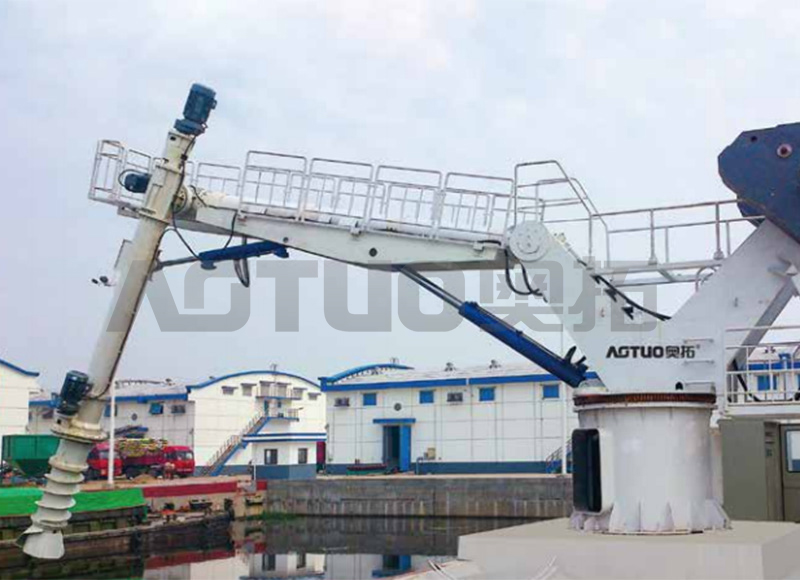
For terminals that also receive grain imports, a complementary grain ship unloader on the same berth completes the material handling loop with the same design and service standards. With a clear specification, a realistic loading cycle model, and a manufacturer that controls both design and fabrication, a grain ship loader should start production on schedule and hold its rated performance through years of service.
 Custom Grain Ship Unloader Manufacturers, SuppliersCustom Grain Ship Unloader, Hangzhou Aotuo Mechanical and Electrical Co., Ltd. is China Grain Ship Unloader Manufacturers and Suppliers, ...View Product →
It is focused on the overall solution of dry bulk material port transfer system,
research and development, manufacturing, and service
Copyright © Hangzhou Aotuo Mechanical and Electrical Co., Ltd. All Rights Reserved.
Custom Material Conveyor Transfer Systems Manufacturers