EN
EN English
 中文简体
中文简体 Français
Industry News
Home / News / Industry News / How Conveyor Systems Improve Grain Ship Loading Efficiency and Terminal Throughput

Article Directory
When a 60,000 DWT bulk carrier is alongside the berth, every extra hour spent in port translates into demurrage, crew costs, and missed schedule windows. For terminals that export grain, the difference between a profitable shift and an expensive one is rarely the crane or the operator — it is the conveyor system that feeds the ship loader.
Here is the conclusion directly: conveyor systems improve grain ship loading by replacing intermittent, high-impact handling with continuous, controlled, and largely automated flow. That change cuts vessel turnaround time, protects grain quality, reduces dust, and makes the entire terminal safer and more predictable.
A typical grain loading operation starts in the storage silo and ends in the ship's hold. The conveyor system is the chain that links those two points.
Under each silo, feeders discharge grain onto a horizontal conveyor. For most terminals, that means heavy-duty belt conveyor systems that can carry grain continuously without interrupting the stream. Belt conveyors handle high tonnage with low energy per tonne and are relatively simple to maintain. When grain needs to reach a higher elevation, grain elevators or bucket elevators lift it vertically, which is often necessary when the wharf structure is higher than the storage area.
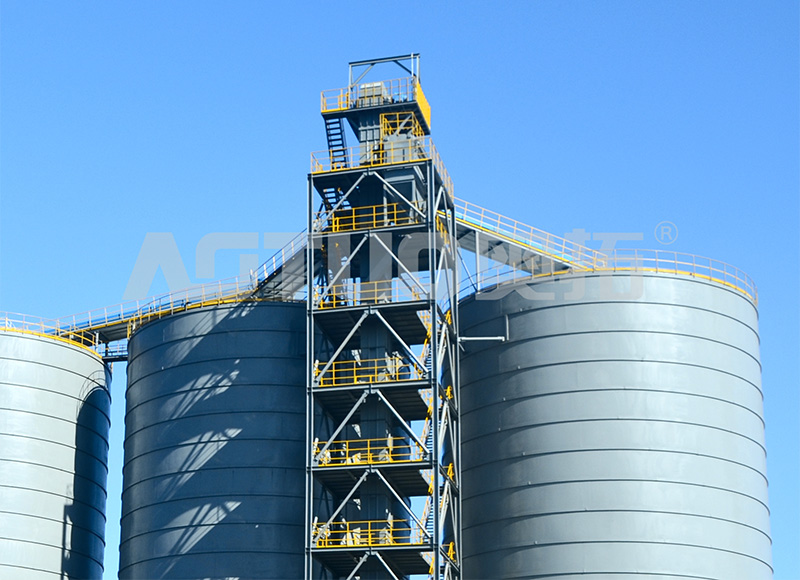 Custom Vertical Elevator Conveyor Systems Manufacturers, SuppliersAs China Custom Vertical Elevator Conveyor Systems Manufacturers, Suppliers, Hangzhou Aotuo Mechanical And Electrical Co., Ltd. Offer Ver...View Product →
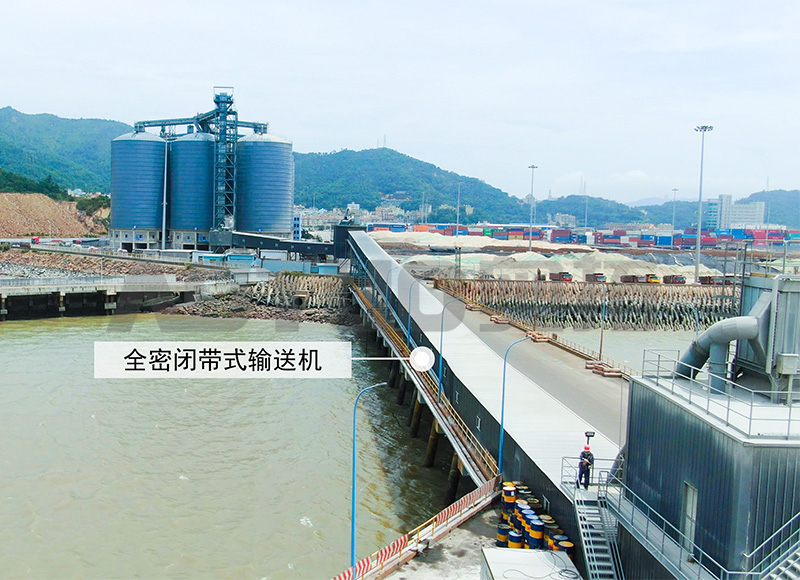 Custom Versatile Alone/Multiple Units Belt Conveyor ManufacturersHangzhou Aotuo Mechanical And Electrical Co., Ltd. Is China Custom Versatile Alone/Multiple Units Belt Conveyor Manufacturers, Suppliers,...View Product →
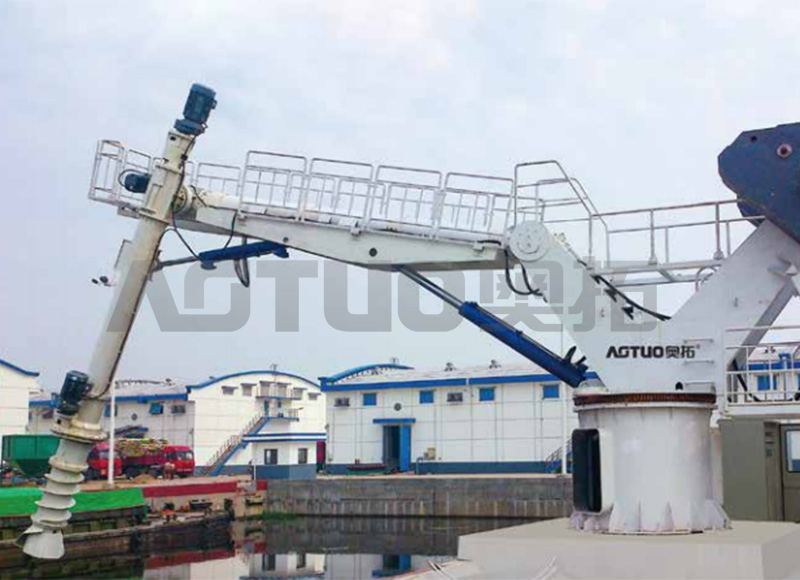
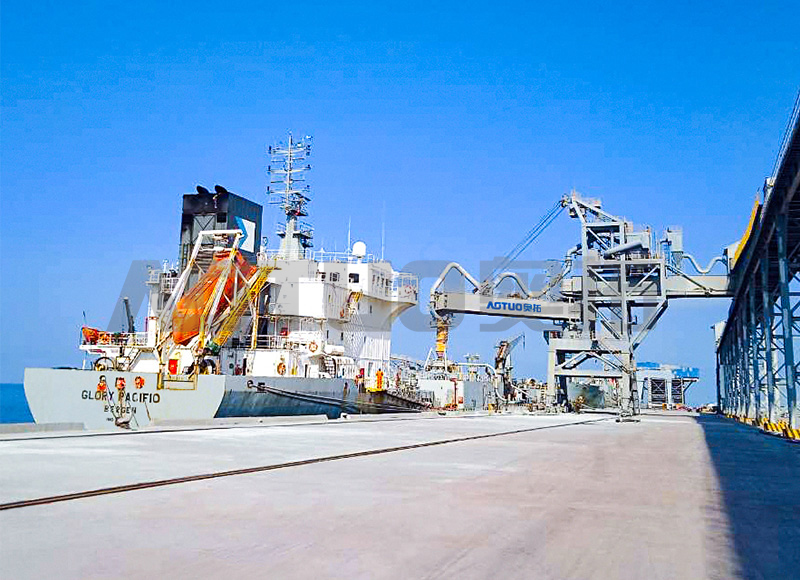
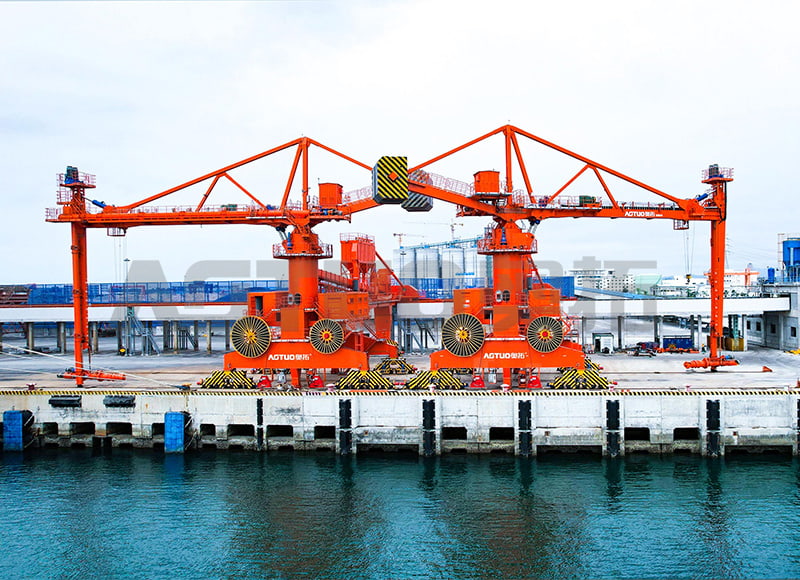
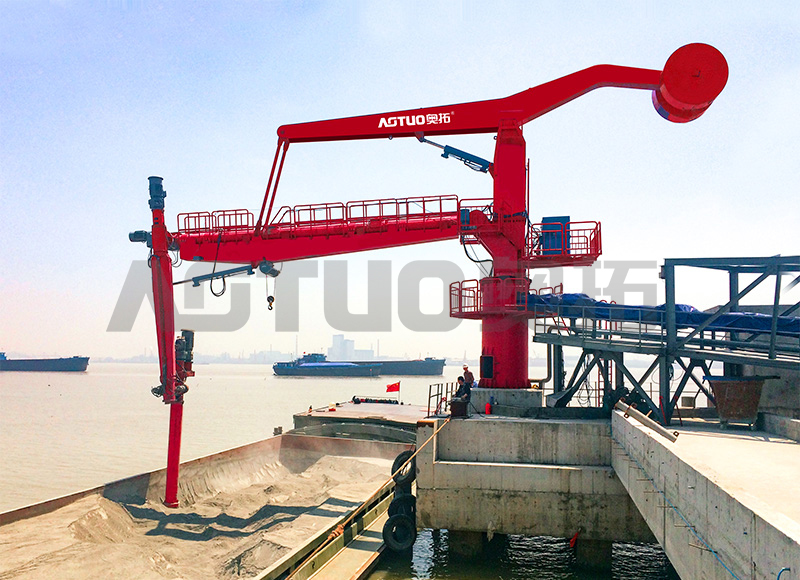
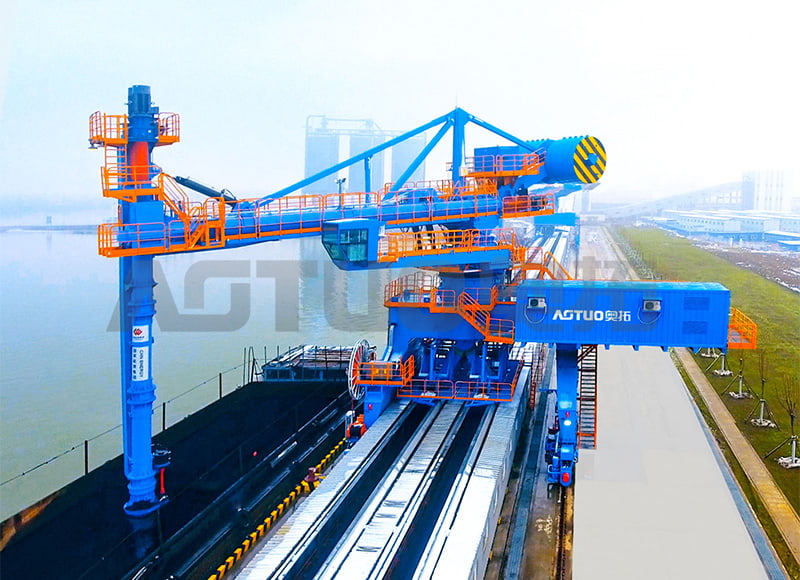
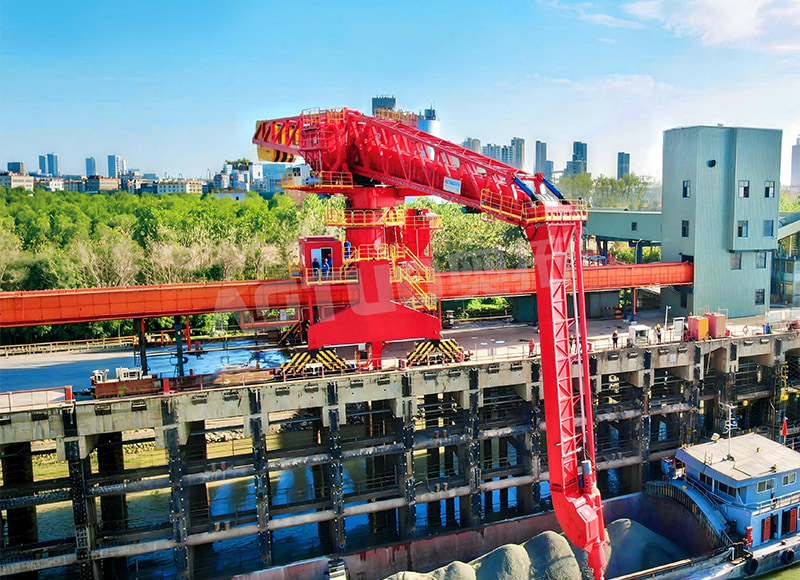
At the wharf, the final conveyor section feeds a ship loader. The loader can travel along the berth and position its telescopic spout over each hatch. A modern rail-mounted ship loader can move parallel to the vessel, which allows one operator to trim all holds without repositioning the ship.
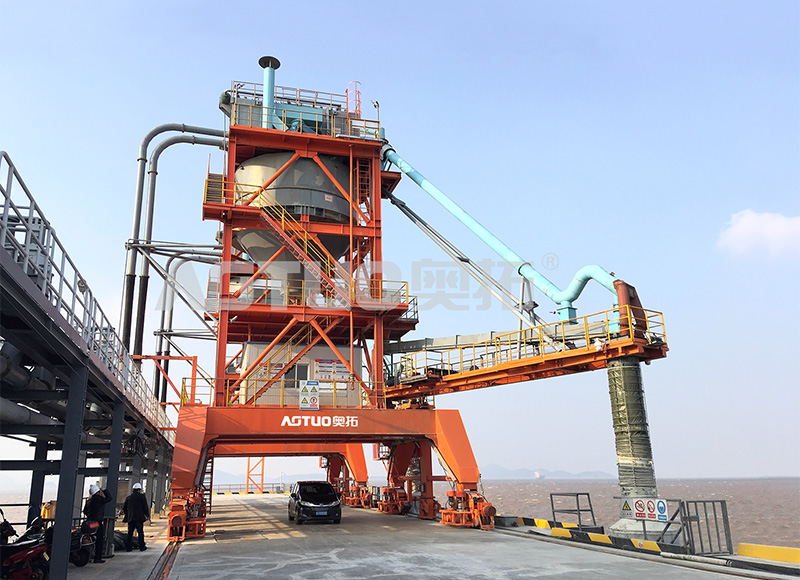 Custom 300-1500t/h 800-50000DWT Rail Mobile Ship Loader For Loading Bulk MateriaCustom 300-1500t/h 800-50000DWT Rail Mobile Ship Loader For Loading Bulk Materials, Hangzhou Aotuo Mechanical and Electrical Co., Ltd. is...View Product →
| Subsystem | What it does | Main impact |
|---|---|---|
| Belt conveyor | Horizontal transport from silos to the wharf | Sustains high flow rates with low breakage |
| Bucket elevator | Vertical lift to the loading level | Compact footprint and reliable elevation |
| Ship loader | Positions the spout over each hatch | Reduces manual alignment and trim time |
| Telescopic spout | Controls grain drop into the hold | Limits free fall and dust generation |
| Dust collection | Extracts dust at transfer points | Keeps the berth compliant and safe |
The most important improvement comes from switching from batch handling to a continuous stream. A grab crane cycles through hoist, swing, discharge, and return motions; every cycle has dead time. A conveyor system, by contrast, moves grain in a steady flow from the moment the feeder opens until the hold is full.
A grab crane may have a nominal capacity, but its real throughput depends on cycle time, operator skill, and grab fill factor. A conveyor-based line is more deterministic: once the belt is running at its design speed, the tonnage per hour is consistent. For planners, that predictability is what makes berth scheduling reliable.
Modern conveyor systems are often integrated with PLC-based controls and belt scales. Operators can adjust feed rate from a control room instead of physically following the grab. When loading grain, this allows the system to slow down near the end of a hatch to avoid overflow, then switch quickly to the next hatch. The result is fewer delays and better use of the loading window.
Grain is a living product, and rough handling reduces its market value. Impact against metal surfaces, repeated transfer points, and uncontrolled free fall all increase breakage and create dust. Conveyor systems reduce these risks in two ways.
Belt conveyors carry grain on a flat, moving surface rather than dropping it repeatedly. When grain does transfer from one belt to another, well-designed chutes use curved paths to slow the product down. This is noticeably different from grabbing and dropping grain into a hopper, where kernels strike each other and the steel structure.
The telescopic spout on a ship loader is not simply a pipe. It extends close to the surface of the grain already in the hold, limiting the distance grain falls. Keeping that drop height low is one of the simplest ways to reduce kernel damage and dust. For high-value grain and oilseed exports, this can mean a better grade at discharge and fewer claims.
Grain dust is both an environmental nuisance and an explosion hazard. A conveyor-based loading line gives a terminal many more points to control dust than a grab crane operation.
Every transfer point — where grain moves from one belt to another, into an elevator, or into the ship loader — can be fitted with a dust collection hood. A central dust collector creates negative pressure at these points and keeps airborne particles from escaping into the atmosphere. This helps terminals meet emission limits and maintain good relations with nearby communities.
Enclosed conveyor galleries and spouts limit the oxygen and ignition sources that can combine with grain dust. In addition, belt misalignment switches, speed monitors, and chute blockage sensors stop the system before a problem escalates. Because the grain stream is automated, fewer personnel need to work in dusty areas, which reduces both safety risk and labour cost.
Not every grain terminal needs the same conveyor configuration. The right system depends on vessel sizes, berth layout, storage capacity, and the types of grain handled. Several factors should be considered before choosing equipment.
For terminals planning a new grain loading line, it pays to look at the whole system rather than individual machines. The company behind the equipment needs to understand how silos, conveyors, elevators, ship loaders, and dust control fit together. A poorly matched component can reduce the capacity of the entire line.
Conveyor systems improve grain ship loading because they make the operation continuous, controlled, and clean. They replace the stop-start rhythm of grabs with a steady stream that is easier to manage, easier to automate, and far more predictable for the terminal operator.
In practice, the biggest gains come from integrating the right belt conveyors, elevators, ship loaders, and dust control into a single system. AOTUO has built and delivered dry bulk handling systems for ports in countries such as Australia and the Philippines, and the company’s port projects show how conveyor-based solutions perform in real marine environments. For a grain terminal, investing in a well-engineered conveyor system is not an extra cost — it is the fastest way to turn demurrage into throughput.
It is focused on the overall solution of dry bulk material port transfer system,
research and development, manufacturing, and service
Copyright © Hangzhou Aotuo Mechanical and Electrical Co., Ltd. All Rights Reserved.
Custom Material Conveyor Transfer Systems Manufacturers