EN
EN English
 中文简体
中文简体 Français
Industry News
Home / News / Industry News / Maximizing Throughput: Precision Capacity Calculation for the Mobile ship unloader

Article Directory
Efficient port logistics depend on the reliable and rapid unloading of bulk cargoes. For the **Mobile ship unloader**, throughput—measured in tonnes per hour (TPH)—is the single most critical performance metric. Engineering the equipment to maximize this rate requires detailed analysis of material characteristics, system dynamics, and the intrinsic differences between continuous and intermittent unloading technologies. This deep dive provides technical insights into optimizing capacity, addressing the key Factors affecting ship unloader average versus peak capacity.
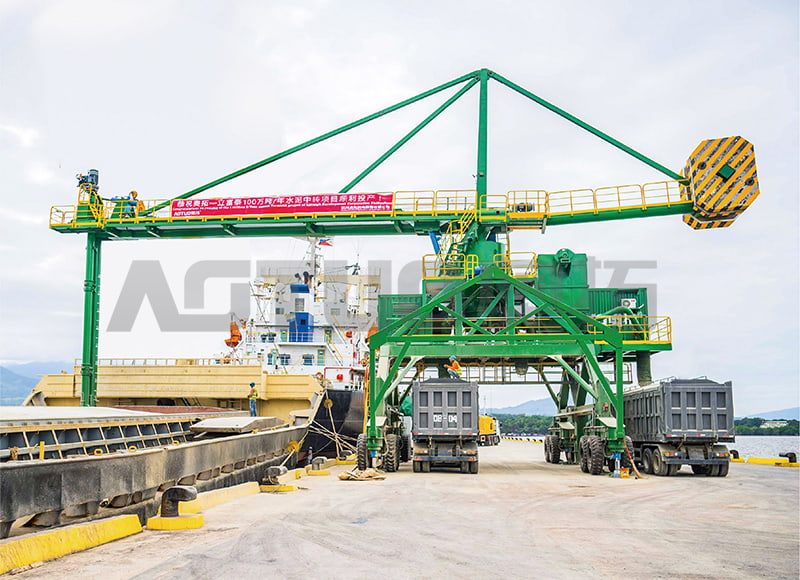
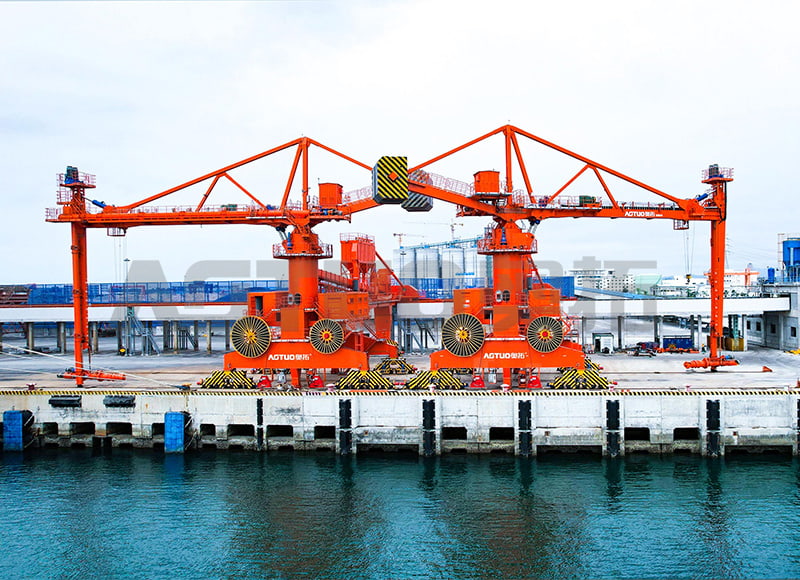
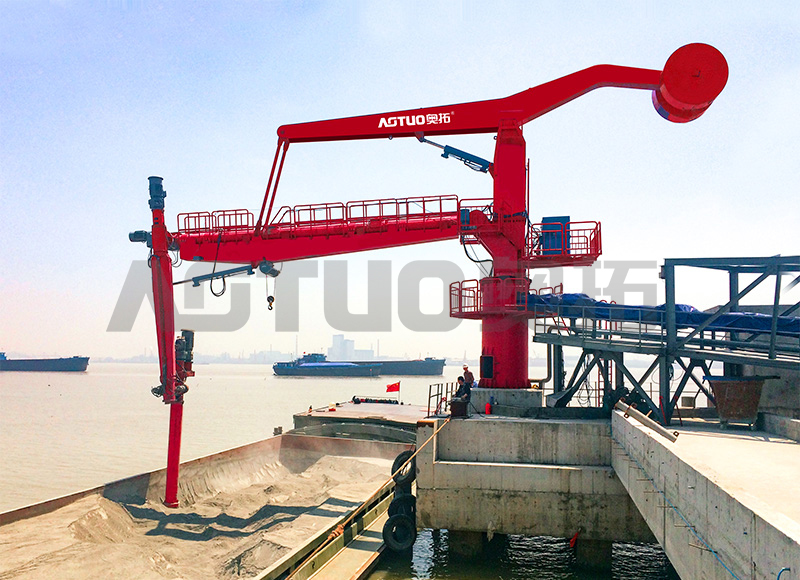
1000-70000 DWT 200-1500t/h Tire Mobile Screw Ship Unloader
When evaluating performance, it is vital to distinguish between peak and average capacity.
The TPH calculation begins with volumetric flow. The mass flow rate is determined by multiplying the system's volumetric capacity (cubic meters per hour) by the actual bulk density (tonnes per cubic meter) of the material being handled. Accurate capacity guarantees rely heavily on precise input data regarding material characteristics.
Material density and flowability are the primary variables dictating achievable mass flow.
Materials like clinker or iron ore are highly abrasive, potentially requiring reduced operating speeds to protect components and avoid excessive wear. Conversely, sticky materials (e.g., certain types of coal) can reduce the effective cross-section of the conveying system, lowering the volumetric flow rate and thus impacting the accuracy of the Calculation of Mobile ship unloader capacity based on material density.
The fundamental operational difference between continuous and intermittent technologies drives variations in achievable average throughput.
Continuous unloaders (CSUs), such as those using screws or bucket elevators, maintain a steady flow, eliminating the non-productive time associated with the grab cycle. As highlighted by a Continuous vs grab Mobile ship unloader TPH analysis, CSUs typically boast a higher average TPH relative to their peak capacity, especially when handling free-flowing materials like cement or grain.
| Unloader Type | Throughput Characteristic | Primary Limitation on Average TPH |
|---|---|---|
| Grab (Intermittent) | High Peak, Low Average | Non-productive time in cycle, cleanup phase |
| Screw/Bucket (Continuous) | Consistent High Average | Volumetric filling factor, material flowability |
For continuous unloaders, the key to maximizing TPH is optimizing the efficiency with which the conveying elements handle material.
In a continuous **Mobile ship unloader** system, all components—from the digging tool to the final discharge conveyor—must be perfectly synchronized. Any bottleneck or mismatch in speed will lead to material backup at transition points, effectively reducing the entire system's TPH to the rate of its weakest link, demonstrating the importance of continuous flow stability.
Hangzhou Aotuo Mechanical and Electrical Co., Ltd. (AOTUO), established in 2003, is a national high-tech enterprise focused on comprehensive solutions for dry bulk material port transfer systems. With 20 years of R&D and manufacturing experience, AOTUO specializes in highly efficient and environmentally friendly screw unloaders and related equipment, including bulk cement, coal, clinker, and grain unloaders. Our technological leadership is evidenced by over 100 patents and our role as the drafting unit for the industry standard JC/T 2575 "Bulk Cement Spiral Unloader." Our unloaders achieve capacities up to 3000 t/h and can serve ships up to 200,000 DWT. We leverage our expertise to ensure our clients benefit from optimal performance, achieving maximum Maximizing screw unloader volumetric filling factor and providing detailed data for the accurate Calculation of Mobile ship unloader capacity based on material density. Our commitment is to provide the most efficient bulk handling solutions, validated by rigorous Continuous vs grab Mobile ship unloader TPH analysis.
Peak capacity is the maximum instantaneous rate under ideal conditions, while average capacity is the rate achieved over the entire unloading period, accounting for non-productive time like cleanup and hatch changes, which are the main Factors affecting ship unloader average versus peak capacity.
Capacity is usually measured in tonnes per hour (TPH), a mass flow rate. The calculation converts the system's volumetric throughput (m³/h) into TPH by multiplying it by the material's bulk density (t/m³).
Continuous unloaders (screws/buckets) eliminate the non-productive time associated with grab cycles (hoisting, slewing, discharge), resulting in a significantly higher average throughput rate relative to their peak capacity.
Optimization for Maximizing screw unloader volumetric filling factor involves designing the screw geometry to match the material's flow characteristics and precisely controlling the speed of the digging tool relative to the conveyor speed to minimize internal backflow.
Priorities include high hoisting and slewing speeds, accurate positioning (to minimize unnecessary travel), and rapid discharge mechanisms, all of which reduce the overall cycle time and improve the average TPH.
It is focused on the overall solution of dry bulk material port transfer system,
research and development, manufacturing, and service
Copyright © Hangzhou Aotuo Mechanical and Electrical Co., Ltd. All Rights Reserved.
Custom Material Conveyor Transfer Systems Manufacturers