EN
EN English
 中文简体
中文简体 Français
Industry News
Home / News / Industry News / How Do Fully Automated Bulk Ship Loader Systems Reduce Operational Risks and Labor Costs in Maritime Logistics?

Article Directory
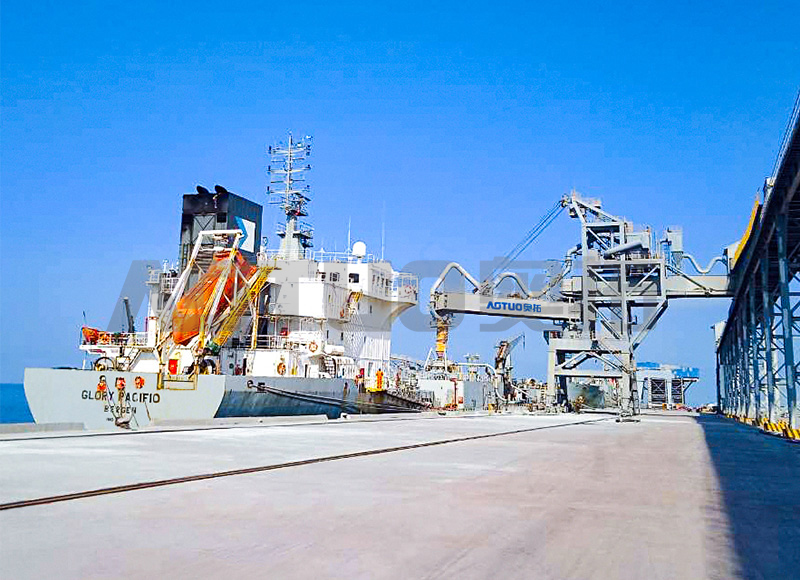
In the high-stakes world of maritime logistics, the efficiency of port transfer systems is the deciding factor in a terminal's profitability. As global trade volumes rise, the demand for a bulk ship loader that can handle massive capacities while maintaining safety has never been higher. Hangzhou Aotuo Mechanical and Electrical Co., Ltd. (AOTUO), established in 2003, is a national high-tech enterprise at the forefront of this evolution. With over 20 years of R&D experience and more than 100 patents, AOTUO specializes in the research and development of high-end equipment for dry bulk material. Our bulk ship loader solutions are engineered to meet the stringent demands of modern ports, handling vessels up to 200,000 DWT. This article examines the technical transition from manual to automated systems and how industrial automation for bulk material handling is revolutionizing the industry.
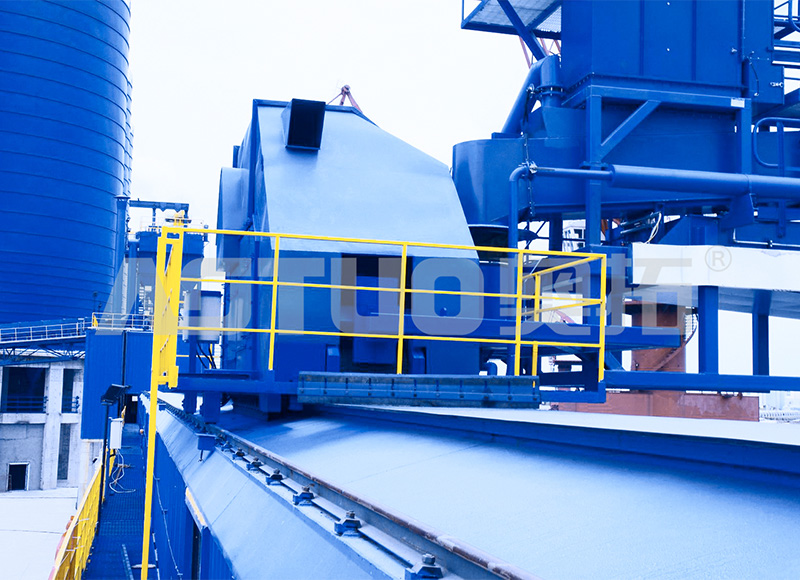
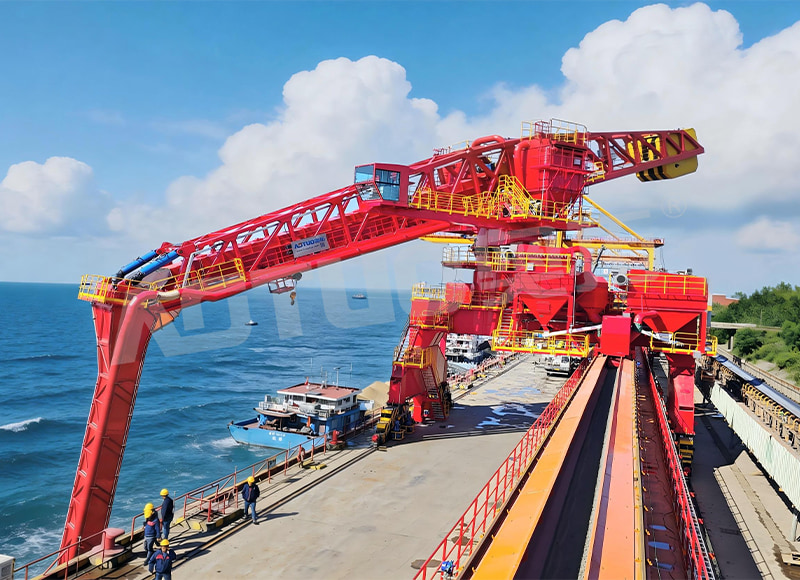
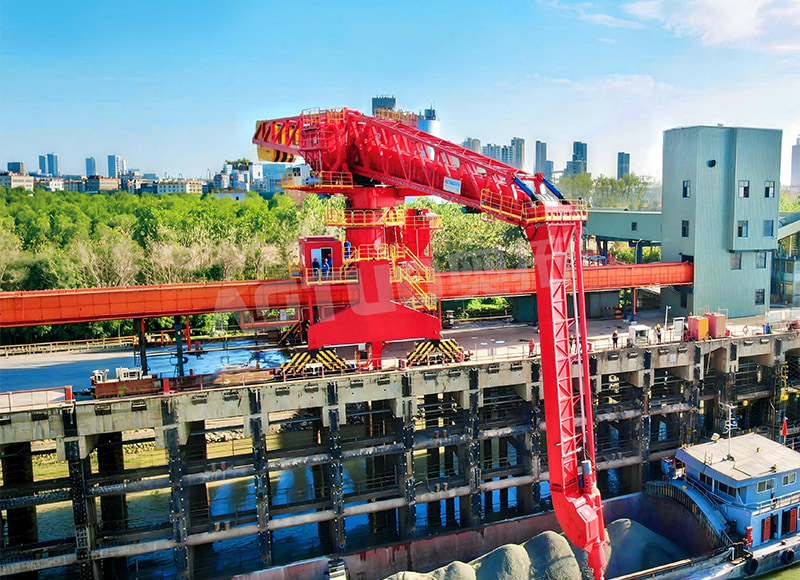
Operational risks in port environments usually stem from collision hazards, dust emissions, and equipment mechanical failure. A fully automated bulk ship loader integrates intelligent control systems for port loaders, such as anti-collision sensors and 3D laser scanning of the ship's hold. These technologies allow for precision ship loading for 200,000 DWT vessels, ensuring that the material is distributed evenly to maintain the ship's stability. When comparing manual operation to bulk ship loader automated ship loading technology, the automated version significantly reduces the "human factor" in high-risk maneuvers. Furthermore, the environmentally friendly bulk ship loader features, such as integrated dust collectors and telescopic chutes, minimize the risk of environmental non-compliance and health hazards for port workers.
| Safety Feature | Manual/Traditional Loading | Fully Automated Bulk Ship Loader |
| Collision Prevention | Visual estimation by operator | Real-time radar & Laser 3D mapping |
| Overload Protection | Reactive (Post-event) | Proactive (Continuous metering control) |
| Environmental Control | Passive dust suppression | Active, integrated dust collectors |
Labor remains one of the highest expenses in port operations, not only in wages but also in the costs associated with training and safety insurance. By implementing a bulk ship loader equipped with intelligent control systems, terminals can move from a multi-person crew per shift to a centralized monitoring model. How to reduce labor costs in dry bulk ports is solved through the localization of control; a single technician can oversee multiple dry bulk material port transfer system units from a remote command center. When comparing manual vs automated bulk loading systems, the automated path demonstrates a significantly higher consistency in "peak loading" rates, avoiding the fatigue-related slowdowns common in 12-hour shifts. This transition also enables high-capacity bulk cement ship loaders to operate at 24/7 efficiency without the overhead of massive labor rotations.
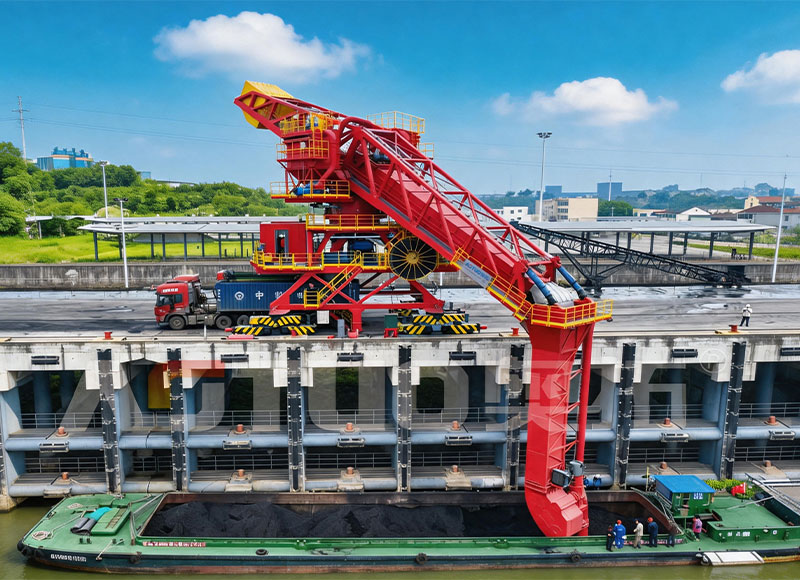
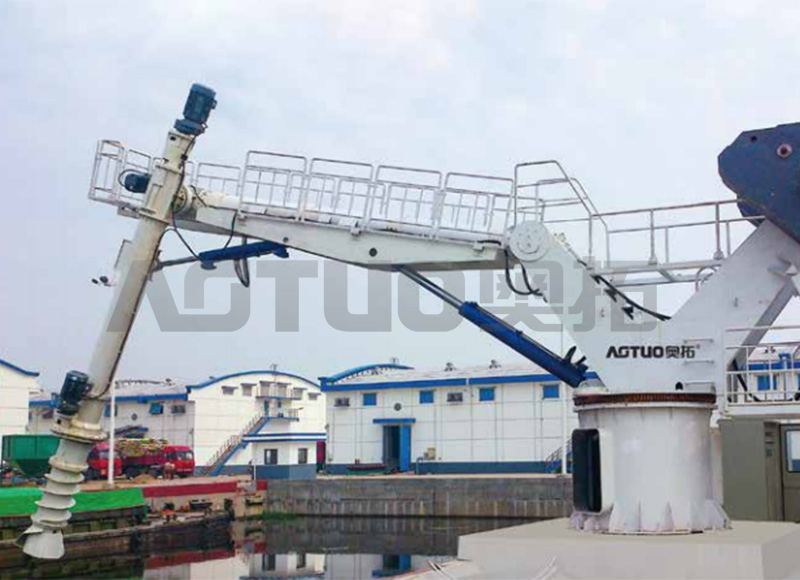
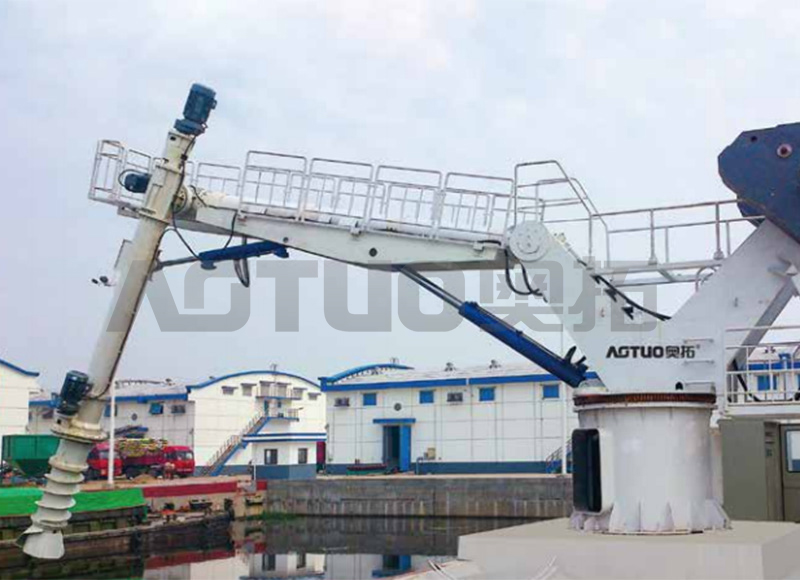
The technical goal of any bulk ship loader is to maximize the TPH (tons per hour) while minimizing vessel turnaround time. AOTUO's environmentally friendly and efficient screw unloaders and loaders reach capacities of up to 3000t/h. This high-end engineering is supported by a dry bulk material port transfer system that ensures seamless flow from the warehouse to the ship's hold. For specialized materials, such as clinker and grain ship loading solutions, the automation system adjusts the flow rate and boom angle dynamically. This high-end equipment for dry bulk material is designed to reduce the idle time of the vessel, which in turn reduces the port's demurrage costs. Our status as the responsible drafting unit for industry standards (JC/T 2575) ensures that our bulk ship loader technology remains the global benchmark for reliability.
| Performance Metric | Traditional Loading Systems | AOTUO Bulk Ship Loader Systems |
| Max Loading Capacity | Variable (Operator dependent) | Up to 3000t/h (Constant) |
| Vessel Compatibility | Limited range | Up to 200,000 DWT |
| Energy Consumption | High (Inconsistent flow) | Optimized (Via intelligent control) |
Transitioning to a fully automated bulk ship loader is no longer a luxury but a strategic necessity for maritime logistics providers. By integrating industrial automation, metering control, and environmentally friendly bulk ship loader features, AOTUO provides a total solution that addresses the twin challenges of operational risk and rising labor costs. As a pioneer in the localization of bulk cement screw unloaders and a national high-tech enterprise, Hangzhou Aotuo Mechanical and Electrical Co., Ltd. is committed to delivering the high-end equipment for dry bulk material that will power the ports of tomorrow. We invite you to explore our overall solutions and join us in setting new industry standards for efficiency and sustainability.
Our systems are engineered for versatility and power, capable of servicing vessels up to 200,000 DWT, making them suitable for major international deep-water ports.
They use sensors and software to monitor the environment in real-time, automatically adjusting the bulk ship loader position to prevent collisions and ensuring the ship is loaded evenly to prevent structural stress.
Yes, AOTUO provides clinker and grain ship loading solutions, as well as equipment for cement, coal, and other dry bulk materials, all while maintaining high environmentally friendly bulk ship loader features.
Automated systems generally require less frequent manual inspection due to integrated self-diagnostic tools. Our industrial automation systems monitor component wear and alert staff before a failure occurs.
Absolutely. AOTUO is a leader in environmentally friendly and efficient screw unloaders and loaders. Our equipment includes advanced dust collectors and sealed conveying systems to meet global environmental regulations.
It is focused on the overall solution of dry bulk material port transfer system,
research and development, manufacturing, and service
Copyright © Hangzhou Aotuo Mechanical and Electrical Co., Ltd. All Rights Reserved.
Custom Material Conveyor Transfer Systems Manufacturers