Article Directory
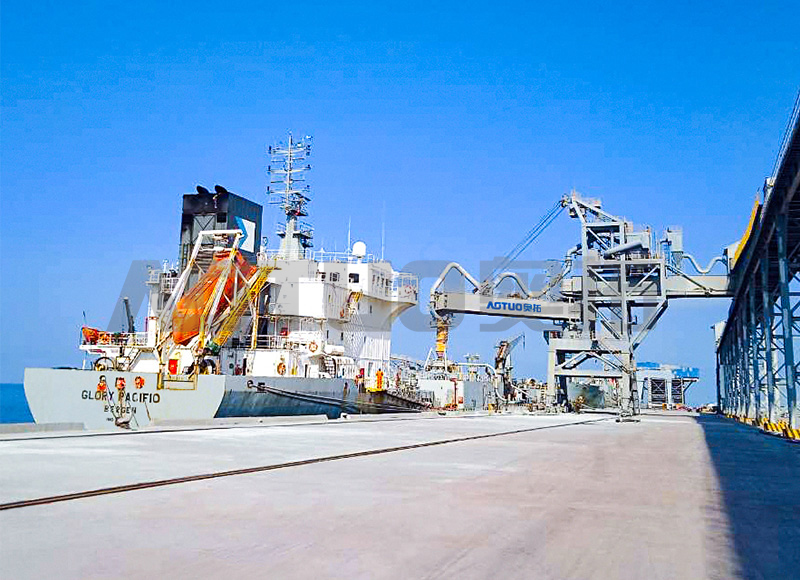
A ship loader is the critical interface between a land-side bulk terminal and an ocean-going or coastal vessel. It receives material from a continuous overland conveyor system and delivers it at high throughput rates into the ship's hold, controlling the loading rate, trimming the pile, and maintaining dust suppression throughout the operation. Without a ship loader, bulk cargo terminals cannot function — manual loading of the volumes handled by modern bulk ships is operationally impossible. A Capesize bulk carrier carrying 180,000 tonnes of iron ore loaded at a rate of 10,000 t/h takes approximately 18 hours to load; the same vessel loaded by truck would require over 180,000 truck movements.
A ship loader is a materials handling machine purpose-built to transfer bulk solids from a terminal's land-side storage and conveyor infrastructure onto a ship at the rated throughput of the terminal. The machine must accommodate the geometry of the vessel — hold length, hold width, hatch opening size, and the change in vessel freeboard (deck height above waterline) as the ship is progressively loaded and sinks lower — all while maintaining continuous material flow.
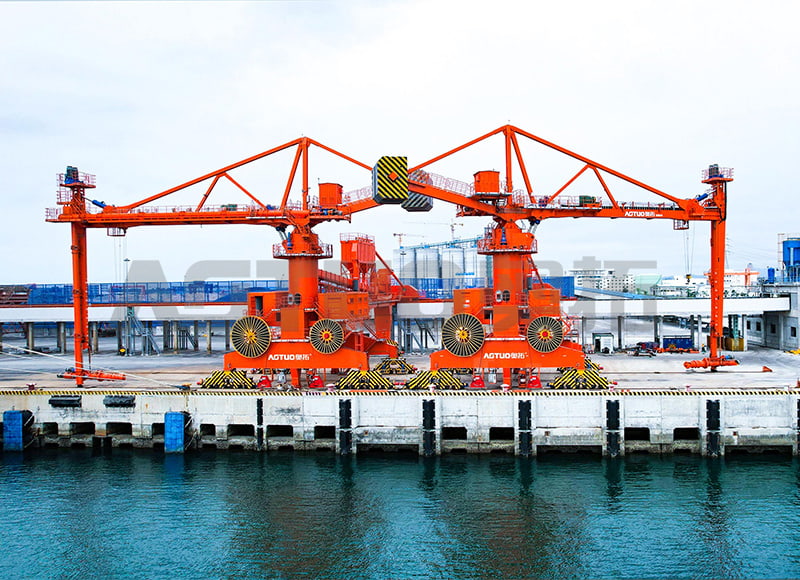
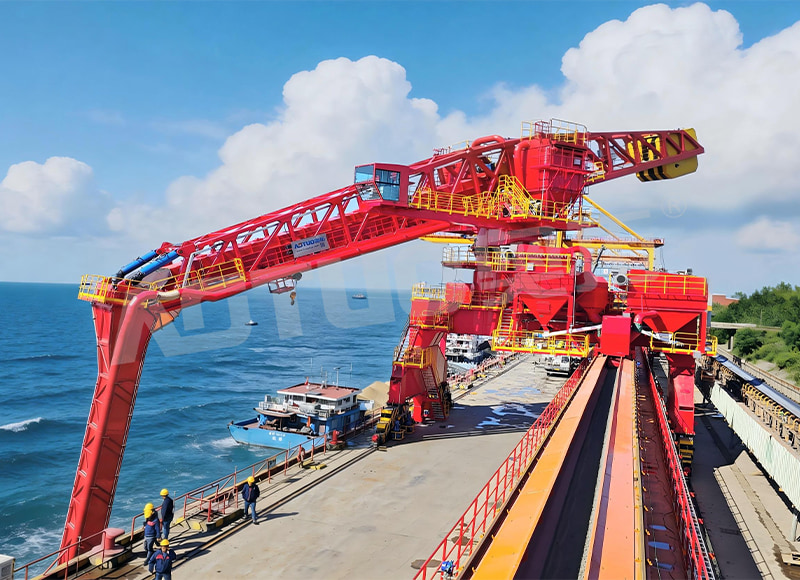
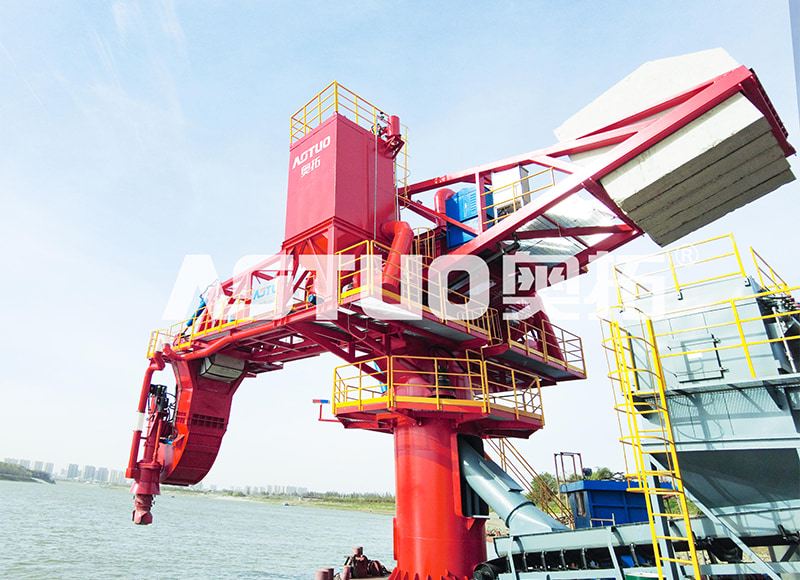
The core components of a standard slewing ship loader are:
Loading a bulk cargo ship is a precisely sequenced operation that balances throughput against vessel stability, structural stress, and port time. The loading sequence for a Capesize bulk carrier carrying iron ore illustrates the process in a commercially realistic context:
Ship loaders are classified by their mobility, structural configuration, and the cargo type they handle. Selecting the correct type is driven by terminal throughput requirements, quay geometry, vessel size range, and the characteristics of the bulk material being loaded.
| Type | Mobility | Typical Capacity | Primary Cargo | Typical Application |
|---|---|---|---|---|
| Rail-mounted slewing | Travel + slew + luff | 2,000–20,000 t/h | Iron ore, coal, bauxite | Major bulk export terminals |
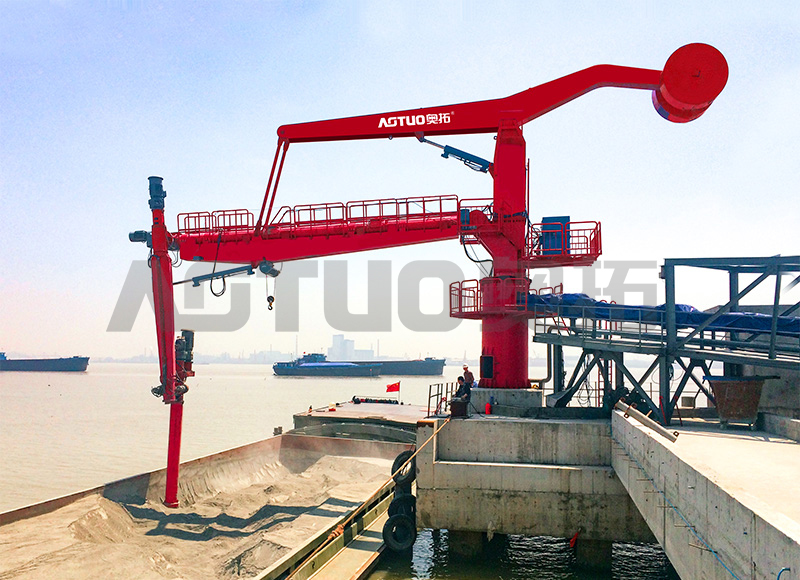
| Fixed pedestal (knuckle-boom) | Slew + luff only | 500–5,000 t/h | Grain, fertiliser, sugar | Single-berth grain terminals |
| Radial (pivoting) loader | Pivot from fixed point | 300–2,000 t/h | Cement, aggregate, grain | River and coastal terminals |
| Mobile (rubber-tyred) | Full road mobility | 200–1,500 t/h | Grain, coal, aggregate | Multi-purpose, flexible-use ports |
| Barge/floating loader | Marine — tug-moved | 500–3,000 t/h | Coal, nickel ore, minerals | Offshore transhipment, anchorage loading |
The rail-mounted slewing ship loader dominates high-throughput bulk export terminals because it combines the full range of motions needed to service any hatch on any vessel within the berth window — travel along the quay, slewing across the hatch opening, luffing to match the vessel's changing freeboard — while maintaining the structural rigidity required for continuous high-tonnage operation. The largest machines of this type, such as those at the Pilbara iron ore ports in Western Australia, load at rates exceeding 16,000 t/h and can complete loading a 180,000 DWT vessel in under 14 hours.
Loading a bulk cargo ship correctly requires managing four simultaneous technical constraints that are all in tension with each other: maximising throughput, maintaining vessel stability, controlling cargo quality, and managing environmental compliance. Failure in any of the four can result in vessel damage, cargo contamination, port authority sanctions, or vessel detention.
Specifying a ship loader for a new terminal project requires translating the commercial operating requirements into mechanical and structural specifications. The following parameters define the machine specification:
Global bulk commodity trade is concentrated at a small number of high-volume terminals where ship loader performance benchmarks define the standard for the industry. These benchmarks are publicly reported through port statistics and are useful reference points for new terminal design:
| Terminal | Commodity | Loader Capacity | Annual Throughput | Vessel Size |
|---|---|---|---|---|
| Port Hedland (BHP, RIO), WA, Australia | Iron ore | Up to 16,000 t/h per loader | 550+ Mt/year (port total) | Capesize / VLOC 250,000+ DWT |
| Tubarao (Vale), Brazil | Iron ore | Up to 16,000 t/h | 130+ Mt/year | Valemax 400,000 DWT |
| Richards Bay Coal Terminal, South Africa | Thermal coal | 8,000–10,000 t/h | Up to 91 Mt/year (design cap.) | Panamax / Capesize |
| New Orleans Grain Elevator, USA | Grain (soybean, corn, wheat) | 2,000–3,500 t/h | 15–25 Mt/year per terminal | Panamax grain vessels |
| Hay Point Coal Terminal, QLD, Australia | Metallurgical coal | 8,000 t/h | 55+ Mt/year | Capesize |
It is focused on the overall solution of dry bulk material port transfer system,
research and development, manufacturing, and service
Copyright © Hangzhou Aotuo Mechanical and Electrical Co., Ltd. All Rights Reserved. Custom Material Conveyor Transfer Systems Manufacturers