EN
EN English
 中文简体
中文简体 Français
Industry News
Home / News / Industry News / Ship Loader Boom Design: 7 Critical Factors Affecting Loading Performance

Article Directory
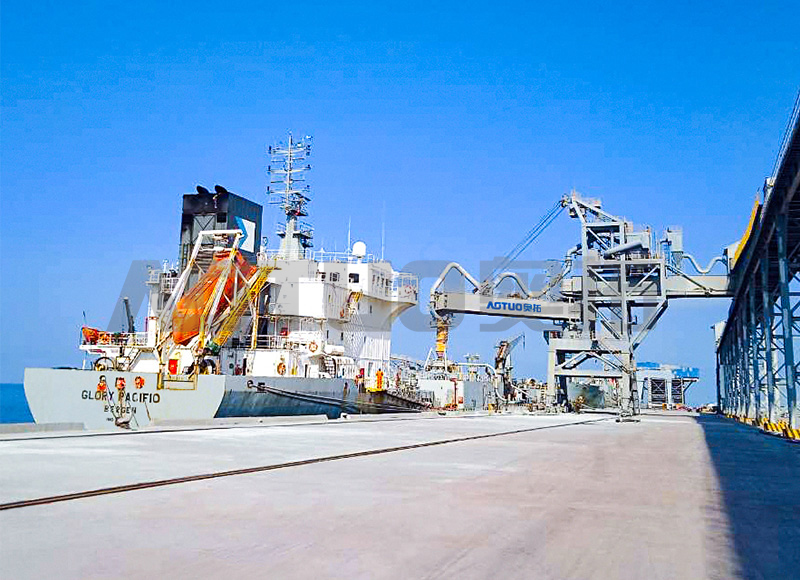
A 180,000 DWT bulk carrier arrives at a deep-water terminal with a 36-hour loading window. After six hours, the operator realizes the ship loader boom cannot reach the vessel's outer hatch - the machine's design reach is 3.2 meters short. The vessel must shift to a second berth, adding 5 hours to the load cycle, and the terminal owner faces $6,000 in demurrage. This happens in ports around the world when ship loader boom design is treated as a structural afterthought rather than the performance-critical system it really is.
A ship loader boom design controls three performance variables: hatch reach, positioning time, and material flow rate - the combined ceiling on terminal throughput.
The boom is the interface between the machine and the vessel. It has to reach the hatch at the correct angle, swing between hatches quickly, deliver material without spillage, and resist the dynamic loads of continuous operation. Getting all four right is what separates a high-efficiency terminal from one that constantly fights its equipment.
Boom reach, luffing range, slew speed, belt width, and structural stiffness are the five factors that determine how quickly a machine can deliver material into a hold.
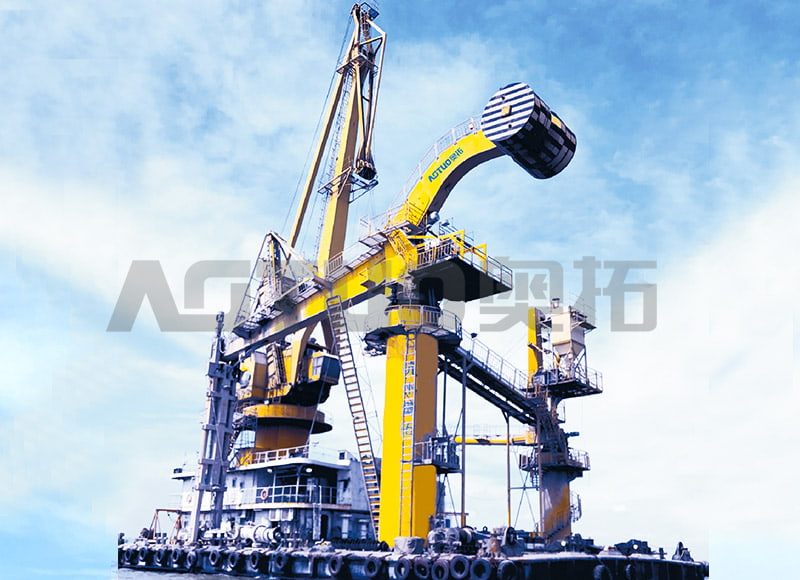
Boom reach is the horizontal distance from the slew center to the discharge end. It must span the hatch layout of the design vessel. An 80,000 DWT bulk carrier with seven hatches typically requires a reach of 18-25 meters; a 180,000 DWT vessel jumps to 28-35 meters. Luffing range is the vertical arc the boom travels, letting the loader reach into the hatch as the hold fills.
Modern rail mobile ship loaders achieve slew speeds of 10-30 degrees per minute. A single hatch-to-hatch transition takes 40-90 seconds. Positioning accuracy matters equally: the boom must land the discharge point within plus or minus 500mm of the hatch center. Poor accuracy forces operators to jog for 30-60 seconds on every pass, which accumulates across an entire shift.
The belt inside the boom carries material from the transfer point to the hatch. Belt width directly scales with capacity. A 1,000mm belt on cement handles roughly 600-800 t/h, while a 1,600mm belt can reach 2,500-3,000 t/h for clinker and grain. The boom design must also account for the material's angle of repose and density, since these influence the cross-sectional load and the required enclosure height.
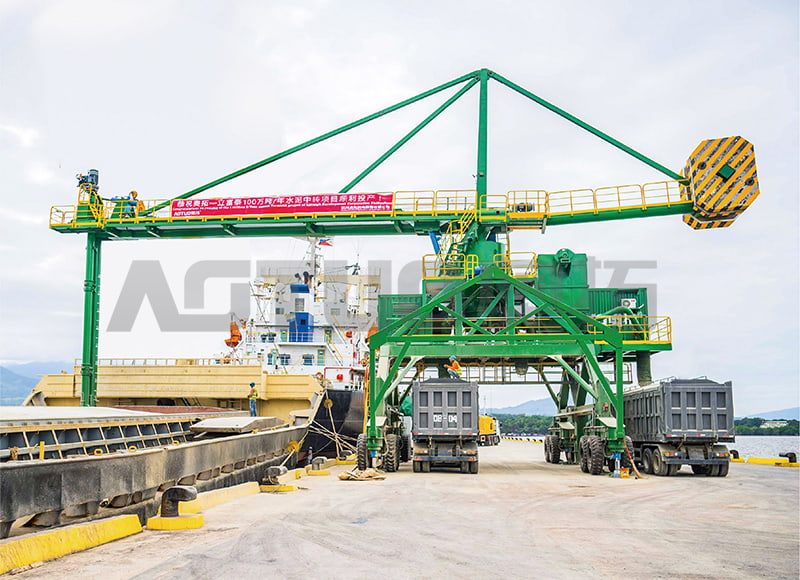
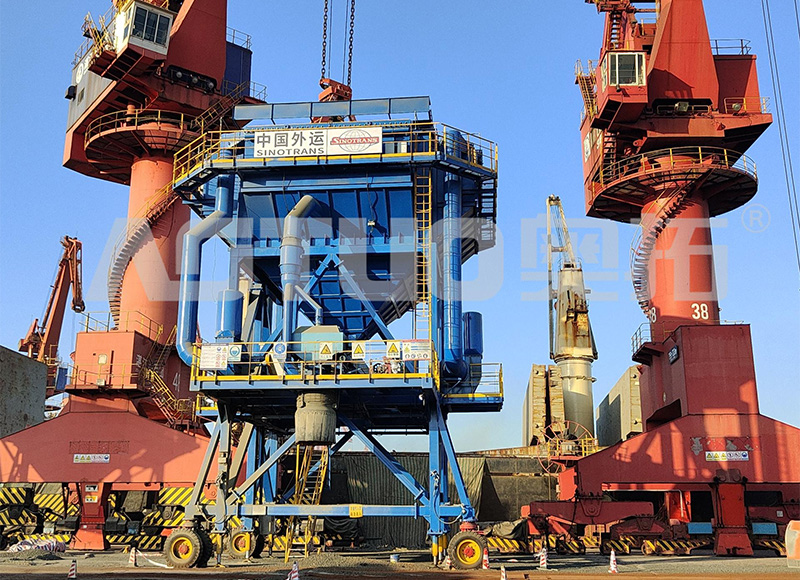 Tire Mobile Dust Suppression Hopper Loader for 200-800 t/h Bulk HandlingThis mobile hopper loader handles 200-800 t/h of bulk materials like clinker, with dust suppression and passive or automatic traction for port flexibility.View Product →
Every boom deflects when the belt is fully loaded. A well-stiffened boom sees 50-100mm of deflection under full load; a weak design can exceed 250mm. High deflection makes the discharge point drift, increases dynamic sway during luffing, and shortens the fatigue life of the structural frame. On a 3,000 t/h machine running 2,000 hours per year, the boom supports millions of load cycles.
Dust suppression is a boom design function, not a bolt-on accessory. An enclosed boom with a dust curtain at the discharge point can cut visible dust by 80-95%. For cement and grain, this is critical for environmental compliance and product loss. Ports in Australia operate under strict emissions limits that influence the entire boom profile.
For an 80,000 DWT vessel, every hour lost to positioning and transition costs roughly $1,000 to $3,000 in demurrage, depending on the charter party.
| Design Factor | Typical Range | Performance Impact |
| Boom reach | 18-35 m | Sets hatch coverage |
| Luffing speed | 0.5-1.5 m/min | 4-8% of cycle time |
| Slew speed | 10-30 deg/min | 2-5% of cycle time |
| Belt width | 1,000-1,800 mm | 600-3,000 t/h capacity |
| Deflection | 1/500 to 1/300 | Positioning accuracy |
For a deeper look at how those numbers translate into your specific operation, see our guide on bulk ship loader tph efficiency optimization.
The right boom design is determined by your design vessel, berth geometry, cargo type, required tph, and environmental rules - in that order of impact.
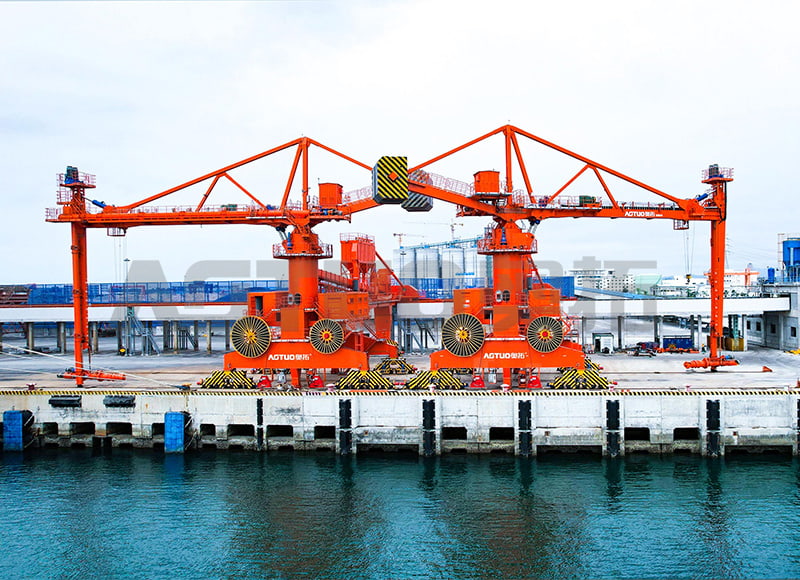
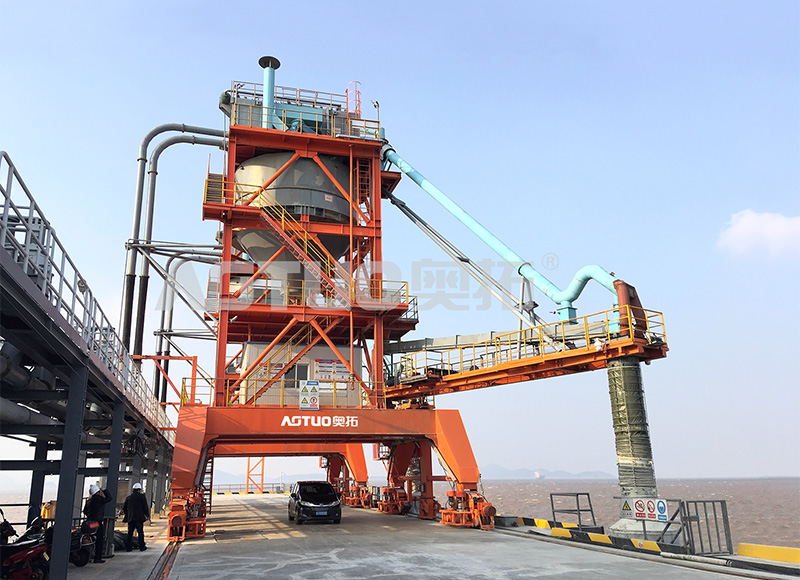 Rail Mobile Ship Loader for 300-1500 t/h Bulk Material LoadingDesigned for vessels up to 50,000 DWT, this rail mobile ship loader offers 300-1500 t/h capacity and integrated dust control, suited for multi-hatch coverage.View Product →
Hangzhou Aotuo Mechanical and Electrical Co., Ltd. (AOTUO) has 20 years of experience manufacturing dry bulk port handling equipment, with products exported to Australia, Singapore, the Philippines, Vietnam, Indonesia, and Bangladesh. The company's rail mobile ship loader is designed around real port constraints, with a track-based chassis that allows the boom to cover multiple hatches and an integrated dust suppression system. AOTUO equipment supports vessels up to 200,000 DWT with loading rates up to 3,000 t/h. Their ship loaders have been deployed at terminals such as Brisbane Port in Australia.
Boom design determines how far the discharge point can reach over the vessel, how fast the machine can transition between hatches, and how steadily material flows into the hold. A design that matches the vessel profile and integrates dust control can reduce total loading time by 8-12%.
Depending on the machine, typical boom reach ranges from 18-35 meters. A rail mobile ship loader can also extend its effective coverage by moving along the wharf, so the boom reach and the track coverage work together to span the full vessel.
Start with the design vessel's hatch layout and compute the maximum horizontal distance from the slew center to the outermost hatch at the lowest operating tide. Add a safety margin of 1-1.5 meters for weather conditions and vessel position tolerance.
Structural steel fabricated from high-strength steel plates, typically Q345B or Q460, is standard. The boom is designed with box-section or lattice construction to balance stiffness against dead weight. AOTUO uses certified structural steel and weld procedures to ensure fatigue life in continuous service.
It is focused on the overall solution of dry bulk material port transfer system,
research and development, manufacturing, and service
Copyright © Hangzhou Aotuo Mechanical and Electrical Co., Ltd. All Rights Reserved.
Custom Material Conveyor Transfer Systems Manufacturers