Article Directory
A terminal does not lose money on the days a ship loader works well. It loses money in the hours a vessel sits at berth waiting on a machine that was undersized, poorly positioned, or built for the wrong cargo. Specifying a Travelling Ship Loader correctly the first time is the single biggest lever a terminal operator has over vessel turnaround time.
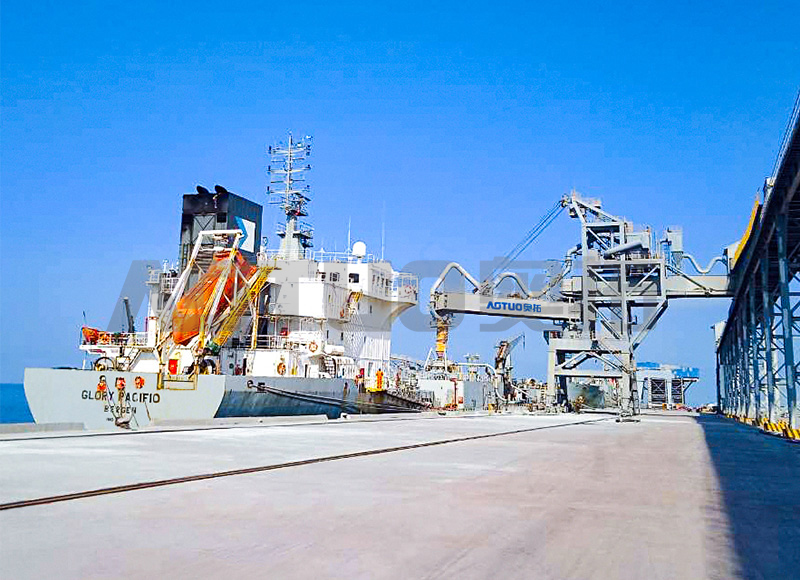
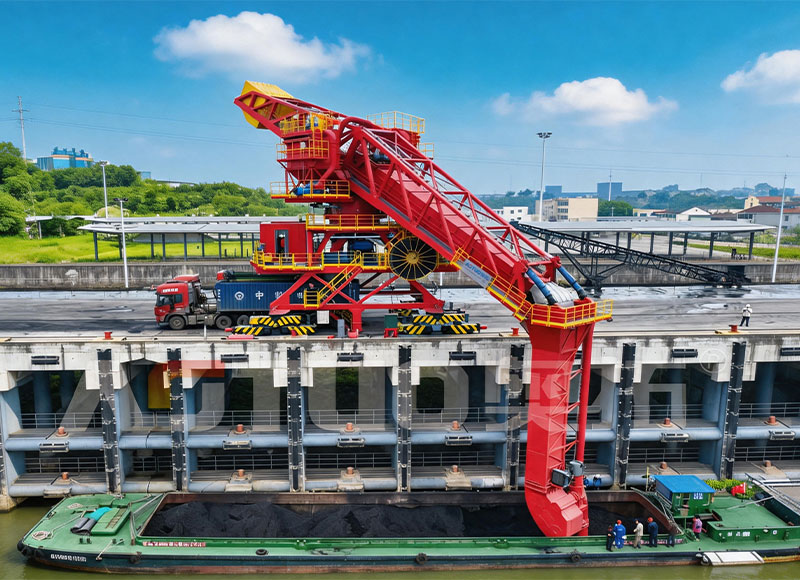
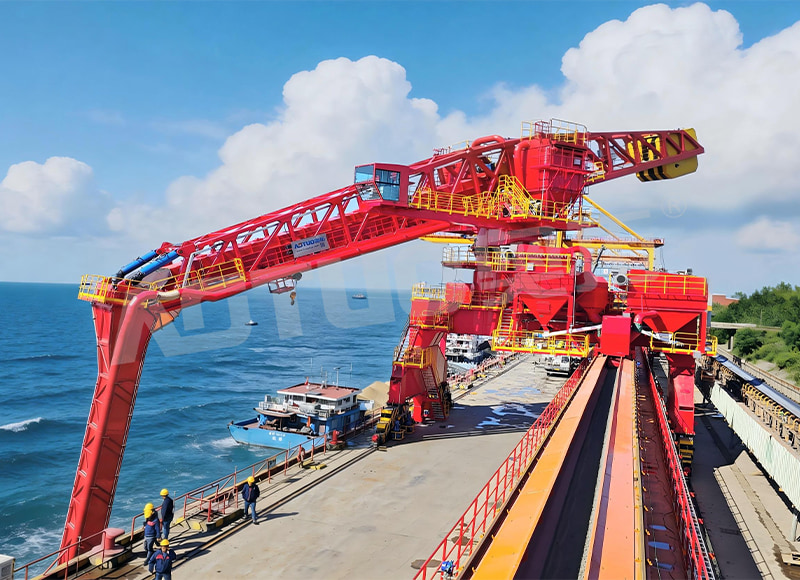
A travelling ship loader is a rail-mounted machine that receives bulk material from conveyor or storage systems and transfers it into a vessel's hold, moving along the berth to reposition itself as loading progresses. Unlike fixed loaders, its mobility lets one machine serve vessels of different sizes and hatch layouts without repositioning the ship itself.
Coal, iron ore, grain, and cement do not behave the same way on a conveyor, and a loader tuned for one will underperform or wear out early on another.
High throughput capacity, dust control, and wear-resistant components for abrasive handling.
Heavy-duty structure and strong conveyor systems built for high load capacity.
Gentle handling and dust reduction to keep the loading environment clean.
Enclosed conveying and effective dust protection for fine, airborne materials.
Loading capacity is the factor most likely to bottleneck an entire terminal. An undersized loader does not just slow one vessel — it compounds delays across the whole berth schedule.
Relative Loading Efficiency by Loader Configuration
Indexed efficiency score, equal cargo type and vessel class
Port-side physical constraints determine whether a loader specification will actually work on-site, independent of how well it matches the cargo.
Confirm ship length, height, and hatch position against the loader's reach.
Verify rail track length and available travel distance for the loader's movement range.
Ensure the boom can access every hold on the largest vessel the berth expects to serve.
Match the slewing range to the loading positions required for accurate cargo distribution.
A travelling ship loader spec sits on a spectrum between basic manual systems and fully automated, monitored platforms. The right point on that spectrum depends on cargo volume and how much operator workload the terminal wants to remove.
Standard vs Advanced Loader: Capability Comparison
Darker fill: standard system. Lighter fill: advanced automated system
| Feature | Standard Loader | Advanced Loader |
| Mobility | Basic rail movement | Optimized travel system |
| Automation | Manual operation | Intelligent control |
| Dust Control | Basic | Advanced environmental systems |
| Maintenance | Regular service required | Predictive monitoring options |
| Loading Efficiency | Moderate | High efficiency |
A travelling ship loader moves along the berth rail, letting a single machine serve vessels of different sizes and hatch layouts without repositioning the ship itself.
Capacity should be set from required tons-per-hour, vessel loading schedules, and terminal throughput targets — not from a manufacturer's default rating alone.
Enclosed conveyor sections and suppression systems reduce material loss and help terminals meet environmental compliance requirements, especially for coal and cement cargo.
Automation improves loading accuracy and reduces operator workload, which tends to pay back fastest on terminals with high vessel frequency or variable cargo types.
It is focused on the overall solution of dry bulk material port transfer system,
research and development, manufacturing, and service
Copyright © Hangzhou Aotuo Mechanical and Electrical Co., Ltd. All Rights Reserved.
Custom Material Conveyor Transfer Systems Manufacturers