EN
EN English
 中文简体
中文简体 Français
Industry News
Home / News / Industry News / What Makes Travelling Ship Loaders a Reliable Solution for Large-Scale Cargo Handling?

Article Directory
A Travelling Ship Loader earns its place at a bulk terminal by solving a problem fixed equipment can't: serving multiple berth positions and vessel sizes without idling the loading line between ships. That mobility, combined with continuous high-volume throughput, is what makes travelling systems the standard choice for modern mining, grain, and cement export operations.
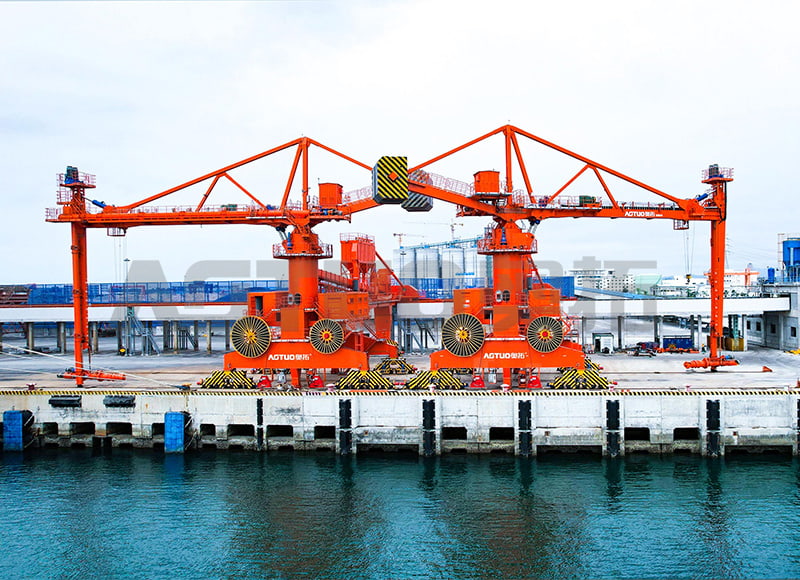
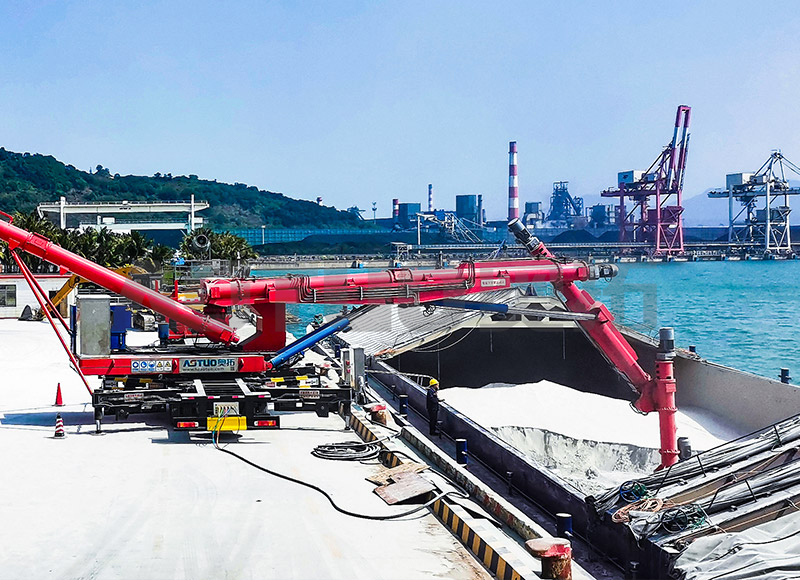
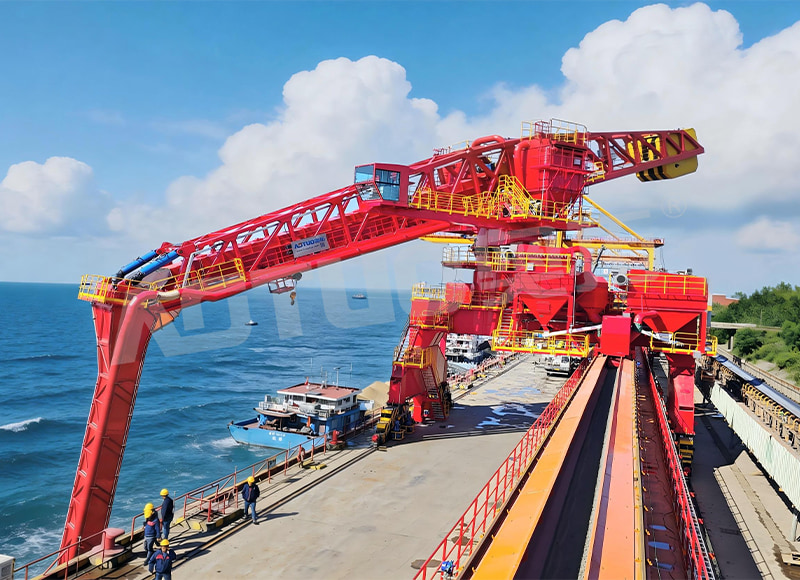
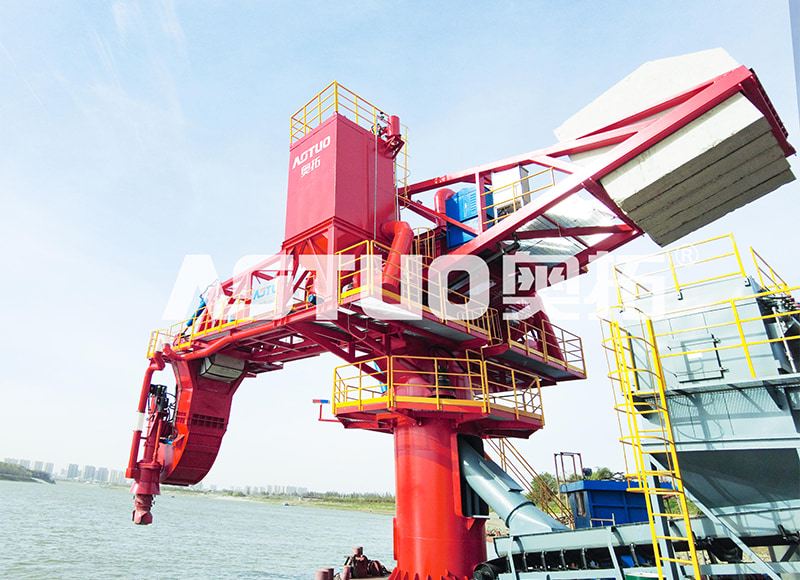
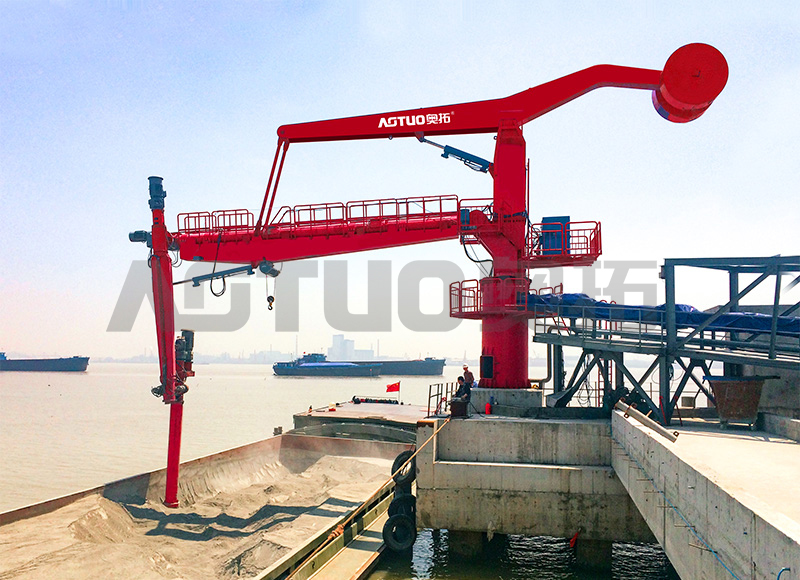
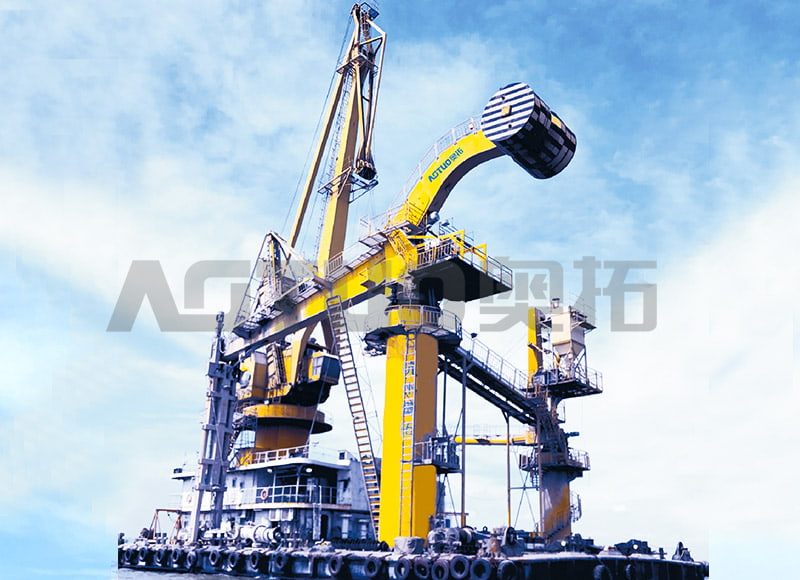
A travelling ship loader is a large material handling machine that moves along rails or dedicated tracks at a berth, loading bulk materials such as coal, iron ore, grain, cement, minerals, fertilizers, and aggregates directly from shore facilities onto vessels. Its core structure combines a travelling mechanism, a slewing and luffing boom, a conveyor system, dust control equipment, and an operator control system.
Continuous material flow through the conveyor system is what separates a travelling ship loader from slower, cycle-based loading methods. For vessels requiring thousands of tons of cargo, that continuous throughput directly reduces loading cycles, cuts vessel turnaround time, and raises overall terminal productivity — the metric most bulk terminals are ultimately optimizing for.
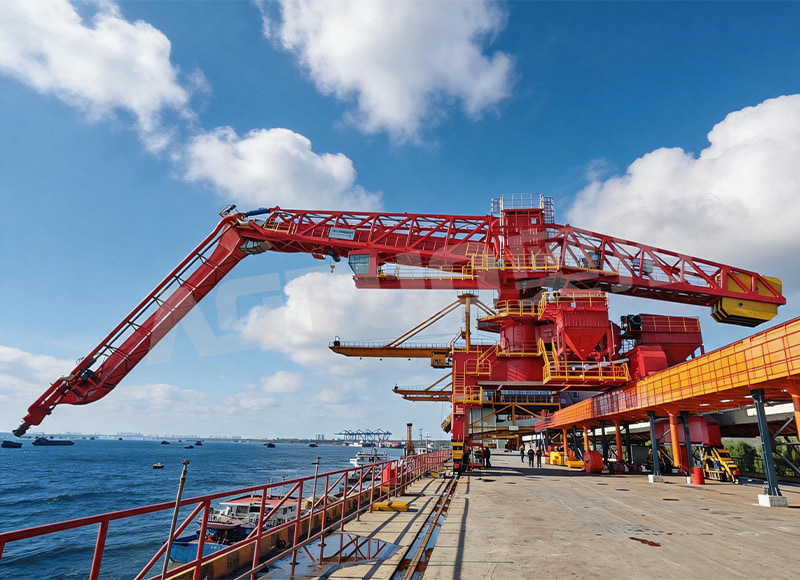
Because the loader moves along the berth rather than staying fixed in one position, a single machine can serve different loading points, adjust to different vessel sizes, and improve berth utilization across a shift. Fixed loading equipment can't offer that same adaptability, which is why terminals handling varied cargo operations increasingly favor travelling systems.
| Mobility | High | Limited |
| Loading position adjustment | Flexible | Fixed |
| Berth utilization | Better | Lower |
| Suitable for multiple vessels | Yes | Limited |
Cargo characteristics — density, particle size, moisture, and flow behavior
Required capacity — vessel size, terminal throughput, loading frequency
Port layout — berth length, rail configuration, operating environment
Equipment reliability — structural design, component quality, maintenance needs
Terminals that combine high loading capacity with a Travelling Ship Loader's berth flexibility consistently reduce vessel waiting time and lower per-ton handling costs compared with fixed-position alternatives.
Common materials include coal, iron ore, grain, cement, minerals, fertilizers, and aggregates, with equipment specifications adjusted to each material's density and flow properties.
A travelling loader serves multiple berth positions and vessel sizes with one machine, improving berth utilization in ways a fixed installation cannot match.
Remote monitoring, automated positioning, and load control systems reduce operator workload while improving loading accuracy and minimizing operational risk.
Yes — terminals handling grain, minerals, or cement often prioritize enclosed conveyors and dust suppression systems to meet environmental and working-condition requirements.
 |
 |
It is focused on the overall solution of dry bulk material port transfer system,
research and development, manufacturing, and service
Copyright © Hangzhou Aotuo Mechanical and Electrical Co., Ltd. All Rights Reserved.
Custom Material Conveyor Transfer Systems Manufacturers