EN
EN English
 中文简体
中文简体 Français
Industry News
Home / News / Industry News / Typical Grain Ship Loader Lifespan: How Long Do They Last & What Affects It?

Article Directory
Ask a terminal superintendent how long a grain ship loader lasts, and the shortest useful answer is 25 years. That is the structural design life that most heavy-duty shiploaders are built to, and with a disciplined maintenance program many machines keep working beyond that. The fuller answer is more subtle: a loader does not fail on a calendar date. It fails because steel corrodes, bearings wear, conveyor belting degrades, and control systems become obsolete. What matters is how well the machine is designed, operated, and maintained over that 25-year window.
The phrase "service life" can be misleading. It usually refers to the structural design life of the main frame, boom, and support legs. Fatigue calculations, corrosion allowances, and wind-load assumptions are built into the steel during design. That does not mean every component inside the loader will last 25 years; it means the main structure is expected to remain sound through 25 years of normal operating cycles if inspections and maintenance keep pace.
Structural design life assumes a defined maintenance regime. If coating breakdown is repaired quickly, if fatigue cracks are caught during routine inspection, and if the machine is not overloaded, the steel can often exceed the original target. Without that care, a loader designed for 25 years can become unsafe or uneconomical to repair after 15.
Two identical loaders installed in the same terminal can age very differently. The one with scheduled lubrication, belt alignment, vibration checks, and stocked spare parts will typically outlast the one that is run until something stops working. That is why procurement decisions should never be made on purchase price alone; the cost of maintenance over a 25-year life is usually several times the initial capital cost.
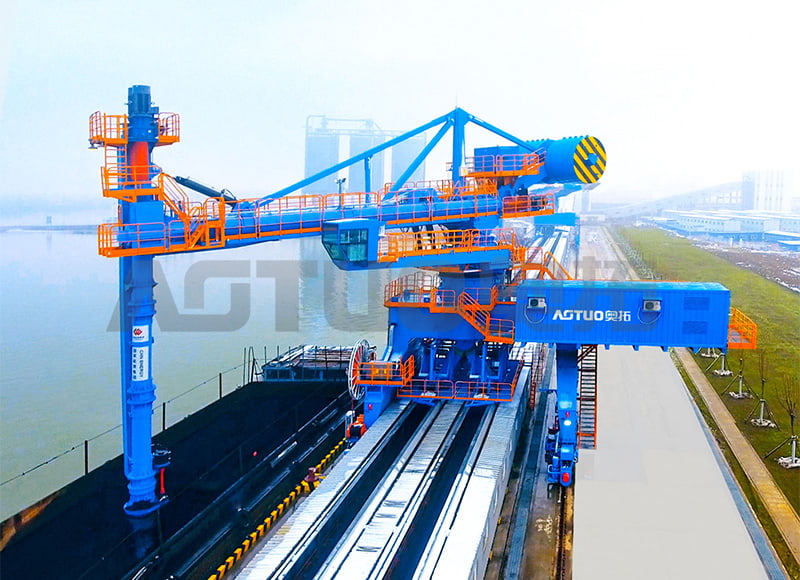
When AOTUO designs and builds a rail-mounted grain ship loader, the same 25-year fatigue target is applied to the structural frame, while service platforms and access points are arranged so that maintenance crews can actually reach the components that need regular attention.
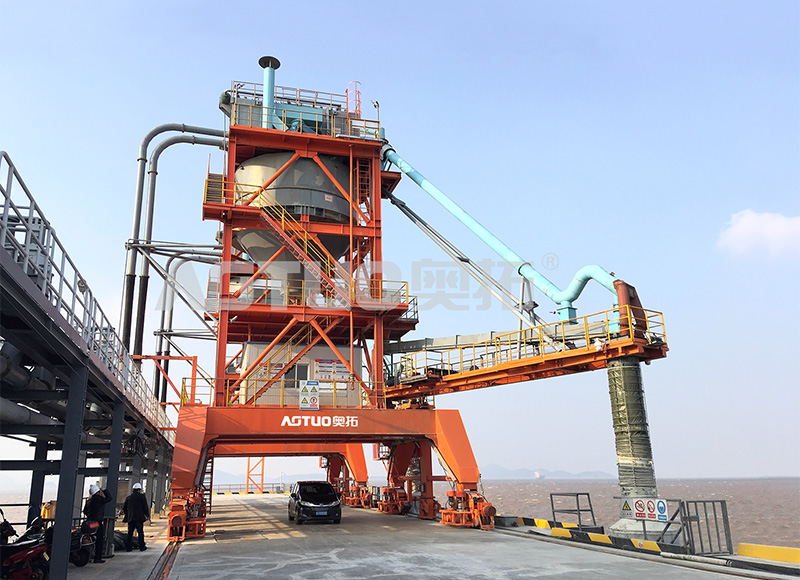 Custom 300-1500t/h 800-50000DWT Rail Mobile Ship Loader For Loading Bulk MateriaCustom 300-1500t/h 800-50000DWT Rail Mobile Ship Loader For Loading Bulk Materials, Hangzhou Aotuo Mechanical and Electrical Co., Ltd. is...View Product →
No single number fits every part of a grain ship loader. The table below gives realistic expectations for a well-maintained machine in a coastal grain terminal.
| System | Typical Service Life | Main Driver of Wear |
|---|---|---|
| Structural steel frame | 25 years or more | Fatigue, corrosion, coating breakdown |
| Protective coating system | 10-15 years, with touch-up | UV exposure, salt air, abrasion |
| Conveyor belts | 5-10 years | Edge wear, punctures, tracking issues |
| Slew bearing or turntable | 10-20 years | Lubrication failure, pitting, contamination |
| Gearboxes and drives | 15-25 years | Oil degradation, seal leakage, overload |
| Hydraulic system | 10-20 years | Hose aging, fluid contamination |
| Electrical and control system | 10-15 years | Moisture, dust, component obsolescence |
The gap between a 15-year machine and a 30-year machine is rarely luck. It usually comes down to how heavily the loader is worked, where it lives, and how quickly small problems are corrected.
A loader that moves 100,000 tonnes per week will accumulate more fatigue cycles than one that works a few days per month. The number of slewing movements, boom lifts, belt starts, and emergency stops all add stress. Operators who constantly run the machine at maximum speed, or who override safety interlocks, will cause wear that no inspection schedule can fully compensate for. Clear operating procedures and operator training are life-extension tools, not administrative overhead.
Grain dust absorbs moisture and can settle on bearings, electrical enclosures, and walkways. In a marine environment, salt-laden air accelerates corrosion wherever the coating is damaged. A simple policy of washing the machine, repairing paint chips immediately, and keeping enclosures sealed will prevent many of the most expensive failures seen at grain terminals.
Adding a heavier chute, a larger telescopic spout, or an extra platform can change the loads that the structure was originally designed to carry. Even a modest modification can shorten fatigue life if the new mass sits at the end of the boom. Always have a qualified engineer assess the impact of structural changes before installation.
Extending the life of a grain ship loader requires more than oiling a few bearings. The most effective strategies are proactive, data-driven, and built into the terminal's daily routine.
Vibration analysis on slew bearings and gearboxes, oil sampling, motor current monitoring, and regular visual checks will reveal problems before they become structural damage. A small increase in vibration or an abnormal temperature rise can justify a planned repair instead of an emergency shutdown.
In a coastal port, a scratch in the paint can grow into visible rust within one wet season, and section loss in a load-bearing member is far more expensive to repair than the cost of regular touch-up painting. Keep a coating inspection on the monthly checklist.
Belts, hoses, seals, and bearings have predictable life spans. Replacing them on a schedule costs less than unscheduled downtime and the collateral damage that often follows a mechanical failure. Keep critical spares in stock and track component hours for each machine.
Longevity starts with the original design. AOTUO has applied more than 20 years of dry bulk equipment manufacturing experience to loaders and unloaders used in demanding coastal environments, including projects from the Port of Brisbane in Australia to the Philippines. The same engineering logic that extends the life of a rail-mounted shiploader applies to complementary equipment: on the discharge side, a grain screw ship unloader with hardened screw flights and effective dust suppression will give you fewer maintenance surprises than a light-duty machine. AOTUO's case studies show how real terminals balance reliability, dust control, and operating cost.
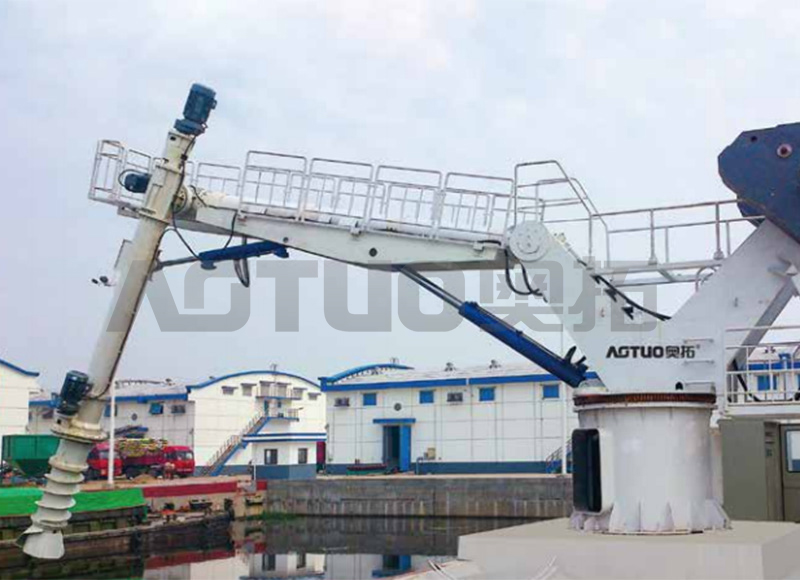 Custom Grain Ship Unloader Manufacturers, SuppliersCustom Grain Ship Unloader, Hangzhou Aotuo Mechanical and Electrical Co., Ltd. is China Grain Ship Unloader Manufacturers and Suppliers, ...View Product →
For a terminal planning capital expenditure, the right assumption is that a grain ship loader can last 25 years with proper maintenance, and many installations exceed 30 years when coatings, mechanical components, and electrical systems are renewed as needed. The loader's steel frame sets the outer limit, but the owner's maintenance program and operating discipline decide how close the machine gets to that limit. Choose a well-engineered machine, establish a serious maintenance regime, and your grain loading line can remain productive for decades.
It is focused on the overall solution of dry bulk material port transfer system,
research and development, manufacturing, and service
Copyright © Hangzhou Aotuo Mechanical and Electrical Co., Ltd. All Rights Reserved.
Custom Material Conveyor Transfer Systems Manufacturers