Article Directory
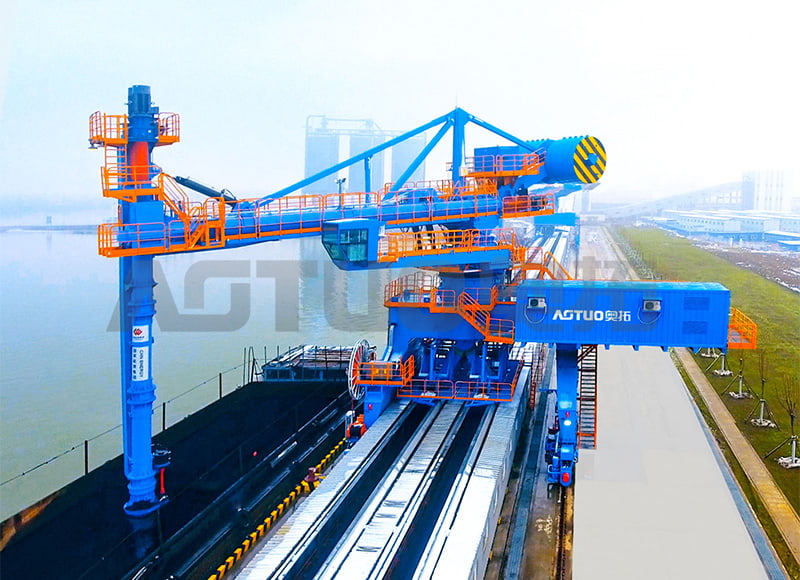
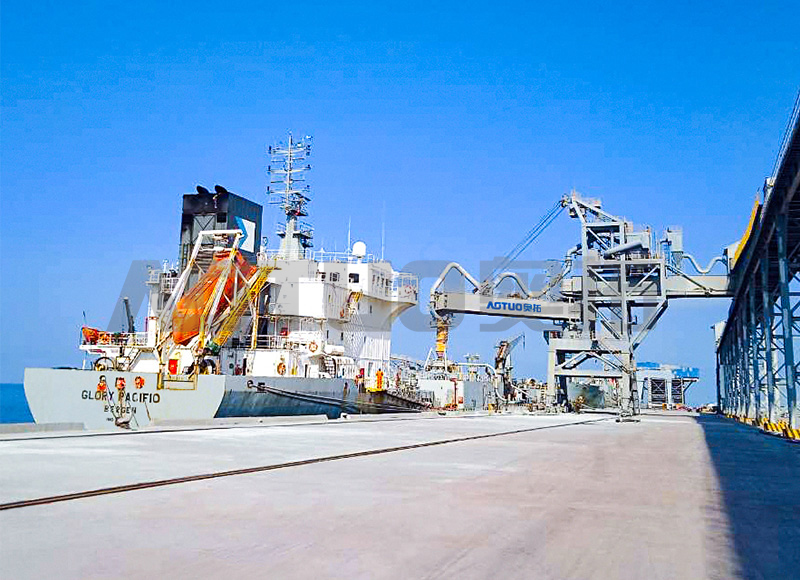
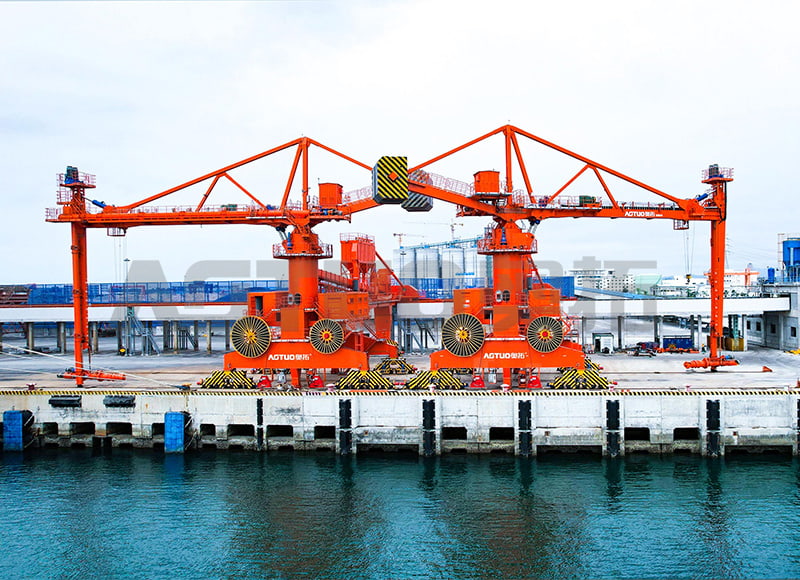
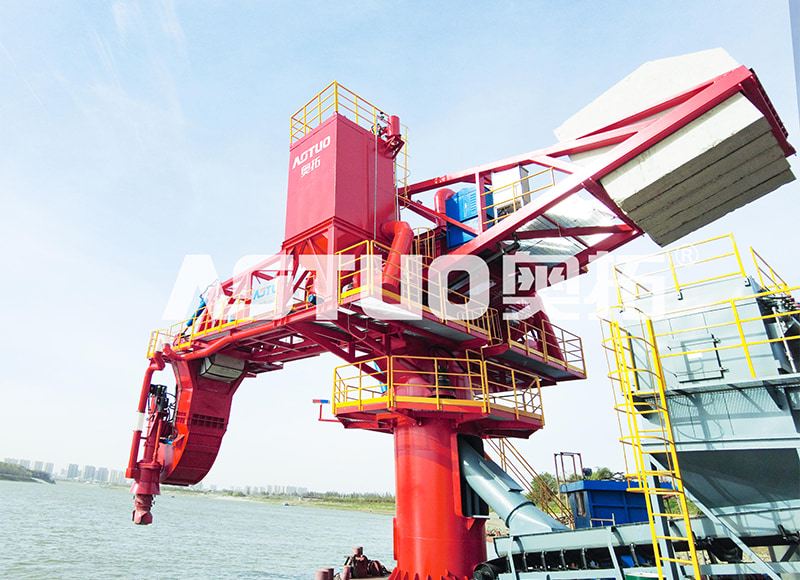
A coal ship loader is a purpose-built bulk material handling machine that transfers coal from a shore-side conveyor system directly into the cargo holds of bulk carrier vessels. Operating at the intersection of structural engineering, materials handling, and port logistics, modern ship loaders are among the most productivity-critical assets in any coal export terminal — their throughput rate, dust containment, and automation level directly determine berth occupancy time and vessel demurrage costs.
Coal ship loader loading capacity is the primary procurement specification — it determines vessel turnaround time, annual tonnage throughput, and berth utilization rate. Capacity is expressed in tonnes per hour (t/h) and must be matched to both the incoming conveyor feed rate and the class of vessels the terminal handles.
Effective loading capacity is never equal to nameplate capacity. Actual throughput is reduced by trimming time (repositioning the boom to level coal in the hold), hatch change time, and tidal windows that restrict vessel draft. High-capacity terminals design for a utilization factor of 70–80% of nameplate rate across a full vessel loading cycle.
Coal ship loader dust control is both an environmental compliance requirement and an operational necessity. Coal dust is combustible, corrosive to electronic and mechanical components, and a health hazard for terminal workers. Regulatory limits under the EU Industrial Emissions Directive, Australian NEPM standards, and equivalent frameworks require fugitive dust emissions below 10 mg/Nm³ at source — achievable only with integrated dust suppression and containment systems.
The most effective primary containment measure. A telescoping spout lowers the coal discharge point to within 500mm of the growing coal pile surface, eliminating freefall distance and the turbulent air entrainment that generates visible dust plumes. Rubber skirting seals the annular gap between chute and coal surface.
Nozzle banks positioned at the chute discharge and along the conveyor transfer points apply fine water mist to agglomerate dust particles before they become airborne. Typical water application rates of 0.1–0.3 L/tonne add less than 0.03% moisture to the coal product — negligible against contract quality tolerances.
The boom conveyor that carries coal from the machine column to the spout is fully enclosed in a sealed gallery. This eliminates wind-generated dust along the 30–60m boom length — a significant source in open-gallery designs operating in coastal wind environments above 5 m/s.
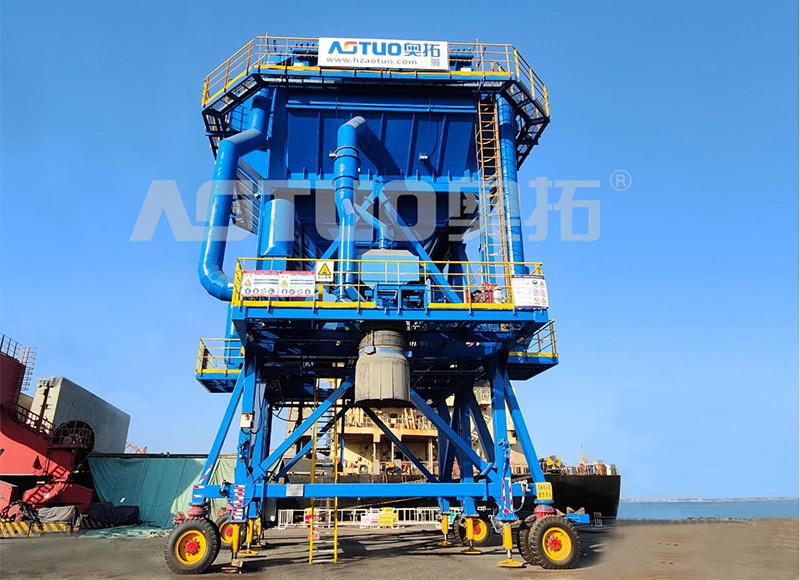
For terminals with strict point-source emission limits, a baghouse dust collector mounted on the machine superstructure captures dust-laden air drawn from the enclosed chute. Pulse-jet cleaned filter bags achieve outlet concentrations below 5 mg/Nm³ — exceeding the requirements of the most stringent international port authority specifications.
Foaming agents mixed with water produce a low-moisture foam that encapsulates coal fines at the discharge point. Foam suppression achieves dust reduction efficiencies of 85–95% with lower water consumption than conventional spray systems — particularly effective for high-volatile coals with fine particle fractions above 20%.
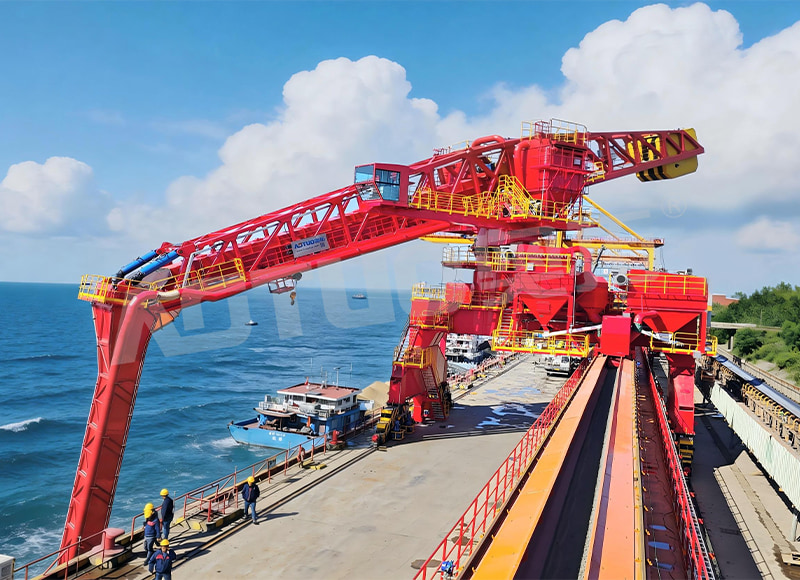
Coal ship loader boom design determines outreach capability, luffing range, slewing arc, and the structural integrity of the machine under fully loaded operating and storm survival conditions. The boom is simultaneously a structural beam, a conveyor support structure, and a kinematic mechanism — its design drives both capital cost and maintenance lifecycle.
The boom must luff (raise and lower its angle) across a range typically from -5° to +25° relative to horizontal. The lower limit allows the chute to reach the bottom of an empty hold; the upper limit clears vessel superstructures when slewing. Hydraulic luffing cylinders or wire rope systems are both used, with hydraulic systems preferred on high-capacity machines for load control precision.
Most coal ship loaders slew across a 270° arc to cover all cargo holds along a vessel without requiring the ship to shift berth. Full-slew designs (360°) are used on offshore loading platforms where vessel orientation varies. The slewing mechanism sits on the gantry travel base and must accommodate the full dynamic load envelope of the boomed machine at maximum reach.
A counterweight at the landward end of the boom balances the overhung load of the seaward boom and spout assembly. Counterweight mass is typically 30–40% of the total boom assembly weight. Variable counterweight systems — using hydraulically repositionable masses — reduce structural bending moments across the full luffing range and extend fatigue life.
Coal ship loader automation has advanced from basic PLC-controlled interlocking to fully autonomous loading sequences that require no operator input once a vessel loading plan is entered. Automation reduces labor cost, eliminates human error in hold trimming, and enables 24-hour operation at consistent throughput rates independent of shift changes.
PLC-controlled conveyor start/stop sequencing, overload protection, belt alignment monitoring, and emergency stop systems. Standard on all modern ship loaders regardless of overall automation level.
Full machine control from an air-conditioned control cabin or remote control room using joystick and HMI panel. Operator manages boom positioning, luffing, slewing, and belt speed. CCTV cameras on the boom tip provide hold visibility. Reduces on-machine operator exposure to dust and noise.
Integrated vessel draft monitoring (laser or ultrasonic sensors on the berth structure) feeds real-time stability data to the control system. The loader automatically adjusts loading sequence across holds to maintain vessel trim and list within acceptable limits. Reduces the need for manual draft calculations between holds.
3D laser scanning of hold geometry, combined with coal pile height mapping and belt weigher feedback, enables fully autonomous loading sequences. The system automatically positions the spout, monitors pile height to prevent buildup against hatch coamings, and executes trimming passes without operator input. Deployed at major Australian and South African coal export terminals handling 50+ million tonnes per annum.
A coal ship loader for bulk terminals does not operate as a standalone machine — it is the final node in a material flow chain that begins at the stockpile reclaimer and includes multiple conveyor transfer stations, samplers, belt weighers, and magnetic separators. The loader's operational performance is constrained by the weakest link in that chain.
The loader's instantaneous peak demand rate must be matched to the reclaimer output rate and intermediate conveyor capacity. A mismatch causes either belt underloading (reducing effective throughput) or surge bin overflow. Most terminals install a surge bin with 200–500 tonne capacity ahead of the loader to buffer flow rate variations.
Custody transfer belt weighers — typically certified to OIML R50 Class 0.5 accuracy — are installed on the loader conveyor to provide real-time and cumulative tonnage data for commercial measurement. Automated cross-belt samplers collect coal increments throughout the loading cycle to determine the as-loaded quality for contract compliance.
The loader travels on rails mounted on a fixed jetty or trestle structure extending 300–600m into the harbor. Trestle rail gauge (typically 10–16m center-to-center) must accommodate the loader's travel bogie spacing. Electrical power and signal cabling are supplied via festoon or cable reel systems running the full trestle length.
The coal ship loader vs conveyor loading systems comparison is most relevant for port operators evaluating a new terminal or upgrading a low-throughput facility. Fixed conveyor chute systems — where a stationary conveyor discharges over the vessel through a fixed or luffing spout — are substantially cheaper to install but impose significant operational constraints.
| Criterion | Coal Ship Loader | Fixed Conveyor Chute System |
| Throughput Rate | 1,000–10,000 t/h | 200–1,500 t/h |
| Hold Coverage | All holds without vessel shift | Vessel must warp between holds |
| Vessel Size Flexibility | Handysize to VLOC | Typically Handysize to Panamax |
| Dust Control | Telescoping spout, enclosure, suppression | Limited — open discharge chute common |
| Automation Capability | Full autonomous operation available | Basic PLC control only |
| Capital Cost | $15M–$60M+ per machine | $1M–$8M per installation |
| Maintenance Complexity | High — rotating structures, travel drives | Low — static structure |
| Breakeven Throughput | Above 3–5 Mtpa terminal capacity | Below 3 Mtpa |
Fixed conveyor chute systems are cost-effective for terminals handling below 3 million tonnes per annum with predominantly Handysize or Supramax vessel calls. Above that throughput level — or where Panamax and Capesize vessels are served — a dedicated coal ship loader delivers superior berth productivity, dust compliance, and operating cost per tonne that justify the higher capital investment within 5–8 years of commissioning.
It is focused on the overall solution of dry bulk material port transfer system,
research and development, manufacturing, and service
Copyright © Hangzhou Aotuo Mechanical and Electrical Co., Ltd. All Rights Reserved.
Custom Material Conveyor Transfer Systems Manufacturers