EN
EN English
 中文简体
中文简体 Français
Industry News
Home / News / Industry News / How to Choose Travelling Ship Loaders for Bulk Cargo Handling, Port Logistics and Efficient Ship Loading Operations

Article Directory
Bulk cargo ports move enormous volumes of coal, grain, ore, cement, and fertilizer every day, and the equipment responsible for getting that material onto a ship efficiently plays a direct role in vessel turnaround time. A travelling ship loader is one of the most widely used solutions for this task, combining mobility with continuous conveyor-based loading. This guide breaks down how these machines work, the types available, and what to consider when evaluating one for a port operation.
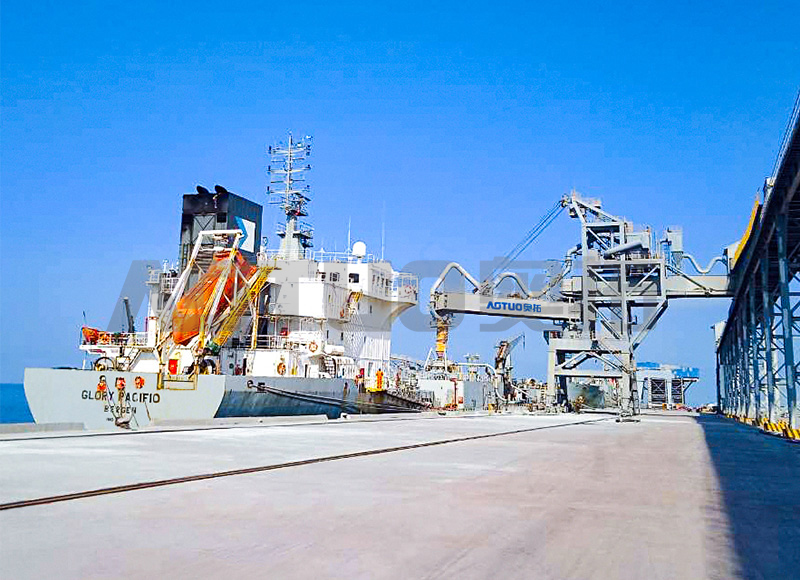
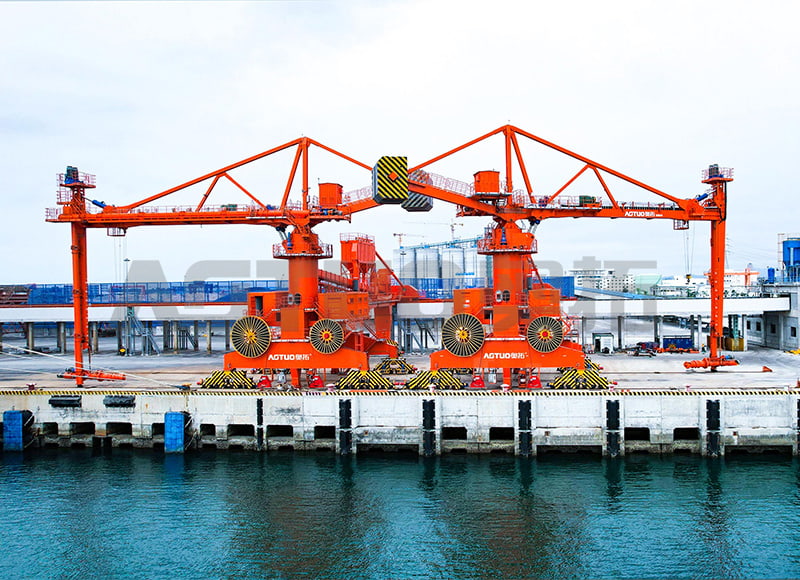
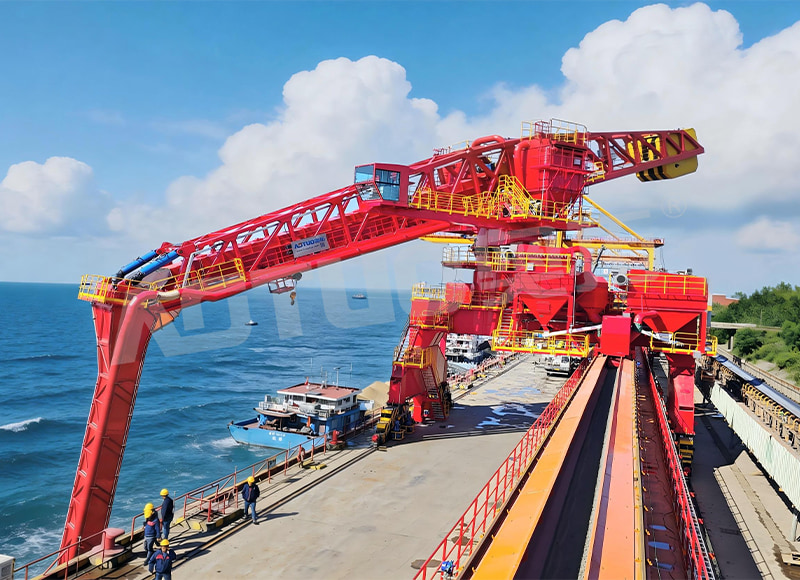
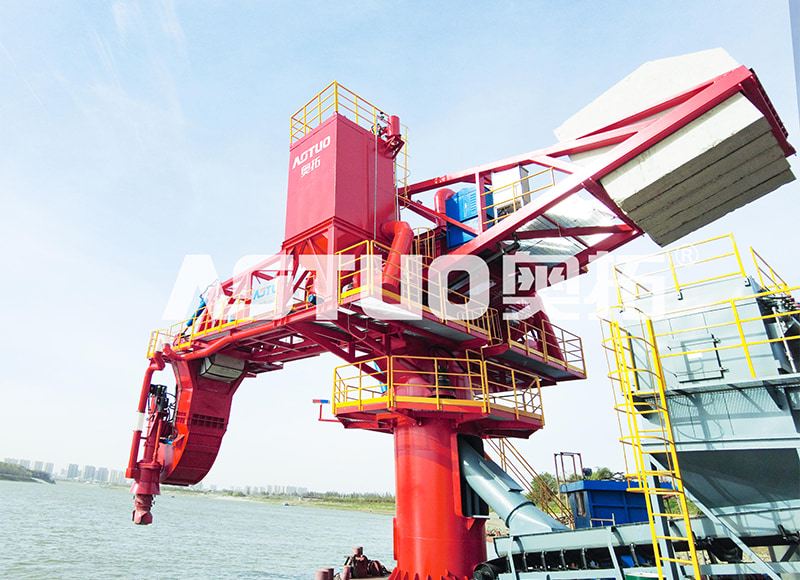
A travelling ship loader is a mobile, rail-mounted or track-mounted conveyor-based machine used at ports and marine terminals to transfer bulk materials such as coal, grain, ore, and cement directly into the holds of waiting vessels. Unlike fixed loading towers, a travelling ship loader can move along a quay on rails, position its boom over different sections of a ship, and adjust the height and reach of its discharge point without repositioning the vessel itself. This mobility is what separates it from stationary loading equipment and makes it one of the more flexible solutions in modern port logistics.
The core function of any travelling ship loader is continuous material transfer. Bulk cargo arrives at the terminal by rail, truck, or an internal conveyor network, is stored temporarily in stockpiles or silos, and is then fed onto the ship loader conveyor system. From there, the material travels along the boom, which can be raised, lowered, luffed, and slewed, until it reaches the loading spout positioned above the ship's cargo hold. Because the loader travels along rails parallel to the berth, a single unit can service multiple hold openings across the length of a vessel without needing cranes or manual handling equipment to reposition cargo.
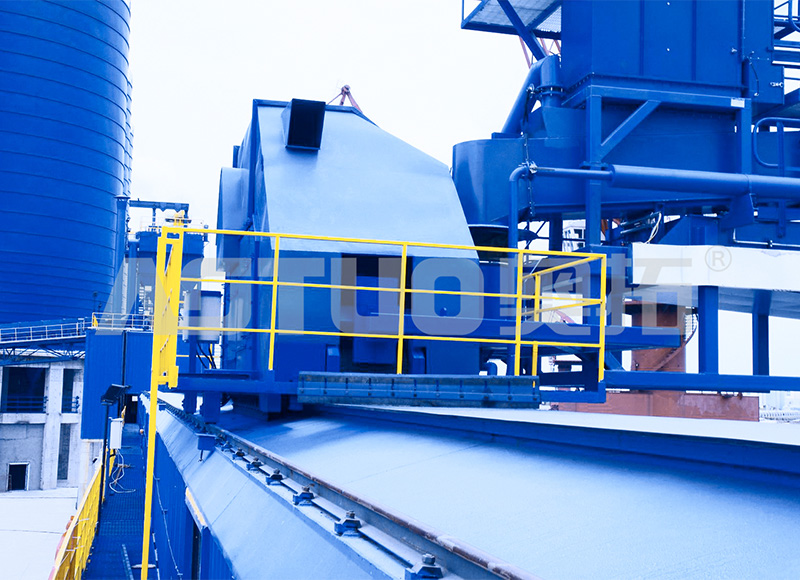
Travelling ship loaders form the backbone of many bulk material ship loading equipment systems because they combine mechanical simplicity with high throughput. A port conveyor loading system built around a travelling loader typically integrates with yard conveyors, transfer towers, and dust suppression equipment to create a continuous flow of material from stockpile to ship. This structure is what allows continuous ship loading machinery to operate for extended periods with minimal interruption, which is particularly valuable for terminals handling high volumes of dry bulk commodities.
Travelling ship loaders are generally classified by their conveyor configuration, boom mechanism, and mobility method, and each type suits a different combination of terminal layout, vessel size, and material characteristics.
A belt type ship loader relies on a continuous rubber or fabric conveyor belt to move bulk material from the yard system to the ship's hold. This is the most common configuration because belt conveyors handle a wide range of material sizes and moisture levels while maintaining a steady flow rate.
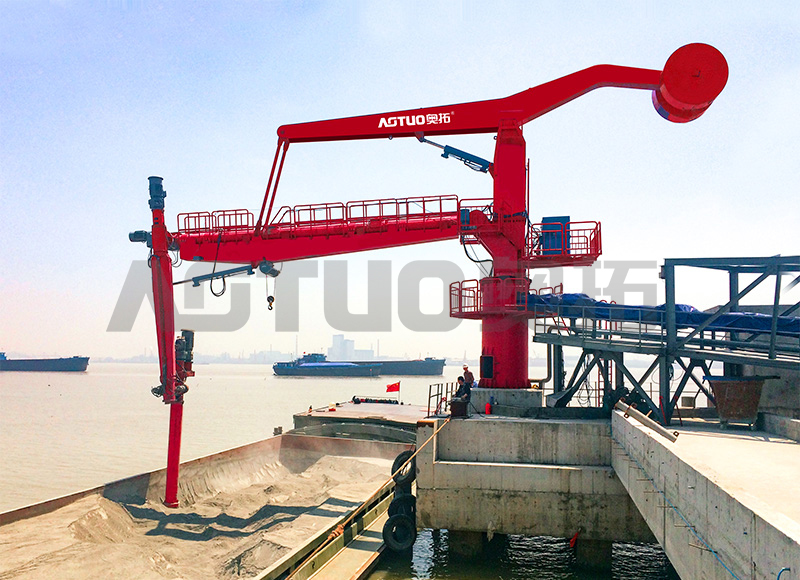
A luffing ship loader is equipped with a boom that can be raised or lowered through a hydraulic or mechanical luffing mechanism. This vertical adjustment allows the loading spout to reach different hold depths and adapt to vessels of varying freeboard height.
A telescopic ship loader extends and retracts its boom length, which helps position the loading spout precisely over a hold opening while minimizing free-fall distance and material spillage or dust generation.
A rail mounted ship loader travels along fixed rails installed parallel to the berth, giving it a defined but flexible operating range. This design offers structural stability while still allowing the loader to service the full length of a vessel.
A mobile ship loading conveyor may use wheels, crawler tracks, or a hybrid rail system for shorter-distance repositioning, often used in smaller terminals or where flexibility across multiple berths is required.
Travelling ship loaders are used wherever dry bulk commodities need to move from land-based storage into ocean-going vessels in large, continuous volumes.
Coal loading ports rely heavily on travelling ship loaders because coal is typically handled in very high volumes and benefits from continuous conveyor transfer rather than repeated grab cycles. Grain export terminals use similar systems, though grain handling often requires additional attention to contamination control and gentle handling to reduce breakage. Cement bulk handling facilities use enclosed or partially enclosed ship loader systems to control the fine, dust-prone nature of cement powder. Iron ore port logistics operations depend on heavy-duty travelling ship loaders built to withstand the abrasive nature of ore and the high tonnages typical of ore export terminals. Fertilizer bulk shipping also uses travelling ship loaders, often with corrosion-resistant components due to the chemically reactive nature of many fertilizer products.
| Industry | Typical Material | Key Handling Consideration |
| Coal export terminals | Thermal or coking coal | High volume, continuous flow |
| Grain terminals | Wheat, corn, soybeans | Contamination control, gentle handling |
| Cement facilities | Bulk cement powder | Dust containment |
| Ore export ports | Iron ore, mineral concentrates | Abrasion resistance, high tonnage |
| Fertilizer terminals | Granular or powdered fertilizer | Corrosion resistance |
A well-designed travelling ship loader should deliver consistent throughput, minimize material loss, and operate reliably across varying weather and cargo conditions.
Continuous loading efficiency depends on how well the conveyor system, transfer chutes, and boom motion work together without creating bottlenecks. An adjustable boom conveyor system allows operators to reposition the loading spout as a hold fills, which helps maintain even material distribution and reduces the need to stop the loading process. Dust control features, such as enclosed conveyor covers, water misting systems, and sealed transfer points, are increasingly treated as a core performance requirement rather than an optional add-on, particularly for terminals located near populated areas. Corrosion resistant marine equipment, including coated steelwork and protected electrical components, extends the operating life of the loader in the humid, salt-laden environment typical of ports.
The design and manufacturing of a travelling ship loader follows a structured process that moves from structural engineering through to final assembly and commissioning at the port site.
Engineers design the heavy steel structure fabrication plan, calculating load paths, wind resistance, and rail reaction forces for the travelling gantry and boom.
The conveyor belt system assembly is engineered around required throughput, belt width, and transfer point geometry to minimize spillage.
The hydraulic luffing system design is developed to control boom elevation smoothly under load, along with slewing and travel drive systems.
Rail mounted equipment engineering determines wheel loads, rail gauge, and travel speed requirements based on berth length and vessel size.
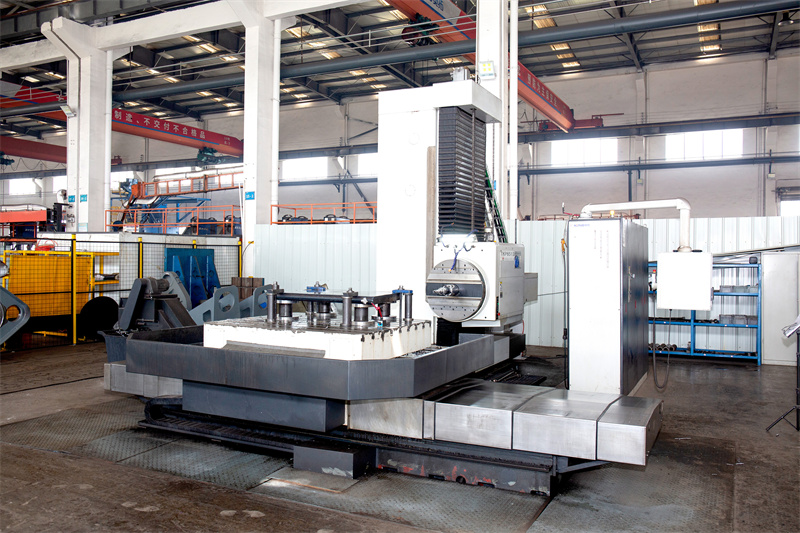
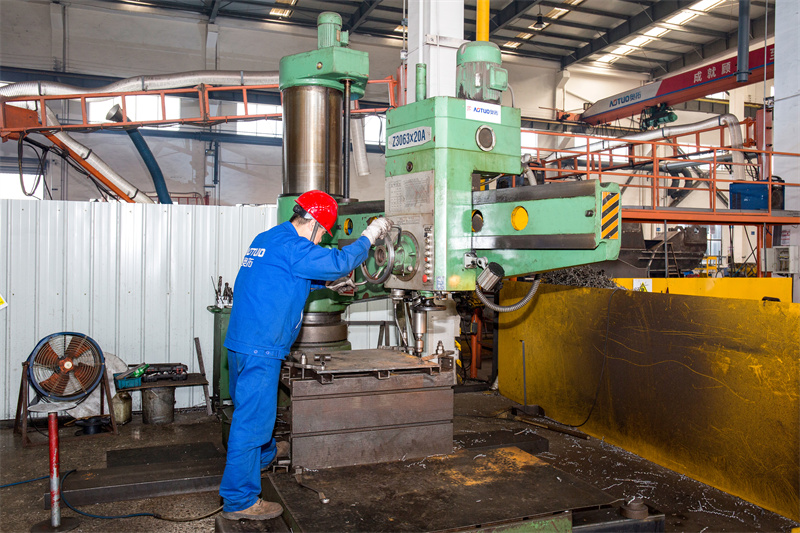
Steel components are fabricated, welded, and assembled, followed by installation of conveyor belts, drive motors, and control systems.
The completed unit undergoes load testing, alignment checks, and operational trials before being handed over for regular service.
This sequence reflects standard port machinery manufacturing process practices, where structural integrity and conveyor performance are validated separately before the full system is tested together under simulated loading conditions.
Travelling ship loaders are one of several approaches to bulk vessel loading, and the right choice depends on cargo type, terminal layout, and throughput requirements.
A ship loader is fundamentally different from a ship unloader, even though both use conveyor principles. A ship loader moves material from land-based storage into a vessel, while a ship unloader removes material from a vessel's hold and transfers it to land-based storage or processing. Within loading systems specifically, a conveyor loader differs from a grab loader in how material is physically moved: a conveyor loader provides continuous, steady flow, while a grab loader uses a crane-mounted grab bucket to lift and drop material in discrete cycles.
Fixed loading towers are generally simpler and less expensive to install, but they cannot reposition themselves along the berth, which limits their ability to service multiple hold positions without moving the vessel. Mobile loading systems, including travelling ship loaders, offer greater flexibility at the cost of a more complex structure and higher installation investment. For high-volume, continuous bulk operations, the efficiency gained from steady conveyor flow often outweighs the additional structural complexity.
Despite their advantages, travelling ship loaders come with operational and maintenance challenges that terminal operators need to plan for.
High maintenance port machinery is a recurring theme, since the combination of conveyor belts, hydraulic systems, travel drives, and structural steel exposed to marine air requires regular inspection and upkeep. Dust emission control challenges remain significant, particularly for dry, fine materials like cement or certain grain products, and inadequate containment can lead to both material loss and environmental concerns. Weather impact on marine equipment is another limiting factor, as high winds can restrict boom operation and travel movement, while heavy rain can affect certain moisture-sensitive cargoes. Alignment issues in conveyor systems can develop over time due to structural settling, rail wear, or thermal expansion, and misalignment can lead to belt tracking problems or increased wear. Finally, high installation cost infrastructure is a genuine barrier for smaller terminals, since rail systems, structural steelwork, and conveyor networks represent a substantial capital investment before the equipment becomes operational.
The direction of travelling ship loader technology is shaped by broader trends in port automation, environmental regulation, and digital infrastructure.
Smart conveyor control systems use sensors and control software to monitor belt speed, material flow, and loading position, adjusting operations automatically to maintain consistent fill levels across a vessel's holds. Energy efficient loading equipment is also gaining attention, with variable-speed drives and optimized conveyor design helping reduce power consumption during partial-load operation. Dust-free bulk handling technology, including fully enclosed conveyor systems and advanced suppression methods, is becoming more common as environmental regulations around port emissions grow stricter. Digital port management systems are tying individual pieces of equipment, including travelling ship loaders, into broader terminal management platforms that track vessel schedules, cargo volumes, and equipment utilization in real time. Together, these trends point toward bulk loading operations that are more automated, more data-driven, and more environmentally controlled than earlier generations of port equipment.
 |
 |
A travelling ship loader is a rail-mounted or track-mounted conveyor machine that moves bulk material from land-based storage directly into a vessel's cargo holds, with the ability to travel along the berth and adjust its boom position.
A ship loader is used to transfer bulk commodities such as coal, grain, ore, cement, or fertilizer from a port terminal onto a waiting vessel, typically as part of a continuous conveyor-based loading system.
A ship loader works by receiving material from yard conveyors or stockpiles, moving it along an internal conveyor belt through the boom structure, and discharging it through a spout positioned above the ship's cargo hold.
Ship loaders are commonly used for dry bulk materials including coal, grain, iron ore, cement, and fertilizer, with equipment design varying based on the abrasiveness, moisture content, and dust characteristics of each material.
Ship loader types differ mainly in boom mechanism and mobility, including belt type, luffing, telescopic, and rail mounted configurations, each suited to different terminal layouts and vessel sizes.
Many modern ship loaders incorporate automated or semi-automated features, such as smart conveyor control and remote boom positioning, though the level of automation varies significantly between older and newer installations.
It is focused on the overall solution of dry bulk material port transfer system,
research and development, manufacturing, and service
Copyright © Hangzhou Aotuo Mechanical and Electrical Co., Ltd. All Rights Reserved.
Custom Material Conveyor Transfer Systems Manufacturers