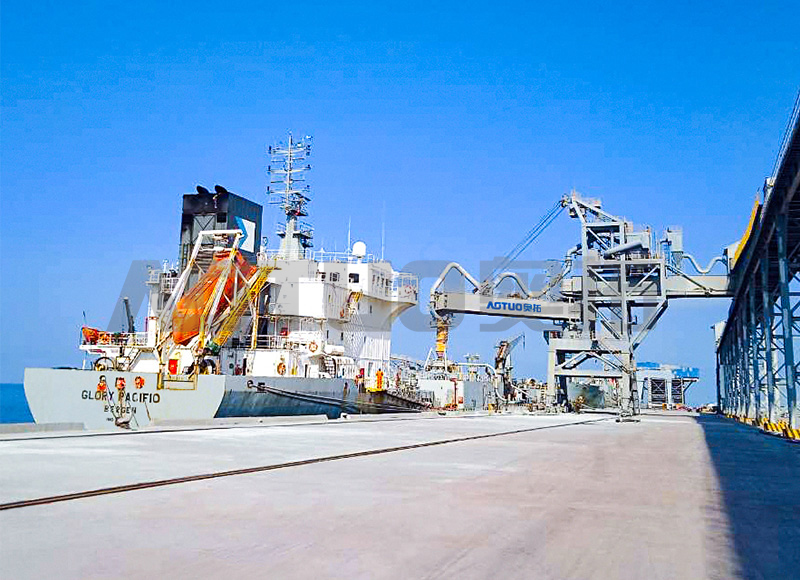
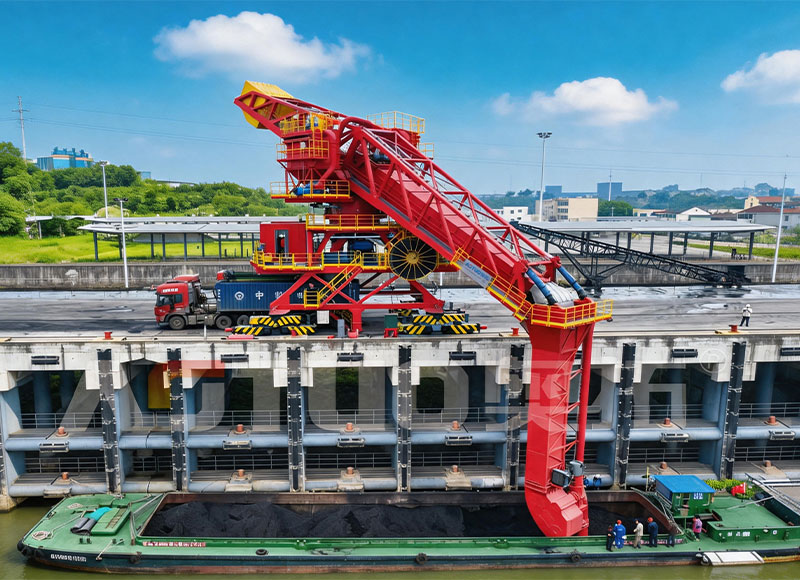
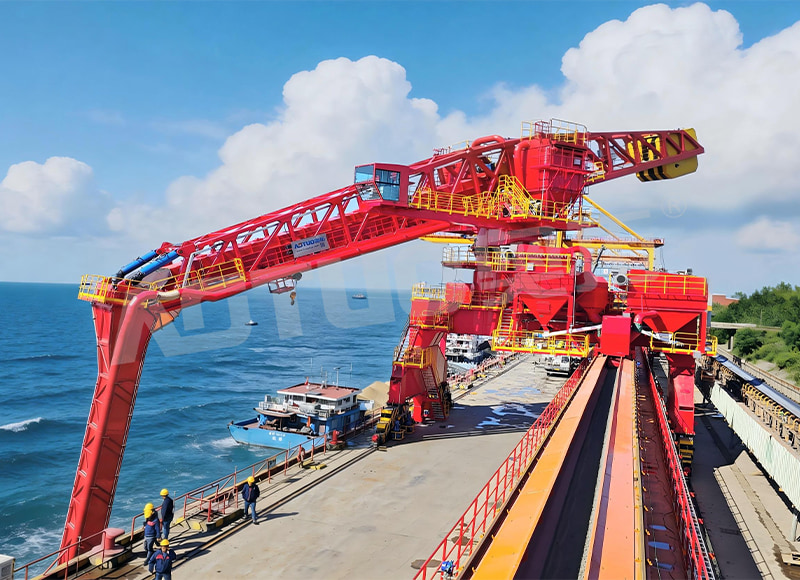
Operating a bulk ship loader in maritime environments presents significant challenges due to high salinity, humidity, and airborne chlorides. These factors accelerate the electrochemical oxidation of structural steel and degrade the integrity of mechanical components. To ensure a design life exceeding 20 years, engineers must implement a multi-layered maintenance and protection strategy that addresses both corrosion protection for bulk ship loaders and the mechanical wear associated with 150,000 to 200,000 DWT vessel loading operations.
The primary defense against structural failure is the application of high-performance coating systems compliant with ISO 12944 C5-M standards for marine environments. For a bulk ship loader, this typically involves a three-coat system: a zinc-rich epoxy primer, an epoxy micaceous iron oxide intermediate coat, and a polyurethane topcoat with high UV resistance. A critical maintenance check is how to inspect coating thickness on ship loaders using dry film thickness (DFT) gauges to ensure the barrier remains above 320 microns. Hangzhou Aotuo Mechanical and Electrical Co., Ltd. (AOTUO), a national high-tech enterprise established in 2003, integrates these high-end protection standards into our dry bulk material port transfer systems. With 20 years of R&D experience, AOTUO's equipment, including bulk cement screw unloaders and loader series, is engineered to withstand the most aggressive coastal conditions.
As a pioneer in the localization of bulk cement equipment and the drafting unit for industry standard JC/T 2575, AOTUO holds over 100 patents and software copyrights. Our bulk ship loader designs prioritize structural steel grades for coastal machinery, often utilizing S355J2+N or similar high-strength steels with enhanced atmospheric corrosion resistance. By maintaining a Ra surface finish suitable for bonding before coating, we ensure maximum adhesion and minimize the risk of localized pitting.
| Maintenance Component | Technical Parameter | Engineering Objective |
| Surface Coating | ISO 12944 C5-M (320um+) | Electrochemical barrier against chlorides |
| Lubrication Points | NLGI Grade 2 (Synthetic) | Reduction of friction and moisture ingress |
| Bolt Preload | ASTM F3125 Grade A325/A490 | Maintaining structural joint rigidity |
The efficiency of a bulk ship loader relies on its ability to handle capacities up to 3000t/h without mechanical seizure. In corrosive environments, sealing systems for bulk material handling must be airtight to prevent fine particulates—such as cement or clinker dust—from mixing with salt air and forming abrasive pastes. Utilizing bulk ship loader units with labyrinth seals and automated grease purging systems significantly extends the MTBF (Mean Time Between Failures). Furthermore, replacing carbon steel rollers with stainless steel in non-structural or high-wear zones prevents the "frozen roller" syndrome common in salt-spray zones.
A centralized automatic lubrication system vs manual greasing comparison reveals that automated systems provide a constant positive pressure within bearings, effectively pushing out contaminants before they can penetrate the raceways. For a bulk ship loader operating at a 200,000 DWT berth, this "active purging" is vital. By using water-resistant lubricants for marine loaders, engineers ensure that the film strength remains intact even when subjected to heavy rain or sea spray, preserving the tensile strength of mechanical fasteners and pins.
Electrical failure is often the root cause of downtime in coastal ports. Bulk ship loader electrical rooms must be pressurized and climate-controlled to prevent chloride-induced stress corrosion in copper wiring. Using IP66 rated enclosures for port equipment is the minimum requirement. AOTUO's intelligent control systems incorporate advanced metering and metering control to ensure that power delivery is optimized, reducing thermal stress on the motors. The use of fiber optic communication in port loaders instead of traditional copper cabling further mitigates the risk of signal degradation due to oxidation.
| System Type | Maintenance Frequency | Standard Reference |
| Electric Motors | Quarterly Megger Testing | IEEE 43-2000 |
| Hydraulic Fluids | Bi-annual Particle Count | ISO 4406 (18/16/13) |
| PLC Hardware | Annual Diagnostic Log Review | IEC 61131-3 |
The advantages of screw unloaders and loaders in dust-sensitive environments are well-documented. Because the system is fully enclosed, the internal mechanical parts are shielded from the external corrosive atmosphere. This enclosed loading for bulk material port transfer prevents environmental contamination and protects the core screw assembly from moisture. AOTUO's expertise in bulk cement screw unloaders and grain loaders ensures that the internal components maintain their high-precision tolerance levels, even during high-capacity 3000t/h throughput.
In C5-M environments, a full DFT audit should be performed annually, with spot checks every six months on high-impact areas like the telescopic chute and discharge head.
A calcium-sulfonate complex grease is typically recommended due to its superior water washout resistance and inherent anti-corrosion properties compared to lithium-based greases.
Our intelligent control systems use sensors to monitor vessel height and tidal movements, automatically adjusting the loader's arm position to prevent structural collision and ensure even distribution in 200,000 DWT ships.
Yes. AOTUO provides comprehensive services to upgrade older transfer station equipment with modern dust collectors and automated conveying systems to meet 2026 environmental standards.
Clinker dust is highly abrasive and slightly alkaline. If it enters a bearing, it acts as a grinding agent. Sealed bearings with positive air or grease pressure are required to mitigate this risk.
It is focused on the overall solution of dry bulk material port transfer system,
research and development, manufacturing, and service
Copyright © Hangzhou Aotuo Mechanical and Electrical Co., Ltd. All Rights Reserved. Custom Material Conveyor Transfer Systems Manufacturers